Canis lupus familiaris
Sapsali
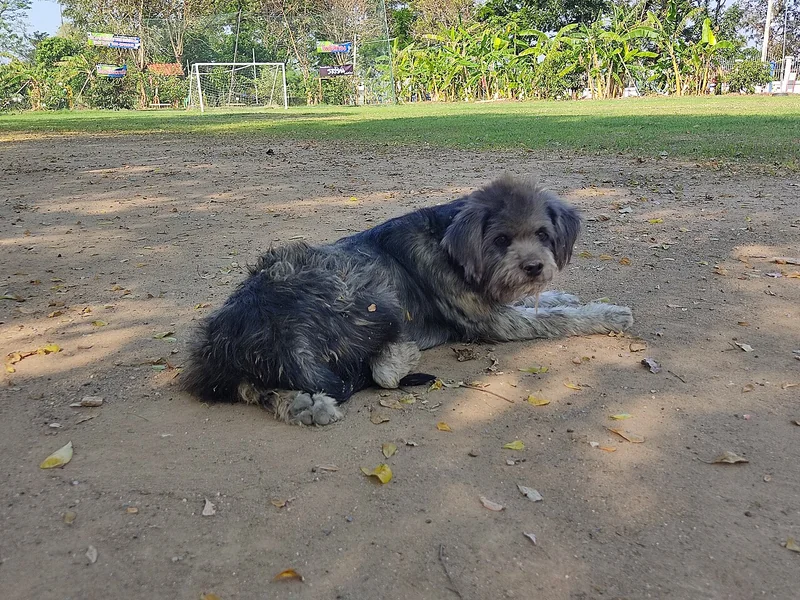 Featured photosapsali.jpg
The Sapsali is a Korean Silla-dynasty 'ghost-driver' guardian — South Korean Natural Treasure No. 368, rebuilt from 1985. The Sapsali (Korean 삽살개, 'sapsalgae', meaning 'the dog that drives away ghosts and evil spirits') is one of two indigenous Korean dog breeds (alongside the Korean Jindo) and was kept as a guardian dog by the Korean nobility from at least the Silla dynasty (57 BC - 935 AD).
Quick facts
- AKC group
- Herding
- Origin country
- South Korea
- Origin period
- Antiquity (revived from near-extinction 1985)
- Coat type
- Long
- Coat colors
- Solid Black, Solid White, Yellow (Cheong Sapsaree), Tawny, Reddish Yellow
- Average lifespan
- 11-14 years
- Recognition
- —
Origin
The Sapsali (Korean 삽살개, 'sapsalgae', meaning 'the dog that drives away ghosts and evil spirits') is one of two indigenous Korean dog breeds (alongside the Korean Jindo) and was kept as a guardian dog by the Korean nobility from at least the Silla dynasty (57 BC - 935 AD); the breed appears in Goryeo and Joseon dynasty paintings and folk tales as a protector against evil. During the Japanese colonial period (1910-1945), the Japanese colonial administration ordered the systematic slaughter of Korean dogs for their winter fur (used for Imperial Army parkas); over 1.5 million Korean dogs were killed and the Sapsali was driven to near-extinction with fewer than fifty surviving dogs by 1945. The modern breed was rebuilt from 1985 by Professor Ji Tak Ha (1922-1993) at Kyungpook National University in Daegu, South Korea, from a foundation of just eight surviving dogs. The breed was designated South Korean Natural Treasure No. 368 in 1992. Neither the AKC, UKC, nor FCI has yet granted recognition.
Recognition
The breed has not been admitted to the major Western kennel-club registries; its working line is maintained by national breed-preservation associations.
Standard
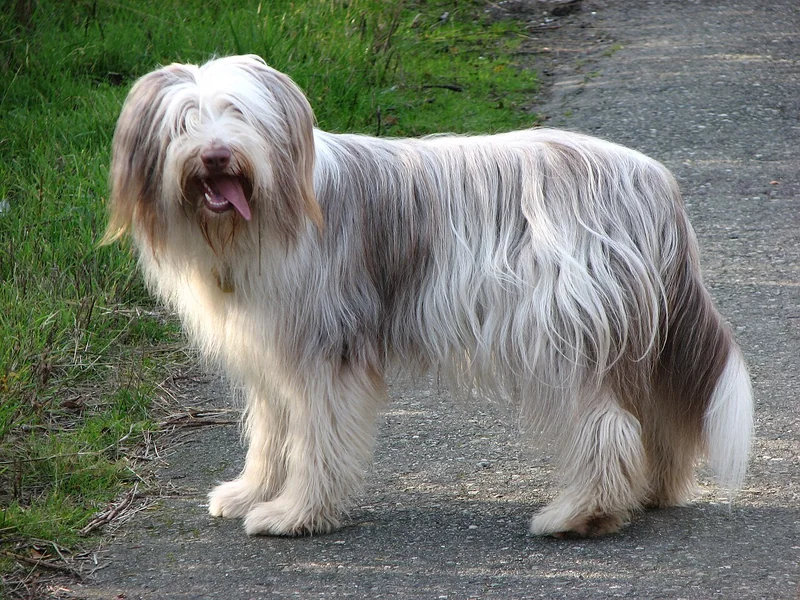
The Korean Sapsaree Foundation standard describes a medium-sized, well-balanced, sturdy dog with a long, abundant, double coat that completely covers the body and falls over the eyes — somewhat reminiscent of the Old English Sheepdog or the Bearded Collie in silhouette. The double coat consists of a soft undercoat under a long, slightly-wavy outer coat. Recognized colours are solid black, solid white, yellow (Cheong Sapsaree), tawny, and reddish-yellow. Males stand 51-58 cm at the withers, females 49-56 cm.
Sources & further reading (2)
- encyclopedia — accessed 2026-04-30
- kennel-club-registry — accessed 2026-04-30
Frequently asked questions
What is the Sapsali's AKC group?
The American Kennel Club places the Sapsali in the Herding Group. The Herding Group, carved out of the older Working Group in 1983, gathers breeds developed to control the movement of livestock — Border Collies, Australian Shepherds, Welsh Corgis, and the German Shepherd among them. The breed's foundation working role was as a Korean Silla-dynasty 'ghost-driver' guardian — South Korean Natural Treasure No. 368, rebuilt from 1985.
When was the Sapsali officially recognized?
The major kennel-club registries recognized the breed during the 20th century.
What is the average lifespan of a Sapsali?
Kennel-club longevity surveys place the Sapsali's average lifespan in the 11-14 years range. The figure here represents the spread reported by the major parent-club studies and the Kennel Club (UK) purebred-dog health surveys.