Canis lupus familiaris
Irish Water Spaniel
 Featured photoirish-water-spaniel.jpg
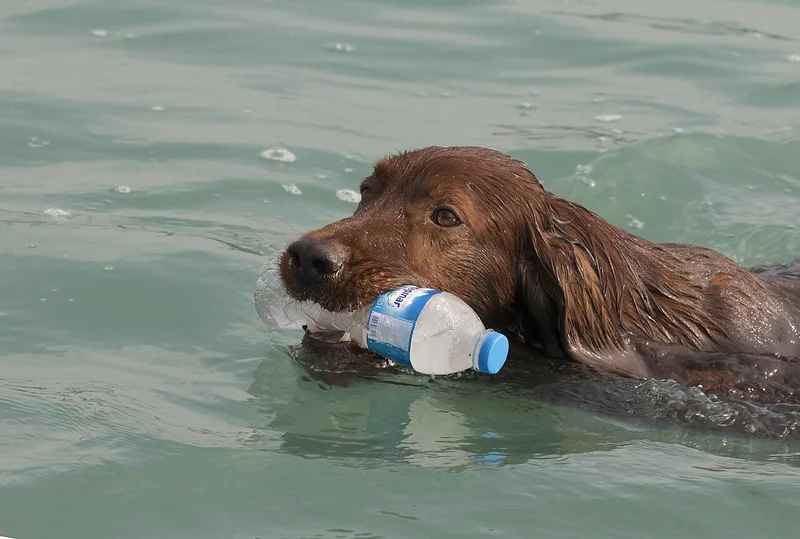
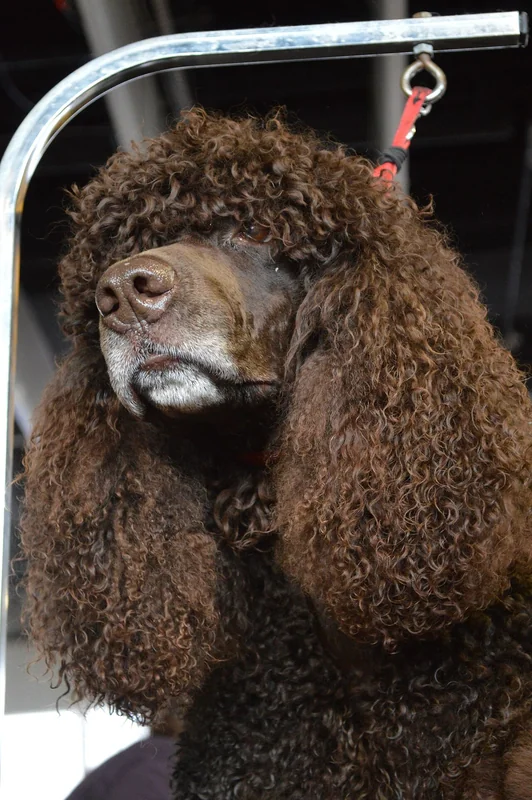
The Irish Water Spaniel is the tallest of the AKC spaniel breeds and one of Ireland's oldest dog breeds. It was systematised by Justin McCarthy of Dublin in the 1830s as a rugged, all-weather waterfowl retriever for Ireland's lakes, rivers, and tidal estuaries. The breed is instantly recognised by its liver-coloured, tightly curled coat, smooth 'rat tail', and the loose topknot of longer curls on the head. The AKC admitted the Irish Water Spaniel in 1884 as one of its founding breeds. Males stand 53–58 cm and weigh 25–30 kg.
Quick facts
- AKC group
- Sporting
- Origin country
- Ireland
- Origin period
- Early 19th century
- Coat type
- Curly
- Coat colors
- Liver
- Average lifespan
- 10-12 years
- Recognition
- AKC 1884 · FCI 1954 · UKC 1940 · Group 8 — Retrievers, Flushing Dogs, Water Dogs (Section 3: Water Dogs)
Origin
The Irish Water Spaniel's modern form was established by Justin McCarthy of Dublin in the 1830s. McCarthy selectively bred from existing Irish water spaniel strains, possibly incorporating poodle-type continental water dogs, to produce a consistent type. His foundation dog, Boatswain (whelped 1834), appears in the pedigrees of virtually all modern Irish Water Spaniels. McCarthy never published his breeding records, leaving the precise ancestral mix historically uncertain. The breed was adapted for the challenging conditions of Irish duck hunting — dense reed beds, cold estuaries, and rough Atlantic coastal waters.
Recognition
The Irish Water Spaniel was exhibited at the first dog show in Birmingham, England, in 1862, and attracted considerable attention for its distinctive appearance. The AKC admitted the breed in 1884, making it one of the founding cohort of recognised breeds. The Kennel Club (UK) has recognised the breed since its formation in 1873. The FCI standard (FCI No. 124) places the Irish Water Spaniel in Group 8, Section 3 (Water Dogs).
Standard
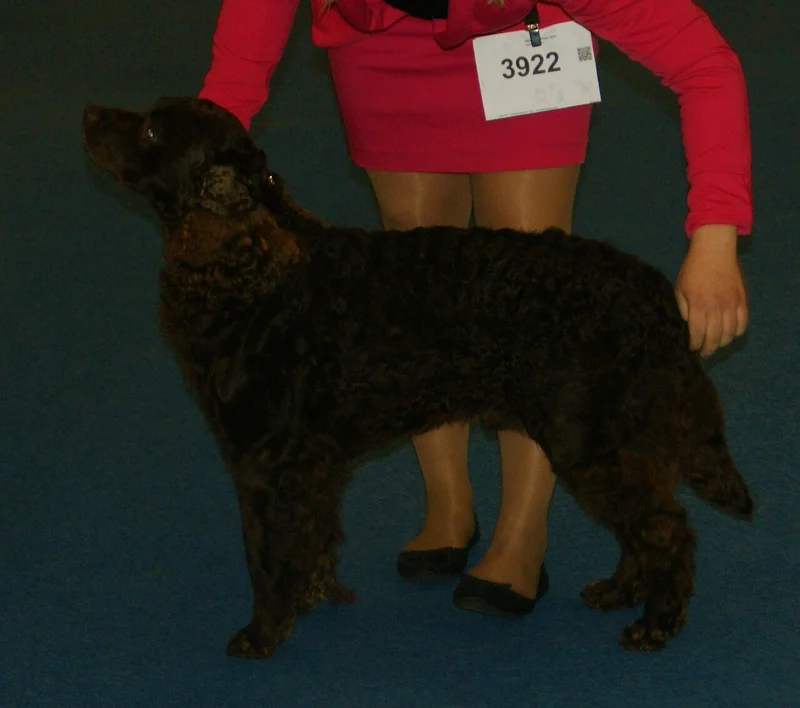
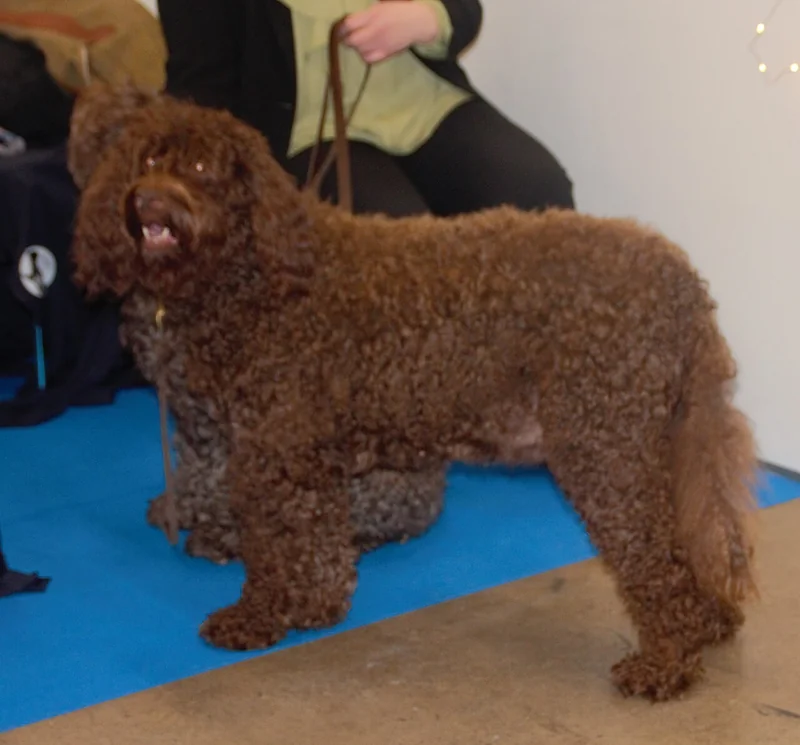
The AKC and FCI standards describe a strong, compact, symmetrical dog of medium to large size, active and alert in expression. The coat is the breed's most recognisable feature: tight, crisp ringlets of liver-coloured hair cover the entire body, except for the smooth 'rat tail' (which is thick at the root and tapers to a fine point) and the smooth muzzle below the topknot. The topknot on the head is composed of long, loose curls falling over the eyes. Males stand 53–58 cm; females 51–56 cm.
Sources & further reading (3)
- kennel-club-registry — accessed 2026-05-07
- encyclopedia — accessed 2026-05-07
- fci-standard — accessed 2026-05-07
Frequently asked questions
What makes the Irish Water Spaniel's tail unusual?
The Irish Water Spaniel has a distinctive 'rat tail' that is smooth and tapering — it is thick at the root where a few short curls grow, then transitions abruptly to a smooth, whip-like point. This is one of the breed's most immediately recognisable features, in sharp contrast to the feathered tails of other spaniel breeds. The smooth tail is a natural trait, not the result of docking.
What AKC group is the Irish Water Spaniel in?
The AKC places the Irish Water Spaniel in the Sporting Group. Unlike most spaniels, which are classified as flushing dogs, the Irish Water Spaniel was also used extensively as a retriever in water, which explains its placement with the other dual-purpose spaniel-retriever types in the group. It is the tallest of all AKC-recognised spaniels.
Who standardised the Irish Water Spaniel?
Justin McCarthy of Dublin systematised the Irish Water Spaniel in the 1830s. His foundation dog, Boatswain (whelped 1834), is the documented ancestor of virtually all modern Irish Water Spaniels. McCarthy kept his breeding methods secret during his lifetime, leaving the precise ancestral background of the breed a matter of historical debate, though various early Irish water spaniel strains and poodle-type dogs are generally considered contributors.