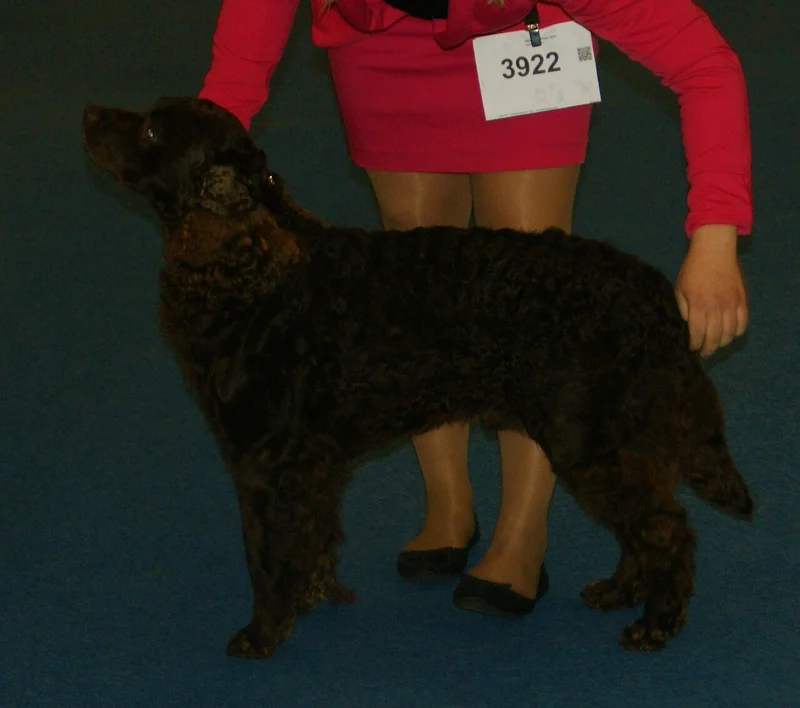
Canis lupus familiaris
Irish Setter
 Featured photoirish-setter.jpg
The Irish Setter is a Irish solid-mahogany setter fixed in the 1860s from the original red-and-white landrace. The Irish Setter was developed in 18th-century Ireland from crosses between the English Setter, the Spanish Pointer, and various spaniels and pointers.
Quick facts
- AKC group
- Sporting
- Origin country
- Ireland
- Origin period
- 18th century (formalized 1880s)
- Coat type
- Long
- Coat colors
- Mahogany Red, Rich Chestnut Red
- Average lifespan
- 12-15 years
- Recognition
- AKC 1878 · FCI 1954 · UKC 1948 · Group 7 — Pointing Dogs (Section 2.2: British and Irish Pointers and Setters, Setters)
Origin
The breed was developed in 18th-century Ireland from crosses between the English Setter, the Spanish Pointer, and various spaniels and pointers — the Irish landrace setter type from which the modern breed descends. Early Irish Setters were red-and-white; the solid mahogany Irish Setter was fixed in the 1860s by selective breeding and became the dominant colour pattern after the 1875 publication of the breed's first standard. The Irish Red Setter Club of Dublin was founded in 1882; the original red-and-white form survived and is now registered as a separate breed (Irish Red and White Setter, AKC 2009).
Recognition
The American Kennel Club admitted the breed in 1878, the United Kennel Club followed in 1948, and the Federation Cynologique Internationale published the international standard (FCI No. 120) in 1954. The FCI assigns the breed to Group 7 — Pointing Dogs (Section 2.2: British and Irish Pointers and Setters, Setters).
Standard
The AKC and FCI standards describe an active, aristocratic bird-dog, rich red in colour, substantial yet elegant in build, with a long, lean head, a deep, narrow chest, and the smooth, free gait of a working setter. The defining feature is the rich mahogany or chestnut red flat-or-slightly-wavy coat with substantial feathering on the ears, chest, belly, legs, and tail. Males stand 65-69 cm at the withers, females 61-65 cm.
Sources & further reading (3)
- kennel-club-registry — accessed 2026-04-30
- encyclopedia — accessed 2026-04-30
- fci-standard — accessed 2026-04-30
Frequently asked questions
What is the Irish Setter's AKC group?
The American Kennel Club places the Irish Setter in the Sporting Group. The Sporting Group gathers pointers, setters, retrievers, and spaniels — breeds developed to assist hunters in locating, flushing, or retrieving game birds. The breed's foundation working role was as a Irish solid-mahogany setter fixed in the 1860s from the original red-and-white landrace.
When was the Irish Setter officially recognized?
The American Kennel Club admitted the breed in 1878; the United Kennel Club followed in 1948; the Federation Cynologique Internationale published the international standard (FCI No. 120) in 1954.
What is the average lifespan of a Irish Setter?
Kennel-club longevity surveys place the Irish Setter's average lifespan in the 12-15 years range. The figure here represents the spread reported by the major parent-club studies and the Kennel Club (UK) purebred-dog health surveys.