Canis lupus familiaris
Harrier
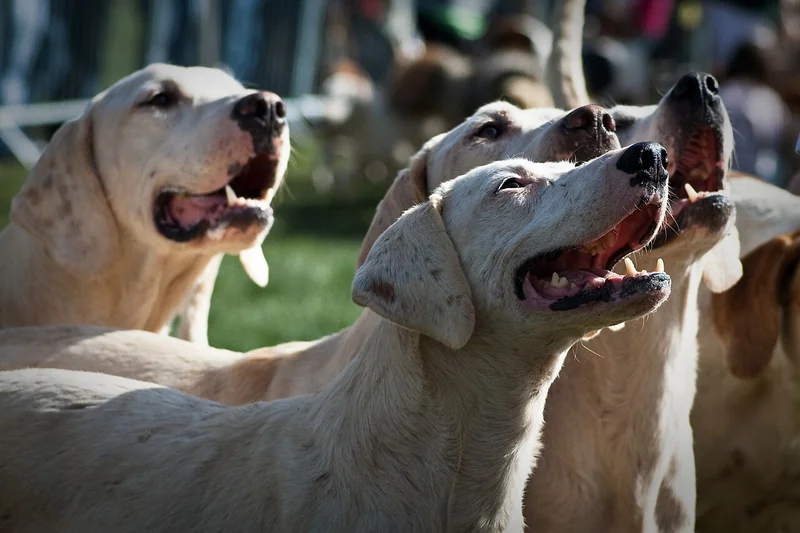 Featured photoharrier.jpg
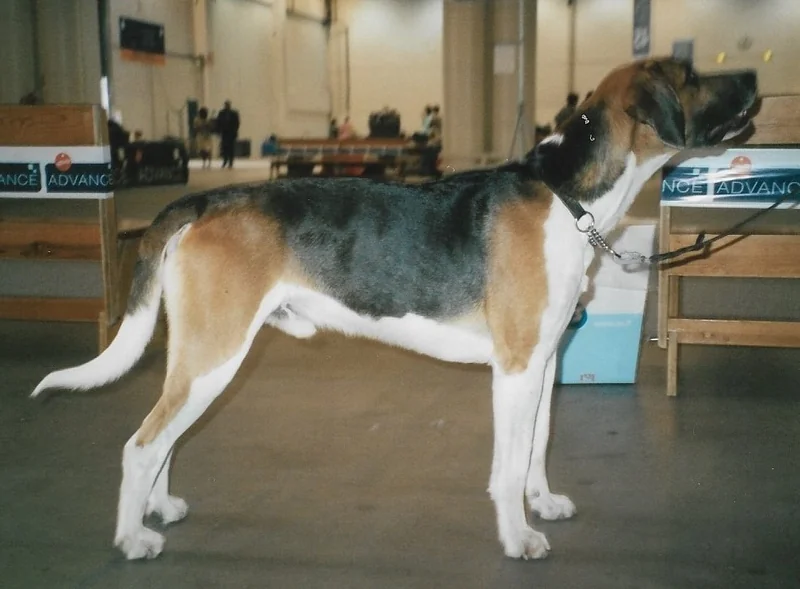
The Harrier is a medium-sized British scent hound developed over centuries for hunting hare in packs followed by hunters on foot. Intermediate in size between the Beagle and the English Foxhound, the Harrier combines the Foxhound's speed and drive with the Beagle's slower, methodical scenting ability. Stud books for Harrier packs date to 1260, making it one of the oldest recorded scent-hound types in Britain. Its build, movement, and tricolor coat closely resemble a smaller English Foxhound. The AKC recognised the Harrier in 1885. Males and females stand 48–55 cm and weigh 18–27 kg.
Quick facts
- AKC group
- Hound
- Origin country
- England
- Origin period
- Medieval, documented from 1260
- Coat type
- Short
- Coat colors
- Tricolor (Black, White, and Tan), Red and White, Lemon and White
- Average lifespan
- 12-15 years
- Recognition
- AKC 1885 · FCI 1954 · UKC 1996 · Group 6 — Scent Hounds and Related Breeds (Section 1.1: Large-sized Hounds)
Origin
The Harrier's documented history in England extends to 1260, when the Penistone Pack was established in Yorkshire — a date that predates even the earliest English Foxhound records by several centuries. The breed was developed to hunt hare (not fox), a quarry that runs in circles rather than a straight line, requiring a hound with a strong nose, adequate speed, and the ability to work in concert with a pack following a twisting line of scent. Huntsmen followed on foot, so the Harrier was deliberately bred slightly slower than the Foxhound. Bloodhound, Greyhound, and early Foxhound blood all contributed during the 17th–18th centuries.
Recognition
The AKC recognised the Harrier in 1885, one year after the AKC was established. Despite this early recognition, the breed has always been rare in AKC registration statistics and remains so today. The Kennel Club (UK) and FCI (FCI No. 295) also recognise the Harrier, though the breed is primarily maintained in working packs in Britain rather than as a companion or show dog.
Standard
The AKC standard describes a medium-sized hound closely resembling a smaller version of the English Foxhound, with a broad, slightly domed skull, a clean, moderately long muzzle, and a large nose with wide nostrils. The coat is short, hard, and dense. Accepted colours include tricolor (black, white, and tan), red and white, and lemon and white. Movement should be free and active at the trot, with a long stride and good drive from the hindquarters. Males and females stand 48–55 cm.
Sources & further reading (3)
- kennel-club-registry — accessed 2026-05-07
- encyclopedia — accessed 2026-05-07
- fci-standard — accessed 2026-05-07
Frequently asked questions
What AKC group does the Harrier belong to?
The AKC places the Harrier in the Hound Group as a scent hound. The Harrier is a pack-trailing hound historically developed to pursue hare in England. It occupies a size niche between the Beagle (smaller) and English Foxhound (larger) and was bred specifically for hare hunting at a pace that huntsmen on foot could sustain over miles of English countryside.
How does the Harrier differ from the Beagle and English Foxhound?
The Harrier is intermediate in size between the Beagle and the English Foxhound — it stands 48–55 cm compared to the Beagle's 33–38 cm and the Foxhound's 58–64 cm. The Harrier is larger and faster than the Beagle but smaller and slower than the Foxhound, suited for hare hunting at a pace that foot hunters can follow. All three breeds share the same tricolor coat and scent-hound lineage.
How old is the Harrier as a breed?
The Harrier is one of the oldest recorded scent-hound types in Britain: the Penistone Pack in Yorkshire is documented to 1260, making it older than any Foxhound records by several centuries. Despite this ancient history, the Harrier remains rare today — it is consistently among the lowest-registered breeds in AKC annual statistics.