Canis lupus familiaris
Chinese Crested
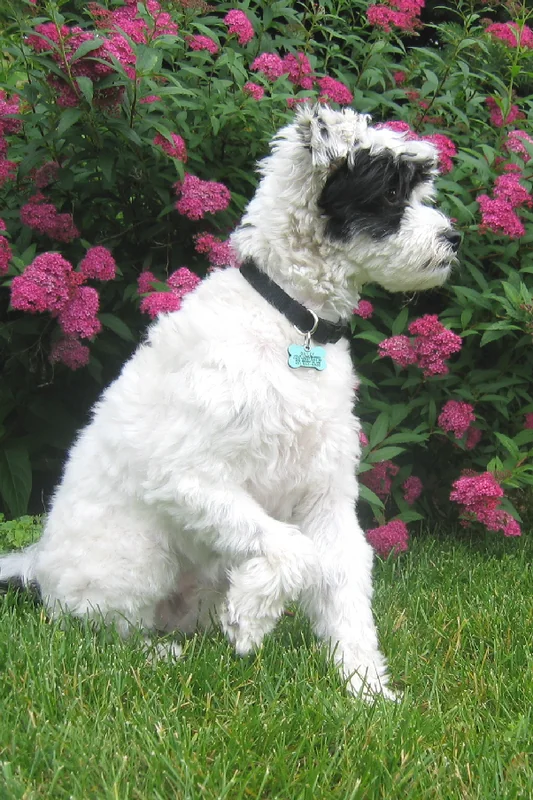 Featured photochinese-crested.jpg
The Chinese Crested is a small Toy breed famous for its dramatic appearance in two varieties: the Hairless, which has soft smooth skin over most of the body with tufts of hair on the head (the crest), feet (socks), and tail (plume); and the Powderpuff, which has a full, soft, silky double coat. Despite its name, the breed's precise origin is debated — Chinese, African, Mexican, and Central American connections have all been proposed. The AKC recognised the Chinese Crested in 1991. Both varieties are produced in the same litter; males and females stand 28–33 cm and weigh 4–6 kg.
Quick facts
- AKC group
- Toy
- Origin country
- China
- Origin period
- Ancient, documented from 19th century in China
- Coat type
- Short
- Coat colors
- Any Color, Any Pattern
- Average lifespan
- 13-18 years
- Recognition
- AKC 1991 · FCI 1987 · UKC 1995 · Group 9 — Companion and Toy Dogs (Section 4: Hairless Dogs)
Origin
The Chinese Crested's ancestry is the subject of active debate among breed historians. Hairless dogs are documented independently across multiple continents — in ancient China, in pre-Columbian Mexico and Central America, and in West Africa — raising the question of whether the modern breed descends from one or multiple hairless lineages. Chinese maritime records from the 13th century onward describe hairless dogs kept aboard trading vessels. American breeder Deborah Wood and others standardised the modern show breed from the 19th century onward; the American breed population is believed to draw primarily on dogs imported from China and possibly Mexico.
Recognition
The Chinese Crested Dog Club of America was founded in 1979 and worked toward AKC recognition. The AKC admitted the breed to the Toy Group in 1991. The FCI had recognised the breed in 1987 (FCI No. 288), placing it in Group 9, Section 4 (Hairless Dogs). Both the Hairless and Powderpuff varieties are recognised as a single breed by all major kennel clubs — they can be born in the same litter and are identical in conformation.
Standard
The AKC and FCI standards describe a small, graceful, alert dog with a smooth body and fine-boned structure. The Hairless variety has warm, soft skin over the body, with a silky crest of long hair on the skull, feathery plume on the tail, and 'socks' of hair on the lower legs and feet. The Powderpuff has a long, soft double coat over the entire body. Any colour or combination of colours is acceptable in both varieties. Males and females both stand 28–33 cm and weigh 4–6 kg.
Sources & further reading (3)
- kennel-club-registry — accessed 2026-05-07
- encyclopedia — accessed 2026-05-07
- fci-standard — accessed 2026-05-07
Frequently asked questions
What AKC group does the Chinese Crested belong to?
The AKC places the Chinese Crested in the Toy Group. The Toy Group includes small companion breeds kept primarily for companionship rather than work. The Chinese Crested's small size (4–6 kg), gentle nature, and decorative appearance place it naturally in this group. The FCI classifies it in Group 9, Section 4 (Hairless Dogs).
What are the two varieties of the Chinese Crested?
The Chinese Crested comes in two varieties that can be born in the same litter: the Hairless, which has soft bare skin over most of the body with tufts of hair on the head (crest), paws (socks), and tail (plume); and the Powderpuff, which has a full double coat of soft, silky hair covering the entire body. Both varieties are identical in size, conformation, and temperament. The hairless gene is dominant; a dog with one copy is Hairless, with two copies would not survive.
When was the Chinese Crested recognised by the AKC?
The AKC recognised the Chinese Crested in 1991, placing it in the Toy Group. The Chinese Crested Dog Club of America was founded in 1979 to promote the breed and work toward AKC recognition. The FCI had recognised the breed earlier, in 1987 (FCI No. 288), placing it in Group 9, Section 4 (Hairless Dogs).