Canis lupus familiaris
Briard
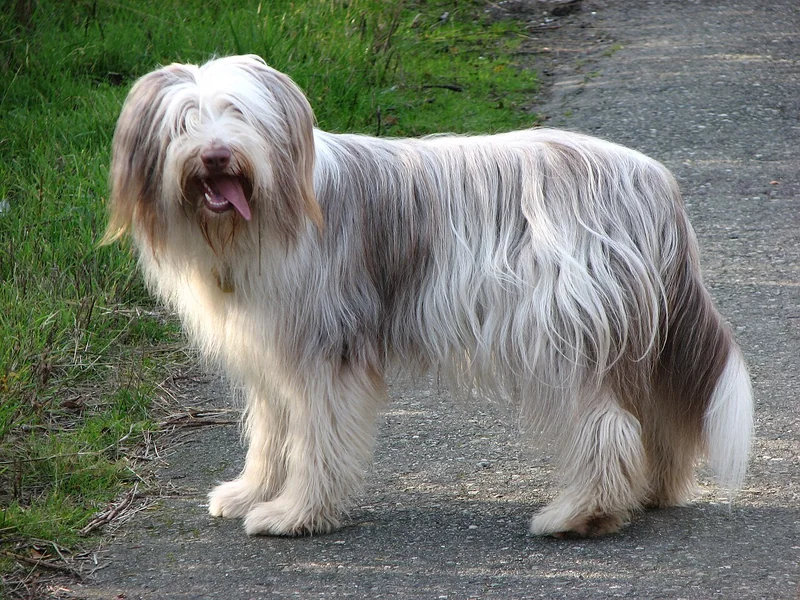
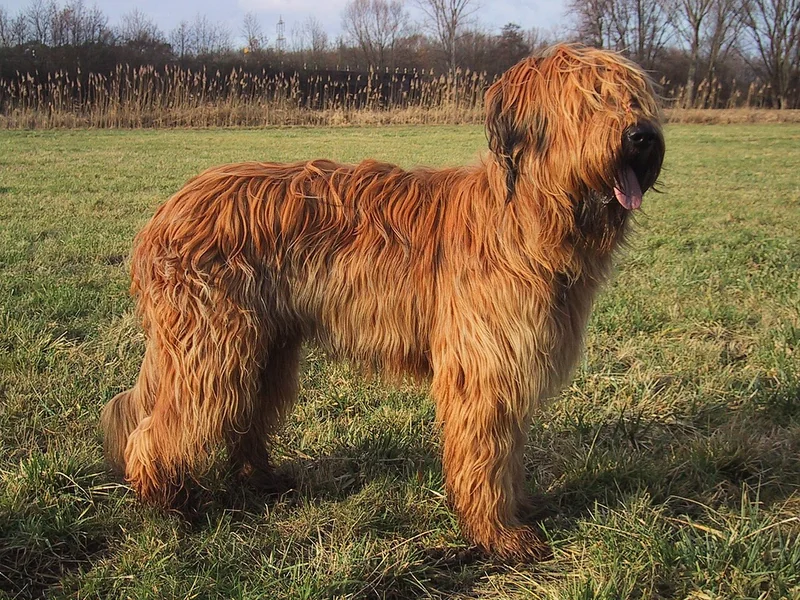 Featured photobriard.jpg
The Briard is a French Brie-region sheep-driving farm dog — Charlemagne and Jefferson's preferred herder. The Briard (Berger de Brie) takes its name from the Brie region of north-central France, where the breed has been used as a sheep-driving and farm-guarding dog since at least the medieval period.
Quick facts
- AKC group
- Herding
- Origin country
- France (Brie region)
- Origin period
- Pre-modern (formalized 1809)
- Coat type
- Long
- Coat colors
- All solid colours acceptable except white — black, fawn, grey, with the fawn shading from light to dark
- Average lifespan
- 10-12 years
- Recognition
- AKC 1928 · FCI 1955 · UKC 1948 · Group 1 — Sheepdogs and Cattledogs (Section 1: Sheepdogs)
Origin
The Briard (Berger de Brie) takes its name from the Brie region of north-central France (the dairy-farm country east of Paris that gives Brie cheese its name), where the breed has been used as a sheep-driving and farm-guarding dog since at least the medieval period; the Abbot of Loiret in the 12th century described the breed in terms recognizably matching the modern type, and 14th-century French manuscripts depict a long-coated black sheepdog of clearly Briard build. Charlemagne is reputed to have kept Briards; Emperor Napoleon I, the Marquis de Lafayette, and Thomas Jefferson (who imported the breed to Virginia in 1789, where Briards became the foundation of several American working herding lines) all kept Briards. The modern type was formalized at the first official French dog show in 1863, and the Briard Club of France was founded in 1909. The AKC admitted the breed in 1928.
Recognition
The American Kennel Club admitted the breed in 1928, the United Kennel Club followed in 1948, and the Federation Cynologique Internationale published the international standard (FCI No. 113) in 1955. The FCI assigns the breed to Group 1 — Sheepdogs and Cattledogs (Section 1: Sheepdogs).
Standard
The AKC and FCI standards describe a strong, substantial, well-balanced, well-muscled herding dog, with a noble, attentive, and intelligent expression. The defining feature is the long, profuse, dry, double coat — flat or slightly wavy, naturally falling in long locks of 15 cm or more, with a dense, fine undercoat. A second defining feature is the requirement for double dewclaws on the rear legs (a rare breed requirement, shared with the Beauceron and the Pyrenean Shepherd). All solid colours except white are acceptable; black, fawn, and grey are most common. Males stand 62-69 cm at the withers, females 56-65 cm.
Sources & further reading (3)
- kennel-club-registry — accessed 2026-04-30
- encyclopedia — accessed 2026-04-30
- fci-standard — accessed 2026-04-30
Frequently asked questions
What is the Briard's AKC group?
The American Kennel Club places the Briard in the Herding Group. The Herding Group, carved out of the older Working Group in 1983, gathers breeds developed to control the movement of livestock — Border Collies, Australian Shepherds, Welsh Corgis, and the German Shepherd among them. The breed's foundation working role was as a French Brie-region sheep-driving farm dog — Charlemagne and Jefferson's preferred herder.
When was the Briard officially recognized?
The American Kennel Club admitted the breed in 1928; the United Kennel Club followed in 1948; the Federation Cynologique Internationale published the international standard (FCI No. 113) in 1955.
What is the average lifespan of a Briard?
Kennel-club longevity surveys place the Briard's average lifespan in the 10-12 years range. The figure here represents the spread reported by the major parent-club studies and the Kennel Club (UK) purebred-dog health surveys.