Canis lupus familiaris
Bouvier des Flandres
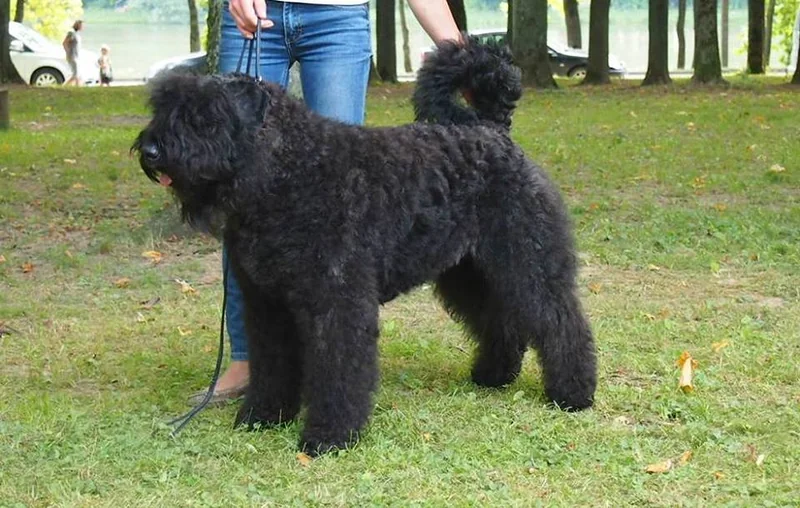 Featured photobouvier-des-flandres.jpg
The Bouvier des Flandres is a Flemish multi-purpose 'Cowherd of Flanders' — cattle-drover and milk-cart-puller, rebuilt after WWI. The Bouvier des Flandres (French for 'Cowherd of Flanders') was developed in the Flemish farms of the Belgian-French border from the 17th century onward as a multi-purpose farm dog used for cattle droving, cart-pulling, and farm-guarding.
Quick facts
- AKC group
- Herding
- Origin country
- Belgium / France (Flanders)
- Origin period
- 17th century (formalized 1923)
- Coat type
- Wirehaired
- Coat colors
- Fawn, Brindle, Salt and Pepper, Black, Grey
- Average lifespan
- 10-12 years
- Recognition
- AKC 1931 · FCI 1955 · UKC 1948 · Group 1 — Sheepdogs and Cattledogs (Section 2: Cattledogs)
Origin
The Bouvier des Flandres (French for 'Cowherd of Flanders') was developed in the Flemish farms of the Belgian-French border country (West Flanders, French Flanders, and Hainaut) from the 17th century onward as a multi-purpose farm dog. Foundation crosses involved Beauceron, Belgian Shepherd, Schnauzer, and Irish Wolfhound stock to produce a heavy-coated, hardy dog used for cattle droving, churning butter, pulling milk-carts to market, and farm-guarding. The breed was nearly wiped out by the trench warfare of the First World War — the Western Front of 1914-1918 ran directly across the Bouvier's home territory and most surviving dogs were used as messenger and casualty dogs by Belgian and French forces, with heavy losses. The modern population was rebuilt in the 1920s by Belgian breeders led by Justin Chastel, and the modern standard was formalized at the 1923 international canine convention in Brussels.
Recognition
The American Kennel Club admitted the breed in 1931, the United Kennel Club followed in 1948, and the Federation Cynologique Internationale published the international standard (FCI No. 191) in 1955. The FCI assigns the breed to Group 1 — Sheepdogs and Cattledogs (Section 2: Cattledogs).
Standard
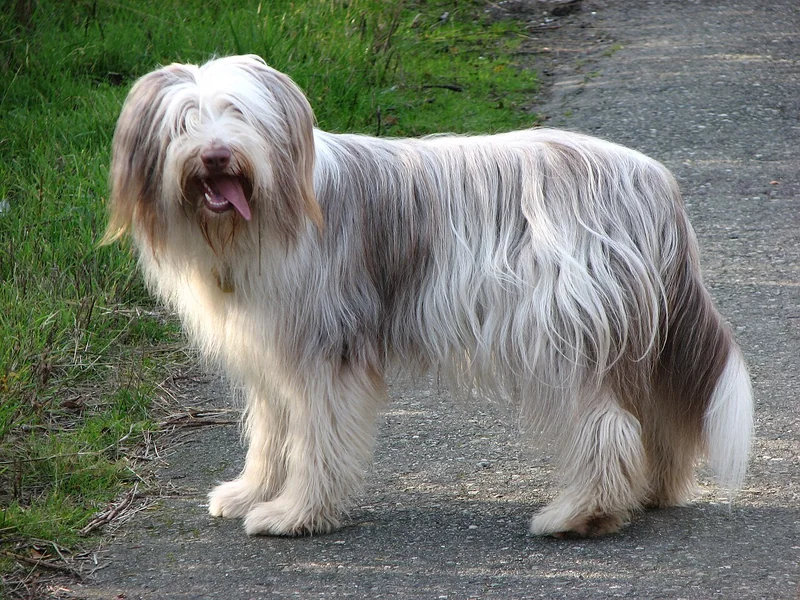
The AKC and FCI standards describe a powerfully-built, compact, short-coupled, rough-coated dog of rugged appearance, with an alert, bold attitude. The defining feature is the harsh, dense, dry, weather-resistant double coat (with the distinctive beard, moustache, and bushy eyebrows characteristic of the rough-coated cattle-dog type) and the powerful, slightly-rectangular head. Recognized colours are fawn, brindle, salt-and-pepper, solid black, and grey. Males stand 62-71 cm at the withers, females 59-66 cm.
Sources & further reading (3)
- kennel-club-registry — accessed 2026-04-30
- encyclopedia — accessed 2026-04-30
- fci-standard — accessed 2026-04-30
Frequently asked questions
What is the Bouvier des Flandres's AKC group?
The American Kennel Club places the Bouvier des Flandres in the Herding Group. The Herding Group, carved out of the older Working Group in 1983, gathers breeds developed to control the movement of livestock — Border Collies, Australian Shepherds, Welsh Corgis, and the German Shepherd among them. The breed's foundation working role was as a Flemish multi-purpose 'Cowherd of Flanders' — cattle-drover and milk-cart-puller, rebuilt after WWI.
When was the Bouvier des Flandres officially recognized?
The American Kennel Club admitted the breed in 1931; the United Kennel Club followed in 1948; the Federation Cynologique Internationale published the international standard (FCI No. 191) in 1955.
What is the average lifespan of a Bouvier des Flandres?
Kennel-club longevity surveys place the Bouvier des Flandres's average lifespan in the 10-12 years range. The figure here represents the spread reported by the major parent-club studies and the Kennel Club (UK) purebred-dog health surveys.