Trinidad Sour
Angostura bitters as the primary spirit, rye, orgeat, and lemon — a 2009 cocktail that inverts convention.
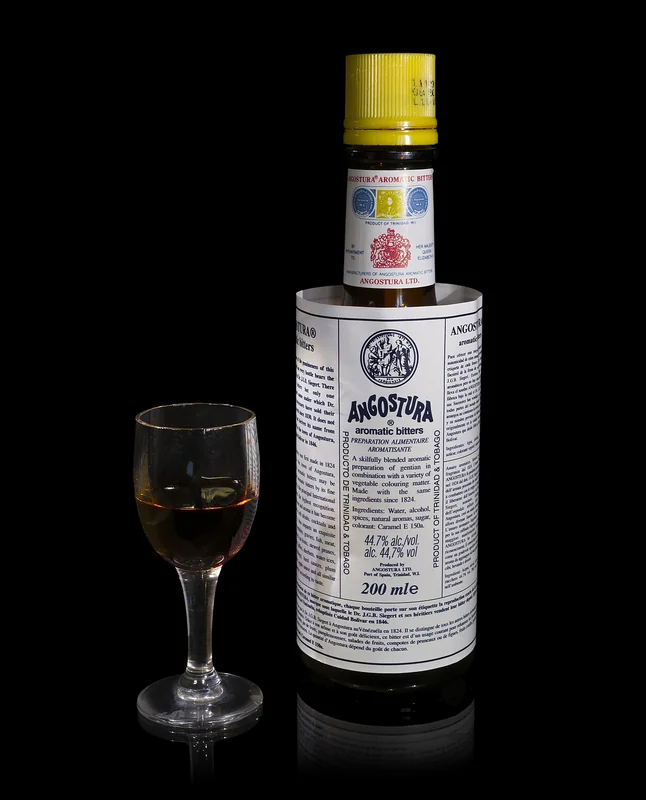
The Trinidad Sour is a modern cocktail created by Giuseppe González at Painkiller NYC in 2009, notable for using Angostura bitters as its primary ingredient rather than as a dash modifier. The formula: 1.5 oz Angostura bitters, 0.75 oz rye whiskey, 1 oz orgeat syrup, 0.75 oz fresh lemon juice. In standard cocktail practice, Angostura bitters are used in quantities of 1–4 dashes (3–12 ml); the Trinidad Sour uses 45 ml, inverting the conventional ingredient hierarchy. Angostura bitters are 44.7% ABV, making them stronger than many spirits, and their complex spice-aromatic profile (gentian, clove, cinnamon, orange, cardamom) is the dominant flavour.
Quick facts
- Type
- Modern Recipe
- Base spirits
- angostura bitters, rye whiskey
- Era
- 2009–present
- Origin
- New York City, United States
- Glass
- coupe
- IBA listed
- No
Inverting the Bitters Convention
The Trinidad Sour's significance lies in its structural inversion: Angostura bitters are the dominant ingredient (1.5 oz, 44.7% ABV) and rye whiskey is the smaller supporting component (0.75 oz). The drink demonstrates that bitters — typically used in tiny quantities to add aromatic complexity — can serve as the primary flavour driver when used in large volumes. González was experimenting with bitters as a spirit equivalent when the recipe emerged; the orgeat syrup's almond sweetness was necessary to balance the intense spice and bitterness of the large Angostura dose. The resulting cocktail has an unusually deep reddish-brown colour (from Angostura's caramel colour) and a complex flavour profile driven by gentian, spice, and almond.
Angostura Bitters: Ingredients and History
Angostura aromatic bitters were developed by German physician Dr. Johann Gottlieb Benjamin Siegert in the town of Angostura (now Ciudad Bolívar), Venezuela in 1824, initially as a medicinal bitters for troops suffering from stomach ailments. Siegert's sons moved production to Trinidad in 1875, where the House of Angostura continues to produce it. The exact recipe is a trade secret shared among a small number of employees, but confirmed ingredients include gentian root (the primary bittering agent), plus cloves, cinnamon, nutmeg, cardamom, orange peel, and other spices in an alcohol and water base at 44.7% ABV. The distinctive oversized yellow label — placed by mistake in the original bottling — became the brand's identifying feature.
Sources & further reading (2)
- encyclopedia — accessed 2026-05-08
- encyclopedia — accessed 2026-05-08
Frequently asked questions
Is the Trinidad Sour safe to prepare given that bitters are sometimes marketed as 'non-potable'?
Angostura bitters are produced in Trinidad as a food product and beverage ingredient and are legally classified as food flavouring in many countries, which exempts them from some alcohol labelling requirements. At 44.7% ABV, Angostura bitters are stronger than most cocktail spirits. 'Non-potable' is a marketing/regulatory classification that does not imply the product is unsafe to consume in cocktail quantities — standard cocktail usage (1.5 oz) is documented in the Trinidad Sour. The product is approved as a food ingredient in the United States, EU, and most markets.
What does Angostura bitters taste like at cocktail-quantity doses?
In large doses, Angostura bitters taste intensely bitter from gentian root, with prominent spice notes (clove, cinnamon, cardamom, orange peel). The bitterness is intense but not harsh; gentian provides a 'clean' bitterness that resolves quickly. The spice complexity — sometimes described as resembling Christmas spices — is much more prominent at 45 ml than in standard 3–5 ml cocktail usage. The orgeat in the Trinidad Sour softens the bitterness with almond sweetness.