Tiki Movement
American Polynesian-themed bar culture from 1934 — rum cocktails, tiki décor, and post-Prohibition escapism.
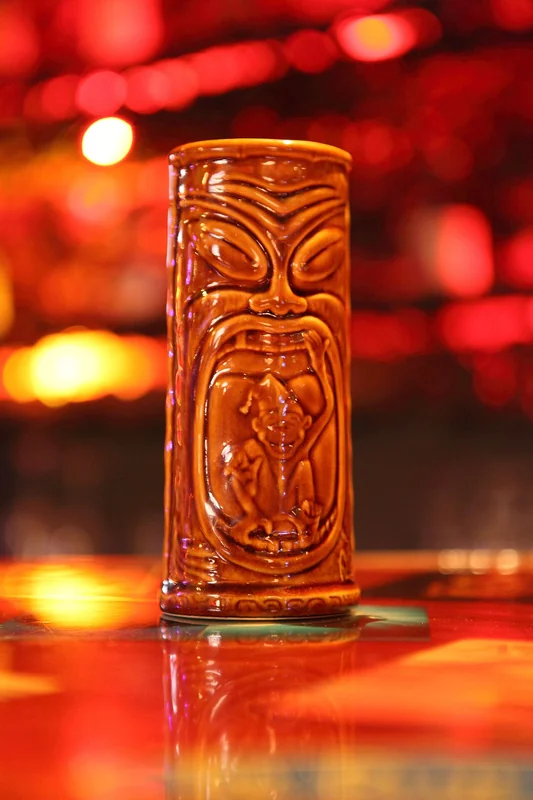
The Tiki movement is an American bar and restaurant culture developed by Ernest Raymond Beaumont Gantt ('Don the Beachcomber') from 1934 and Victor 'Trader Vic' Bergeron from 1937, featuring rum-based exotic cocktails with tropical fruit, orgeat, and falernum in Polynesian-themed environments. Key Tiki cocktails — the Mai Tai, Zombie, Jet Pilot, and Navy Grog — are characterised by complex multi-rum structures and unusual modifiers. The movement drew from American romanticisation of Pacific Island cultures after World War II. It waned in the 1970s–80s but experienced a documented revival from the late 1990s through the work of cocktail historian Jeff 'Beachbum' Berry.
Quick facts
- Type
- Cocktail Culture
- Era
- 1934–present (revival from c. 2000)
- Origin
- Los Angeles, California, United States
Donn Beach and Don the Beachcomber
Ernest Raymond Beaumont Gantt (1907–1989) was born in New Orleans and travelled extensively in the Caribbean and South Pacific as a young man before opening Don's Beachcomber café in Hollywood, California in 1934. The bar's Polynesian décor (carved tikis, bamboo, fishing nets, tapa cloth) and exotic rum drinks were novel in Depression-era America. During World War II, Gantt's bars multiplied across the US while he served in the Army Air Forces; his wife Cora ran the business. By the early 1950s, the Don the Beachcomber chain had become widely known. Gantt's cocktail recipes were famously secretive — he used coded ingredient lists and numbered house-made syrups to prevent competitors from copying his formulas. Many of his original recipes were decoded in the 2000s by cocktail researcher Jeff 'Beachbum' Berry using bar notebooks and accounts from former employees.
The Tiki Revival and Historical Reassessment
The original Tiki movement has been reassessed in contemporary cocktail culture for its appropriation of Polynesian, Melanesian, and Pan-Pacific cultural imagery — carved gods, ceremonial masks, symbolic carvings — removed from their cultural contexts and used as commercial décor. Contemporary Tiki revival practitioners (Jeff 'Beachbum' Berry, Smuggler's Cove, Three Dots and a Dash) have addressed this through acknowledging the appropriation history, emphasising the cocktail recipes themselves rather than stereotyped cultural imagery, and in some cases working with Pacific Islander cultural organisations. The cocktails themselves — which represent a distinct chapter in American cocktail history, particularly in multi-rum blending and tropical ingredient complexity — are documented and preserved separately from the problematic cultural aesthetics of the original movement.
Sources & further reading (2)
- encyclopedia — accessed 2026-05-08
- encyclopedia — accessed 2026-05-08
Frequently asked questions
What is falernum and why is it important to Tiki cocktails?
Falernum is a sweet, low-alcohol syrup (or liqueur) from Barbados, flavoured with lime, ginger, almond, and cloves (and sometimes vanilla, cardamom, or other spices). It serves a similar sweet-complex-aromatic role to orgeat but with a spicier, more Caribbean character. John D. Taylor's Velvet Falernum (Barbados, 11% ABV) is the most commercially available version. In Tiki cocktails, falernum bridges the tropical rum base with the spice-citrus notes of other ingredients. Donn Beach and Trader Vic both used falernum in multiple recipes.
What is the Zombie and why is it associated with Tiki?
The Zombie is a high-proof Tiki cocktail created by Donn Beach for the 1939 New York World's Fair, combining multiple rums (light, dark, and Overproof 151), apricot brandy, lime juice, grapefruit juice, cinnamon syrup, and Donn's secret 'Don's Mix' (a grapefruit syrup blend). Its high alcohol content (the original contained approximately three types of rum plus brandy) led to the famous house rule 'limit two per customer' that Beach implemented and which became part of the cocktail's legendary status. Beach's original formula was decoded by Jeff Berry from bar notebooks.