Speakeasy Era
American Prohibition (1920–1933) and the underground bar culture that reshaped the cocktail world.
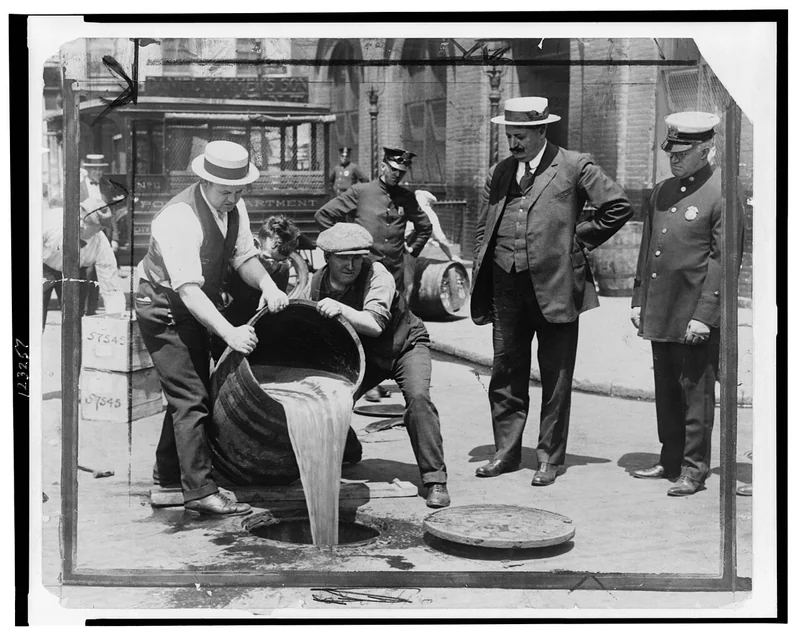
The Speakeasy Era refers to the period of American Prohibition (1920–1933), when the 18th Amendment to the US Constitution (ratified 1919, effective January 17, 1920) prohibited the production, transport, and sale of alcoholic beverages. Speakeasies were clandestine establishments serving liquor illegally; an estimated 30,000–100,000 operated in New York City alone at Prohibition's peak. The era paradoxically accelerated cocktail innovation by encouraging mixologists to mask poor-quality spirits with fruit juice and sweeteners. Many skilled American bartenders emigrated to Europe, creating influential bars in Paris and London that shaped the European cocktail tradition. Prohibition was repealed December 5, 1933 by the 21st Amendment.
Quick facts
- Type
- Cocktail Culture
- Era
- 1920–1933 (Prohibition era)
- Origin
- United States
Prohibition Legislation and the Volstead Act
The 18th Amendment to the US Constitution (ratified January 16, 1919) prohibited the manufacture, sale, or transportation of intoxicating liquors. The Volstead Act (formally the National Prohibition Act, passed October 28, 1919) provided for enforcement, defining 'intoxicating liquors' as beverages containing more than 0.5% alcohol. Limited exceptions included sacramental wine, industrial alcohol, medicinal spirits (physicians could prescribe up to one pint of whiskey per patient per 10 days), and certain other uses. The 18th Amendment was ratified by 46 of 48 states. It was repealed by the 21st Amendment, ratified December 5, 1933 — the only time a constitutional amendment has been repealed by another amendment. The 13-year Prohibition period produced lasting structural changes to the American brewing, distilling, and hospitality industries.
Speakeasies and the Bartender Diaspora
Speakeasies (the word derives from the practice of speaking softly about the location) operated at all economic levels, from basement operations serving home-distilled spirits to glamorous establishments with jazz music, professional service, and connections to organised crime distribution networks. Documented landmarks include the 21 Club in New York (opened 1922 as a speakeasy, now a restaurant), the Green Mill in Chicago (associated with Al Capone), and Chumley's in Greenwich Village. Many professional American bartenders who had built careers before Prohibition emigrated to Europe: Harry MacElhone opened Harry's New York Bar in Paris (1923); Frank Meier worked at the Ritz Paris; Ada 'Coley' Coleman at the Savoy in London created the Hanky-Panky. These expatriate bartenders documented their knowledge in books (Harry MacElhone's Harry's ABC of Mixing Cocktails, 1922; Harry Craddock's The Savoy Cocktail Book, 1930) that preserved American cocktail traditions.
Sources & further reading (2)
- encyclopedia — accessed 2026-05-08
- encyclopedia — accessed 2026-05-08
Frequently asked questions
Did Prohibition actually stop drinking in the United States?
Prohibition significantly reduced overall alcohol consumption in the United States but did not eliminate it. Studies of death records, hospital admissions for liver disease, and government statistics documented sharp reductions in consumption in the early 1920s. However, organized crime supply networks emerged rapidly (bootlegging, smuggling from Canada and the Caribbean), and consumption recovered substantially by the late 1920s. The quality of available spirits declined dramatically: 'bathtub gin' (home-made grain alcohol flavoured with juniper and other botanicals) and impure distillates caused serious poisoning. Documented deaths from methanol-contaminated spirits reached tens of thousands during Prohibition.
Why is the Speakeasy era associated with sweet, fruity cocktails?
The low quality of spirits available during Prohibition — particularly home-distilled gin and bootleg whiskey, which often contained high levels of fusel oils, harsh congeners, or impurities — required flavour masking. Fruit juices, sugar syrups, and sweet liqueurs effectively disguised unpleasant spirits. This practical requirement drove the proliferation of sweet, citrus-heavy cocktail recipes during and after Prohibition. Cocktail historians note that the dominant style of the 1920s–40s American cocktail was noticeably sweeter and more citrus-forward than the spirit-forward, drier pre-Prohibition style.