Penicillin
Blended Scotch, lemon, honey-ginger syrup, and a peated Scotch float — created by Sam Ross in 2005.
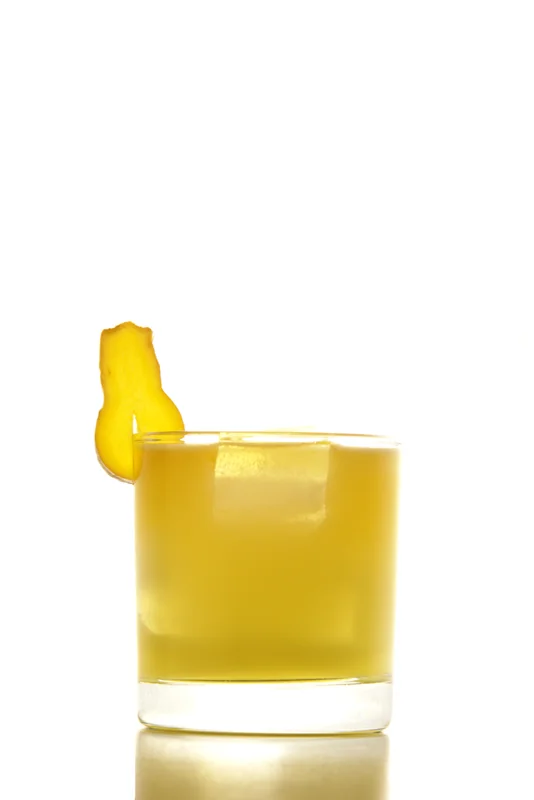
The Penicillin is a modern cocktail created by Australian bartender Sam Ross at Milk & Honey bar in New York City in 2005. It combines blended Scotch whisky with fresh lemon juice, honey-ginger syrup, and a float of peated Islay Scotch whisky. The drink is structured as a whisky sour modified with the honey-ginger sweetener (a technique that became influential) and elevated with a peat-smoke aromatic from the Islay Scotch float. The Penicillin is among the most-studied modern cocktails in terms of its influence on bartending technique — the honey-ginger syrup pairing with Scotch became a template for numerous derivatives.
Quick facts
- Type
- Modern Recipe
- Base spirits
- blended scotch, islay scotch
- Era
- 2005–present
- Origin
- New York City, United States
- Glass
- old-fashioned
- IBA listed
- No
Sam Ross at Milk & Honey, 2005
Sam Ross joined Milk & Honey — the influential New York bar opened by Sasha Petraske in 2000, which is credited as a central institution of the cocktail revival — in 2004. In 2005, Ross developed the Penicillin as a Scotch-based sour. The honey-ginger syrup (made by simmering honey with ginger) was a novel sweetener choice for Scotch drinks, which typically relied on simple syrup. The Islay Scotch float (Laphroaig is the standard, providing intense peat-smoke aromatics) layered on top of the sour base added a dramatic aromatic element. Ross documented the recipe in cocktail publications and the drink spread rapidly through the US craft cocktail community.
The Honey-Ginger Syrup Technique
The honey-ginger syrup used in the Penicillin (typically 3:1 honey to fresh ginger juice, or infused honey syrup) became one of the most adopted technique innovations of the 2000s cocktail revival. The combination of honey's floral sweetness with ginger's spicy warmth provided a complex sweetener alternative to simple syrup that interacted naturally with Scotch whisky's malt and grain notes. The syrup is made by combining warm honey with fresh ginger juice (extracted from grated ginger) and diluting with water to a bartender-workable viscosity. The technique was adapted for numerous other cocktails across different spirit categories.
Sources & further reading (1)
- encyclopedia — accessed 2026-05-08
Frequently asked questions
Why is blended Scotch used rather than single malt?
Blended Scotch (grain whisky blended with malt whisky from multiple distilleries) provides a lighter, more versatile base with grain-sweet notes that complement the honey-ginger syrup and lemon without the peated intensity of an Islay single malt. The Islay Scotch float serves as a concentrated aromatic layer, not the base. Using peated single malt as the base would produce an overwhelmingly smoky drink; the separation of roles — light blended base plus intense peated float — is the structural key.
Which Islay Scotch is conventional for the Penicillin float?
Laphroaig 10-year (heavily peated, 40% ABV, with distinctive medicinal, iodine, seaweed notes) is the most commonly specified and was Ross's original choice. Other heavily peated Islay whiskies (Ardbeg 10, Caol Ila 12) are used as variants. The specific 'medicinal' character of Laphroaig, derived from phenolic compounds from peat and the distillery's use of brackish water and direct-fire stills, is part of the cocktail's intended flavour profile — the 'penicillin' name references the medicinal/pharmaceutical note of heavily peated Islay Scotch.