Old Fashioned
Whiskey, sugar, Angostura bitters, and citrus peel — the earliest documented American cocktail formula.
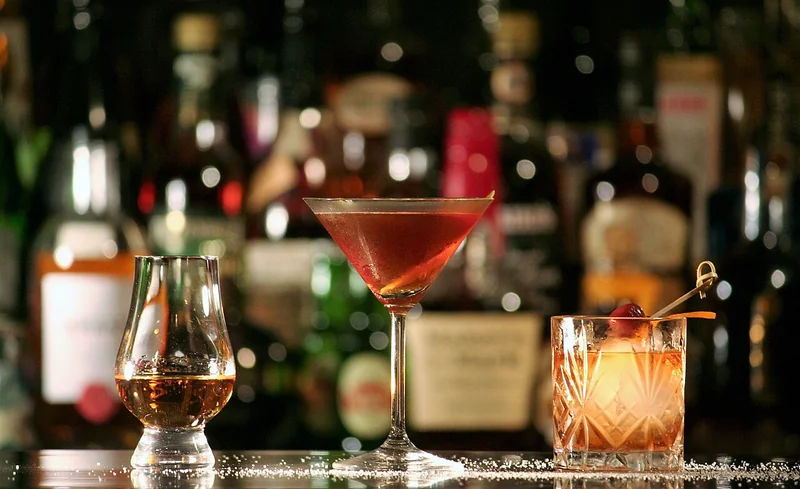
The Old Fashioned is one of the oldest documented American cocktail styles, recorded under that name by 1881 though the underlying formula of spirit, sugar, water, and bitters appears in print as early as 1806. The standard recipe combines rye or bourbon whiskey with a small amount of sugar (dissolved with a few dashes of Angostura bitters and water), stirred over ice and served in a short, wide tumbler — the 'old-fashioned glass' named after the drink. A twist of orange or lemon peel is expressed over the surface for aromatic oils. The simplicity of the formula has made it a foundational benchmark for understanding spirit character.
Quick facts
- Type
- Classic Recipe
- Base spirits
- bourbon, rye whiskey
- Era
- 1806–present
- Origin
- United States
- Glass
- old-fashioned
- IBA listed
- Yes — Official IBA cocktail
Documented History and the 1806 Definition
The word 'cocktail' received an early printed definition in the May 13, 1806 issue of The Balance and Columbian Repository (Hudson, New York): 'a stimulating liquor composed of spirits of any kind, sugar, water, and bitters.' The Old Fashioned embodies exactly this formula. By the 1880s, as bartenders began elaborating standard recipes with liqueurs, citrus, and sodas, customers requesting the original simple preparation began asking for a cocktail 'the old-fashioned way,' giving the drink its name. Jerry Thomas's 1887 revised Bartender's Guide includes the formula. The name 'Old Fashioned Whiskey Cocktail' appears in print by 1895.
Rye vs. Bourbon and Regional Variations
Pre-Prohibition American bartenders typically used rye whiskey, which was more widely produced in the northeastern United States. After Prohibition (1920–1933) disrupted rye production, bourbon from Kentucky became the dominant base, and the bourbon Old Fashioned is now standard in most American bars. Wisconsin maintains a distinctive regional tradition using brandy (often Korbel) as the base spirit, with Angostura bitters, muddled fruit (cherry, orange), and soda water — a style that became established during Prohibition when quality whiskey was scarce. In 1988, Esquire listed the Old Fashioned as the most popular cocktail in America.
The Standard Formula
The IBA (International Bartenders Association) official recipe specifies 4.5 cl (45 ml) rye or bourbon whiskey, 1 sugar cube (or 1 tsp sugar syrup), 2 dashes Angostura bitters, and a few dashes of water. The sugar cube is placed in the glass, Angostura bitters are added, and the cube is muddled with water to dissolve. Whiskey is added, the mixture is stirred with a large ice cube or cubes, and an orange or lemon peel twist is expressed over the surface. The key technique distinction is that the whiskey is stirred — not shaken — to preserve clarity and integrate flavour without diluting with air.
Sources & further reading (2)
- encyclopedia — accessed 2026-05-08
- encyclopedia — accessed 2026-05-08
Frequently asked questions
What is the difference between an Old Fashioned made with rye vs. bourbon?
Rye whiskey (minimum 51% rye grain) contributes a spicier, drier character with more pronounced pepper and grain notes that contrast with the bitters and sugar. Bourbon (minimum 51% corn, aged in new charred oak) contributes sweeter, vanilla and caramel notes that integrate smoothly with the sugar. Pre-Prohibition recipes historically specified rye; modern American convention frequently defaults to bourbon, particularly in the South.
Why does an Old Fashioned glass have a specific shape?
The short, wide tumbler (also called a rocks glass or lowball glass) became associated with the drink in the 19th century because it suited the stirring preparation and single large ice cube. The wide mouth allows aromatic oils from the citrus peel to disperse across the surface. The glass is typically 6–10 oz capacity. The term 'old-fashioned glass' as a noun predates general adoption of 'rocks glass' and is documented in bar equipment catalogs from the late 19th century.