Negroni
Gin, Campari, and sweet vermouth in equal parts — an Italian aperitivo cocktail documented from 1919 Florence.
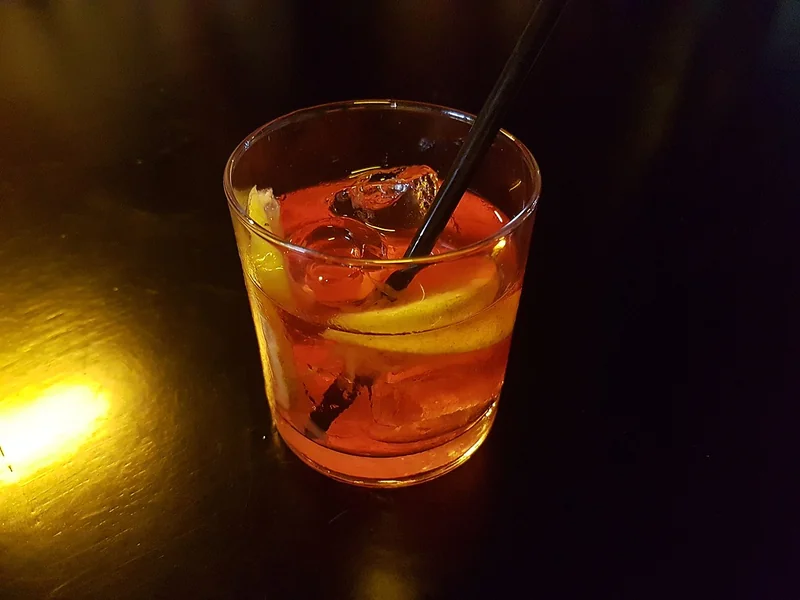
The Negroni is a three-ingredient cocktail combining equal parts gin, Campari, and sweet vermouth, stirred over ice and served with an orange peel garnish. The drink is documented from 1919 Florence, where Count Camillo Negroni is said to have requested that the bartender Fosco Scarselli strengthen his Americano by replacing the soda water with gin at Caffè Casoni. The Negroni is a founding member of the 'Boulevardier family' of bitter aperitivo cocktails and is notable for its balanced bitterness-sweetness-botanical structure. Its equal-parts formula has made it a template for numerous modern variations.
Quick facts
- Type
- Classic Recipe
- Base spirits
- gin, campari, sweet vermouth
- Era
- 1919–present
- Origin
- Florence, Italy
- Glass
- old-fashioned
- IBA listed
- Yes — Official IBA cocktail
The Negroni Origin Account
The Negroni's origin is documented in a 1947 letter from Count Camillo Negroni's family and in accounts from Orson Welles, who encountered the drink in Rome in 1947 and described it in correspondence. The story: Count Negroni, having become accustomed to stronger drinks in London and the American West, asked Caffè Casoni bartender Fosco Scarselli to strengthen his usual Americano (Campari, sweet vermouth, soda) by replacing the soda with gin. The drink spread through the expatriate community in Florence and was documented in Italian cocktail writing from the 1920s. Cocktail historian Gary Regan and others consider this origin account plausible and well-sourced compared to many cocktail origin stories.
Structure: Bitter, Sweet, Botanical
The Negroni's 1:1:1 (equal parts) ratio creates a specific flavour architecture: Campari provides bitter gentian/orange flavour; sweet vermouth provides sweetness, dried fruit, and herbal complexity; gin provides botanical backbone (juniper, citrus, pepper). The equal proportions mean no single ingredient dominates — a balance that requires quality in all three components. Campari's distinctive bitterness is derived from its proprietary blend of herbs, spices, fruits, and alcohol, of which the recipe is not publicly disclosed (gentian and chinotto are suspected key contributors). The orange peel garnish expressed over the surface adds a fresh citrus aromatic layer to the bitter base.
Sources & further reading (2)
- encyclopedia — accessed 2026-05-08
- encyclopedia — accessed 2026-05-08
Frequently asked questions
What is a Boulevardier and how does it relate to the Negroni?
The Boulevardier substitutes bourbon (or rye) whiskey for the gin in a Negroni, with the same Campari and sweet vermouth. The formula appears in Harry McElhone's 1927 *Barflies and Cocktails*. The substitution of a barrel-aged spirit shifts the bitter citrus notes of gin to the vanilla-caramel and rye-spice notes of whiskey, producing a warmer, richer character. The Negroni, Boulevardier, and Old Pal (rye, Campari, dry vermouth) are considered related templates.
What does 'Negroni Sbagliato' mean?
Sbagliato means 'mistaken' in Italian. The Negroni Sbagliato replaces gin with Prosecco (or another sparkling wine), producing a lighter, lower-alcohol aperitivo cocktail. The origin is attributed to bartender Mirko Stocchetto at Bar Basso in Milan, who allegedly added Prosecco to a Negroni preparation by mistake in the late 1960s. The drink became a fixture of the Milanese aperitivo culture.