Muddling
Pressing herbs, citrus, or sugar to release juices and aromatic oils — technique for Mojito and Caipirinha.
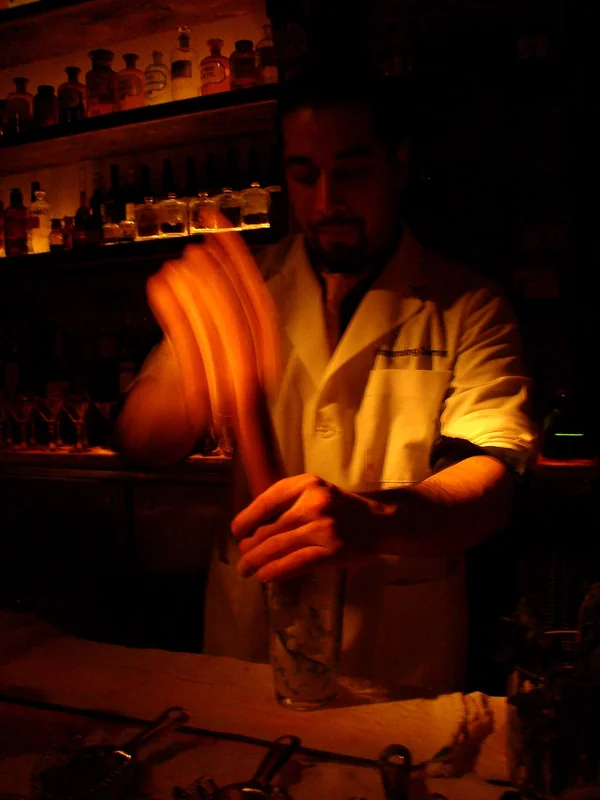
Muddling is a technique in which a muddler (a pestle-like bar tool) is used to press and lightly crush ingredients in the bottom of a mixing vessel to release their juices, essential oils, and flavour compounds. The technique is used for: mint in the Mojito (pressing to release menthol oils without tearing), lime wedges in the Caipirinha (releasing juice and peel oils), sugar cubes with bitters in the Old Fashioned (dissolving the sugar), and whole fruit or herbs in other cocktails. The key principle is that the muddling pressure should be calibrated to the ingredient — herbs require light pressing to release aromatic oils without extracting bitter chlorophyll; citrus peels require firmer pressing to release oils from the rind.
Quick facts
- Type
- Technique
Herb Muddling: Light Pressure for Aromatics
When muddling fresh herbs (mint, basil, rosemary), the objective is to press the leaf surface to rupture the oil glands concentrated near the epidermis of the leaf. These glands contain the aromatic essential oils: mint leaves have 0.5–3% essential oil content (primarily menthol, menthone, limonene). Light pressing releases these surface oils without damaging the leaf's interior cells, which contain chlorophyll and plant tannins that produce a bitter, vegetal flavour. The technique is typically a gentle press-and-rotate motion, 3–5 times, not aggressive pounding. Harder muddling (treating herbs like citrus) produces a bitter, green-tasting cocktail. A wooden muddler with a flat end is preferred for herbs; a serrated or toothed end is not used because it tears leaves too aggressively.
Citrus Muddling: Juice, Oil, and Pith
Muddling lime wedges (Caipirinha) or lemon wedges releases juice from the flesh and aromatic oils from the peel surface (d-limonene, linalool, citral), but over-muddling presses into the white pith (albedo), which contains bitter limonin and naringenin compounds that add bitterness to the cocktail. The standard technique is firm but controlled pressing — enough to extract juice and surface oils but not to grind the wedge into the pith. Using lime wedges cut without removing the pith (standard lime wedges cut from the whole fruit) requires this calibrated technique. The result is a Caipirinha that tastes brighter and more aromatic than one made with squeezed lime juice alone, because the pressed peel oils are present in the glass.
Sources & further reading (1)
- encyclopedia — accessed 2026-05-08
Frequently asked questions
Why does over-muddled mint make a cocktail bitter?
Mint leaves contain two types of compounds in different cell structures. Aromatic menthol and menthone are concentrated in oil glands near the leaf surface — light pressure releases these. Chlorophyll (green pigment), tannins, and other polyphenols are distributed throughout the leaf cell structure — aggressive grinding ruptures these cells and releases the bitter, vegetal compounds. The transition from refreshing mint to bitter-green typically occurs when the leaf is pressed more than 5–8 times or ground against the glass bottom.
Can muddling be done in the shaker tin rather than the serving glass?
Yes. Muddling in a shaker tin (then adding ice and shaking) is more efficient for sours and cocktails that require straining — it prevents having to transfer muddled material to the shaker. The Mojito is traditionally muddled in the serving glass because it is built in the glass with crushed ice added after. The Caipirinha is always muddled in the serving glass. For drinks like the Whiskey Smash (bourbon, lemon wedges, mint), muddling in the shaker tin before adding ice and shaking is standard.