Bar Muddler
A pestle-like tool for pressing herbs, citrus, and sugar — essential for Mojito and Caipirinha.
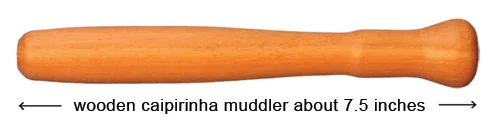
A bar muddler is a pestle-shaped tool used in cocktail preparation to press (muddle) ingredients in the bottom of a glass or shaker tin to release juices, aromatic oils, and flavour compounds. Muddlers are typically 20–30 cm long, with a weighted head and a handle; they are made from wood, stainless steel, or food-grade plastic. The functional end may be flat (for pressing mint and soft herbs), serrated (for harder fruit), or rounded (for general muddling). Standard materials are food-grade and non-reactive; untreated wood muddlers can absorb flavours and are less hygienically maintained in commercial use. The muddler performs the same physical function as a kitchen pestle but is designed for use in glassware.
Quick facts
- Type
- Bar Tool
Muddler Materials and Design
The three main muddler materials have distinct functional profiles. Wood muddlers (traditionally turned hardwood — birch, beech, maple) have a warm tactile feel and are traditional in American bar culture; untreated wood can absorb flavours from repeated use (particularly from citrus oils and bitters). Treated/varnished wood muddlers reduce absorption but may leach varnish into drinks with acidic ingredients. Stainless steel muddlers are the most hygienic (non-porous, easily sanitised) and are standard in commercial bar programmes; the harder surface can scrape glassware if used aggressively. Food-grade plastic muddlers are hygienic and low-cost. The head shape matters: flat-ended muddlers are best for herbs (press rather than grind); rounded or ridged heads are better for citrus wedges and sugar cubes. Many professional bartenders prefer flat-ended stainless steel for its hygiene and versatility.
Jerry Thomas's Documented Use
Jerry Thomas's 1862 How to Mix Drinks describes muddling in the context of several recipes — including various 'smashes' (whiskey, mint, sugar muddled with ice) and slings — making the technique and implicitly the muddler one of the earliest documented bartending tools in American cocktail literature. The word 'muddle' in bartending derives from the general English usage meaning to mix or stir confusedly, applied specifically to the pressing-and-stirring action in a glass. Prior to dedicated muddler production, bartenders used the handle end of a bar spoon or wooden spoon as a makeshift muddler. The dedicated muddler as a distinct bar tool appears in equipment catalogs by the late 19th century.
Sources & further reading (1)
- encyclopedia — accessed 2026-05-08
Frequently asked questions
Should a muddler have a flat or serrated head?
A flat head is preferred for herbs (mint, basil, rosemary) because it presses without tearing. A serrated or toothed head is used for harder ingredients (sugar cubes, citrus peel sections) where more surface disruption is needed to break down cell walls quickly. A rounded head falls between the two. Most professional bartenders use flat-headed stainless steel muddlers as the most versatile and hygienically maintainable option.
How long should a muddler be?
A muddler should be long enough to reach the bottom of the tallest glass used in service with the bartender's hand safely above the glass rim — typically 20–30 cm (8–12 inches). In a Boston shaker tin (typically 28 oz, approximately 20 cm tall), a 20 cm muddler reaches the bottom with the handle protruding above the rim for grip. A muddler that is too short requires the bartender to insert the hand into the glass, creating a safety and hygiene risk.