Mezcal
A Mexican spirit from pit-roasted agave, covering dozens of wild and cultivated species — DO since 1994.
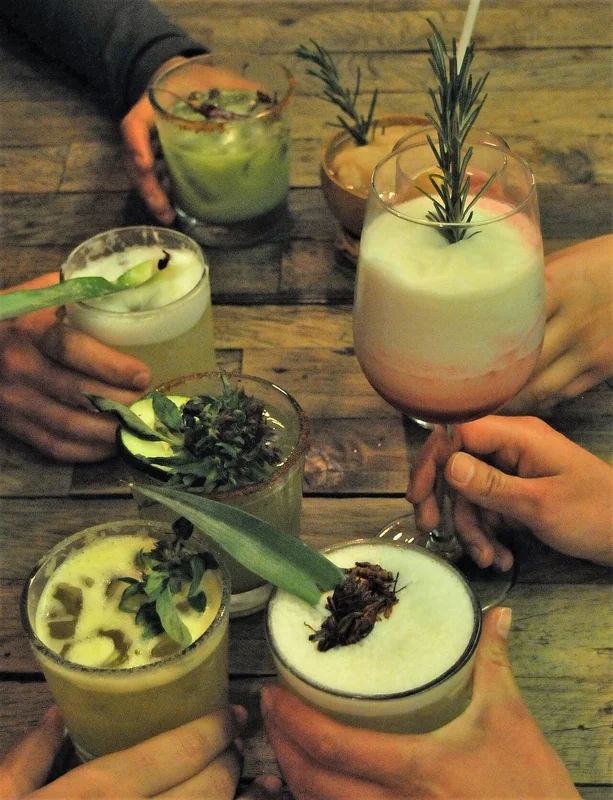
Mezcal is a Mexican distilled spirit produced from the cooked and fermented hearts of agave plants, encompassing dozens of agave species. The Denominación de Origen Mezcal (DOM) established in 1994 covers production in Oaxaca, Guerrero, Durango, San Luis Potosí, Tamaulipas, Zacatecas, Michoacán, Puebla, and Guanajuato states. Unlike tequila, which is restricted to blue agave (Agave tequilana Weber), mezcal can use Agave espadin (most common), Agave tobalá, Agave tepeztate, Agave karwinskii, and many others. The characteristic smoky flavour of most mezcal derives from the traditional earthen-pit roasting of agave piñas with wood coals, which creates phenolic smoke compounds that persist through fermentation and distillation.
Quick facts
- Type
- Spirit Base
- Base spirits
- mezcal
- Era
- pre-colonial–present
- Origin
- Oaxaca, Mexico
- Glass
- old-fashioned
- IBA listed
- No
Earthen Pit Roasting and Smoke
Traditional mezcal production involves roasting harvested agave piñas in earthen pits (palenque pits) lined with volcanic rocks heated with wood coals. The piñas are placed on the heated rocks, covered with agave fibre and earth, and cooked for 3–8 days at 60–80°C. The smouldering coal and wood smoke penetrate the agave fibres during cooking, imparting phenolic compounds (guaiacol, cresol, and related smoke chemicals) that are extracted when the cooked agave is fermented and distilled. The specific wood species used (mesquite, oak, etc.) and pit construction affect smoke character. Some modern producers use above-ground ovens (hornos) or autoclaves to reduce smoke and increase production volume; these products may be labelled 'industrial' mezcal under the Consejo Regulador del Mezcal (CRM) categorisation.
Agave Species Diversity
The botanical diversity of mezcal is its most distinctive feature compared to tequila. The CRM (Consejo Regulador del Mezcal) recognises numerous agave species for mezcal production. Agave espadin (Agave angustifolia) accounts for approximately 80–85% of commercial mezcal production; it is fast-growing (7–10 years to maturity) and produces a bright, medium-bodied mezcal with herbal, green-pepper, and tropical notes alongside smoke. Wild and semi-cultivated species produce smaller batches of distinctively different mezcals: Agave tobalá (9–15 years maturity, produces floral, fruity mezcal); Agave tepeztate (up to 25 years maturity, produces earthy, grassy, intense mezcal); Agave karwinskii (tall, narrow form, multiple sub-varieties, woody, earthy). The species used is typically documented on premium mezcal labels.
Sources & further reading (1)
- encyclopedia — accessed 2026-05-08
Frequently asked questions
Is all mezcal smoky?
No. Smoke intensity varies significantly by production method. Pit-roasted mezcal (the traditional method) is often heavily smoked. Mezcal roasted above ground in hornos or steam ovens has less or no smoke. Within pit-roasted mezcal, smoke level varies by wood species, pit temperature, and roasting duration. Some producers, particularly those making mezcal from certain highland agave varieties, produce relatively light-smoke expressions focused on agave terroir rather than smoke dominance.
What is the Consejo Regulador del Mezcal categorisation system?
The CRM classifies mezcal in three production categories: Artesanal (traditional methods — earthen pit roasting, stone mill or wooden mallet crushing, open-air fermentation in wood or stone vessels, pot still distillation in clay pots or wood/copper), Ancestral (the most traditional methods, with further restrictions on distillation equipment and roasting), and Industrial (column still production, autoclaves). The CRM also classifies by age: Joven (unaged or minimally aged), Reposado (2–12 months in oak), and Añejo (over 12 months in oak).