Martini
Gin and dry vermouth — a stirred cocktail evolving from the 1880s Martinez toward increasing dryness.
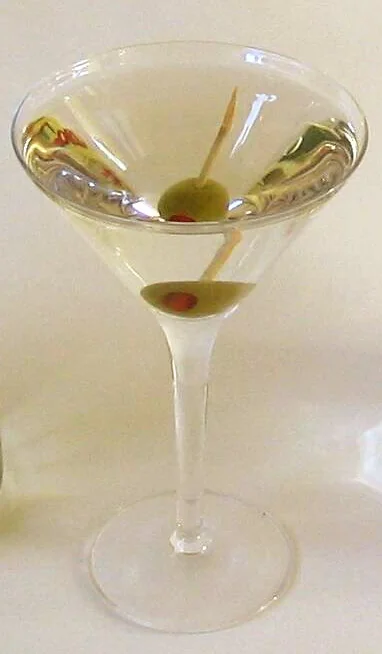
The Martini is a stirred cocktail of gin and dry vermouth, garnished with an olive or lemon twist and served in the distinctive V-shaped martini glass. The drink evolved from the 19th-century Martinez recipe (gin, sweet vermouth, maraschino, bitters), with the proportion of vermouth progressively decreasing over the 20th century as 'dry' became the dominant style. The IBA standard recipe is a 6:1 ratio of gin to dry vermouth. Vodka variants became popular in the mid-20th century. The martini's cultural prominence in 20th-century American life and literature is extensively documented in food history scholarship.
Quick facts
- Type
- Classic Recipe
- Base spirits
- gin, dry vermouth
- Era
- 1880s–present
- Origin
- United States
- Glass
- martini
- IBA listed
- Yes — Official IBA cocktail
Evolution from Martinez to Martini
The Martinez cocktail, documented in O.H. Byron's 1884 The Modern Bartender's Guide and in Jerry Thomas's revised 1887 Bartender's Guide, consisted of Old Tom gin (sweeter than London Dry), sweet vermouth, maraschino liqueur, and a dash of Angostura bitters. The transition from Martinez to Martini involved three changes: the shift from sweet to dry vermouth, the shift from Old Tom to London Dry gin, and the elimination of maraschino and bitters. By the 1900s, the drier formula was standard. The proportion of vermouth continued to decrease: pre-Prohibition recipes often specified 2:1 or 3:1 gin-to-vermouth; mid-century American recipes frequently specified 6:1, 8:1, or more, reflecting a cultural preference shift.
The Dry-Wet Spectrum and Technique
A 'wet' martini has a higher vermouth proportion (3:1 or 2:1 gin to vermouth), which produces a softer, more herbaceous cocktail. A 'dry' martini has less vermouth (6:1 or more), emphasising the gin. A 'bone dry' martini has only a rinse or wash of vermouth in the glass before it is discarded. The IBA recipe specifies 6 cl gin and 1 cl dry vermouth. The technique is always stirring — the 'shaken, not stirred' preference attributed to James Bond is noted by many cocktail historians as producing a slightly different texture (from ice chip dilution and aeration) but is a personal preference documented in fiction, not a professional standard. Stirring preserves the drink's characteristic clarity and silky texture.
Sources & further reading (2)
- encyclopedia — accessed 2026-05-08
- encyclopedia — accessed 2026-05-08
Frequently asked questions
What is the difference between an olive garnish and a lemon twist in a martini?
A lemon twist expresses citrus oils across the surface, adding a bright aromatic note. An olive (typically a pimento-stuffed green olive) adds a saline, briny character that contrasts with the gin's botanicals. A 'dirty martini' adds olive brine (juice) directly to the cocktail, noticeably increasing salinity and cloudiness. The garnish choice is a documented convention that affects flavour.
When did vodka martinis become a distinct category?
Vodka martinis (gin replaced with vodka) became popular in the United States in the 1950s–60s as vodka imports increased. The Vesper Martini — from Ian Fleming's 1953 *Casino Royale* — specified a combination of gin, vodka, and Kina Lillet (a dry aperitif wine), shaken over ice. The 'Vesper' recipe is documented as a fictional formula that influenced real-world drink making.