Last Word
Equal parts gin, green Chartreuse, maraschino, and lime — Prohibition-era formula from Detroit c. 1916.
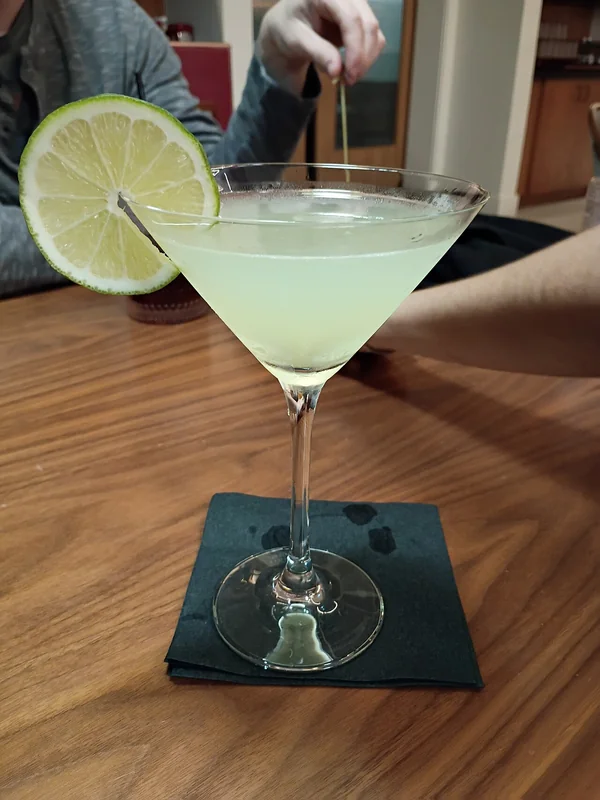
The Last Word is an equal-parts cocktail combining gin, green Chartreuse, maraschino liqueur, and fresh lime juice. The recipe is attributed to the Detroit Athletic Club circa 1916, where vaudeville comedian Frank Fogarty is documented performing the era. Ted Saucier included the recipe in his 1951 *Bottoms Up*, preserving it for posterity. The drink was largely forgotten until cocktail historian Ted Haigh featured it in his 2004 book *Vintage Spirits and Forgotten Cocktails*, after which it became a signature of the 2000s cocktail revival. Its equal-parts structure (each component at 22.5 ml in the IBA recipe) balances gin's botanicals, Chartreuse's herbal complexity, maraschino's cherry-almond character, and lime's citrus acid.
Quick facts
- Type
- Classic Recipe
- Base spirits
- gin, green chartreuse, maraschino
- Era
- 1916–present
- Origin
- Detroit, Michigan, United States
- Glass
- coupe
- IBA listed
- Yes — Official IBA cocktail
Documented History and the Cocktail Revival
The Last Word was documented in Ted Saucier's 1951 Bottoms Up with an attribution to the Detroit Athletic Club from the Prohibition era. The cocktail remained obscure for fifty years until cocktail historian Ted Haigh (writing as 'Dr. Cocktail') featured it in his 2004 book Vintage Spirits and Forgotten Cocktails, calling it 'perhaps the most perfectly balanced cocktail ever invented.' Murray Stenson, a bartender at Zig Zag Café in Seattle, began serving it around 2004, and its popularity spread rapidly through the craft cocktail scene. The Last Word is now considered a defining cocktail of the early 21st-century revival movement and a demonstration that equal-parts formulas can achieve complex balance.
Green Chartreuse: The Defining Modifier
Green Chartreuse is a French herbal liqueur produced by Carthusian monks at the Chartreuse monastery near Grenoble since 1764, using a formula incorporating 130 plant species. At 55% ABV, it is one of the highest-proof liqueurs commercially produced, with a complex herbal profile: fresh mint, tarragon, hyssop, angelica, and a warming spice character. Its high proof means it contributes significant alcohol alongside herbal complexity. In the Last Word, Chartreuse (representing the herbal/botanical quadrant) balances against gin (juniper-botanical), maraschino (cherry-almond sweet), and lime (citrus acid). The equal proportions ensure that no single flavour dominates — a balance that requires quality Chartreuse.
Sources & further reading (2)
- encyclopedia — accessed 2026-05-08
- encyclopedia — accessed 2026-05-08
Frequently asked questions
What is the Paper Plane's relationship to the Last Word?
The Paper Plane (2007, attributed to Sam Ross) is a modern equal-parts cocktail directly inspired by the Last Word's structure: equal parts bourbon, Aperol, Amaro Nonino, and lemon juice. Sam Ross explicitly cited the Last Word's equal-parts architecture as his model. The Paper Plane substitutes bourbon for gin, Aperol (bitter orange) for green Chartreuse, Amaro Nonino (Italian amaro) for maraschino, and lemon for lime — a full-component substitution maintaining the structural template.
Can Yellow Chartreuse substitute for Green Chartreuse?
Yellow Chartreuse (lower proof at 40% ABV, sweeter, milder) produces a noticeably different cocktail — softer, sweeter, and less intensely herbal. The Green Chartreuse's 55% ABV and 130-herb complexity are considered essential to the drink's balance. The substitution shifts the cocktail toward the sweeter, more approachable range but is documented as a valid variant.