Gin and Tonic
Gin and tonic water over ice — a highball from British India as a quinine delivery method.
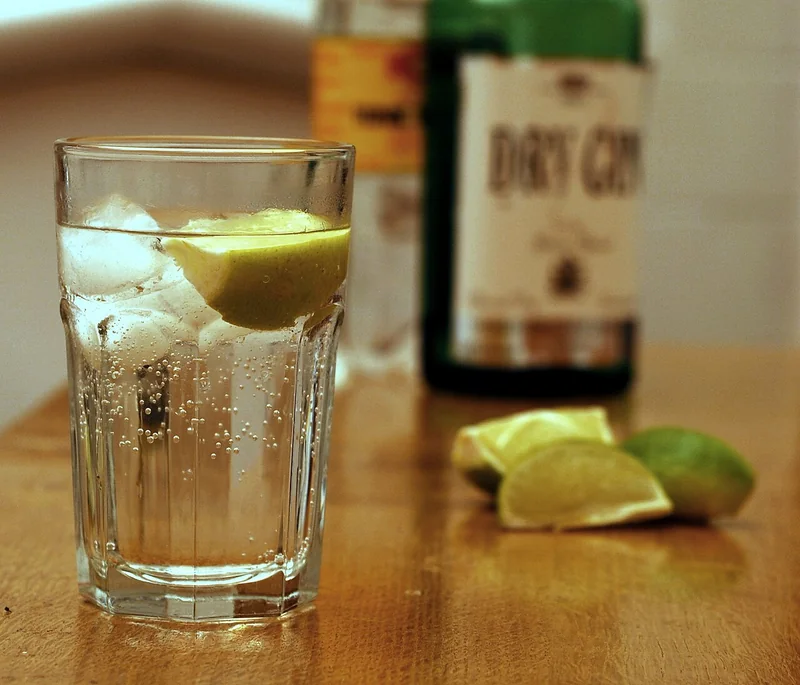
The Gin and Tonic is a two-ingredient highball of gin and tonic water served over ice, typically garnished with a lime or lemon wedge. The drink originated in British India in the early 19th century when British officers in the Indian subcontinent were issued quinine dissolved in carbonated water — the original tonic water — as a prophylactic against malaria. Quinine (extracted from Peruvian cinchona bark) was highly bitter in the required doses, and gin was added to make the medicine more palatable. The commercial tonic water available today contains far less quinine than the original formulation. The drink has become central to the global gin market and has experienced significant regional variation in garnish and style.
Quick facts
- Type
- Classic Recipe
- Base spirits
- gin
- Era
- 1820s–present
- Origin
- British India
- Glass
- highball
- IBA listed
- No
Quinine, Cinchona Bark, and British India
Quinine is a natural alkaloid compound extracted from the bark of the cinchona tree, native to Peru and Bolivia. It was the only effective treatment for malaria available to European colonial forces for most of the 19th century. The British East India Company and British Army issued quinine to troops stationed in malaria-endemic regions of India and Africa from the 1820s. The 1858 dissolution of the East India Company transferred this supply network to the British government. Jacob Schweppe's company (founded 1783) began commercial production of carbonated tonic water with quinine around the 1850s. The Indian Quinine Tonic Act of 1858 regulated quinine concentrations. The gin addition is documented in East India Company officer correspondence from the 1820s–30s. The combination spread through the British military class and eventually to civilian culture.
Modern Tonic Water and Quinine Regulation
Modern commercial tonic water contains quinine at concentrations of 83 mg/L in Europe and 83 mg/L in the United States (FDA limit), far below the therapeutic dose of 500–1000 mg that early tonic water contained. The bittering effect in modern tonic water is primarily flavour rather than pharmacological. Premium tonic water brands (developed from the early 2000s) use natural quinine from cinchona extract and less high-fructose corn syrup, producing a cleaner bitter profile. The Spanish tradition of serving the Gin Tonic (Gin Tónico) in a large copa de balón (balloon glass) with elaborate garnishes — specific botanicals matching the gin's botanical bill — developed from the early 2000s and has influenced global serving conventions.
Sources & further reading (2)
- encyclopedia — accessed 2026-05-08
- encyclopedia — accessed 2026-05-08
Frequently asked questions
What proportion of gin to tonic is conventional?
Standard British convention is approximately 1:3 (one part gin to three parts tonic water). The exact ratio varies by preference, gin strength, and tonic brand. Premium gin experiences may use a 1:2 ratio to emphasise the gin's botanical complexity. Tonic water dilutes both the strength and the gin aroma — the choice of ratio directly affects how prominently the gin's juniper, citrus, and spice notes are perceived.
Why does the garnish choice matter for a Gin and Tonic?
Garnishes in the Gin and Tonic serve as aromatic complements to the gin's botanical profile rather than merely visual decoration. A slice of lime adds citrus acidity and aromatic oils that interact with juniper. Cucumber slices (common with Hendrick's-style rose-and-cucumber gins) amplify fresh green botanical notes. Pink peppercorn, rosemary, or cardamom are used with gins that feature those botanicals in their recipe. The Spanish tradition of botanically-matched garnishes reflects deliberate flavour pairing logic.