Brandy and Cognac
Cognac: double pot-still distilled wine from Charentes, France — classified VS, VSOP, and XO by age.
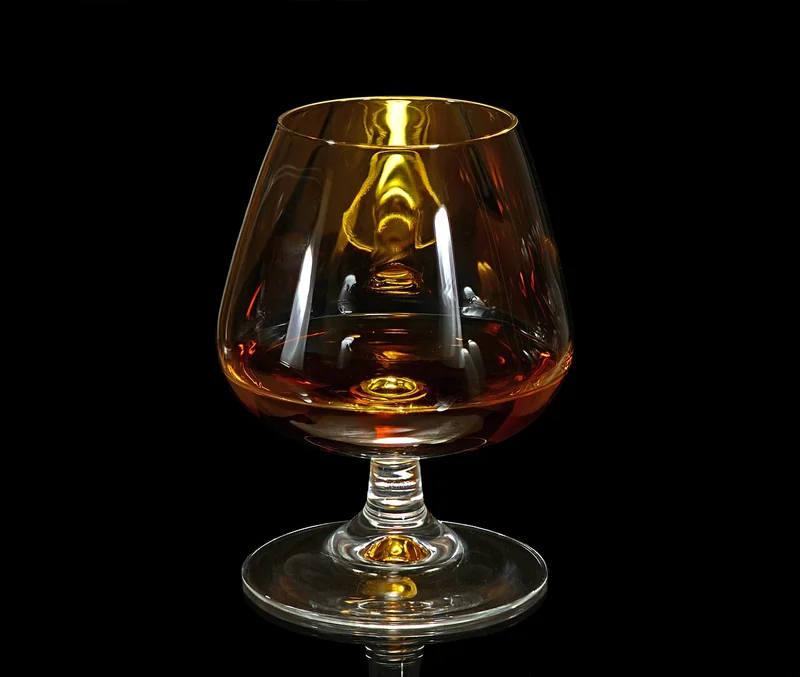
Brandy is a spirit produced by distilling wine or other fermented fruit juice; Cognac is a geographically protected brandy produced in the Charentes region of France from specific white wine grape varieties (primarily Ugni Blanc), distilled in copper pot stills using the Charentais double-distillation method, and aged in Limousin or Tronçais oak barrels. Armagnac is a similar French brandy protected by geographic indication from Gascony. Cognac age classifications: VS (Very Special — minimum 2 years), VSOP (Very Superior Old Pale — minimum 4 years), XO (Extra Old — minimum 10 years since 2018). Cognac was historically the spirit of choice in early 19th-century American cocktails, including precursors to the Sazerac.
Quick facts
- Type
- Spirit Base
- Base spirits
- cognac, armagnac, brandy
- Era
- 17th century–present
- Origin
- Charentes, France
- Glass
- old-fashioned
- IBA listed
- No
Cognac's Charentais Double-Distillation
Cognac production is tightly regulated under French AOC (Appellation d'Origine Contrôlée) law. The process: white wine (typically low-ABV, high-acid Ugni Blanc from Charentes vineyards) is distilled twice in traditional copper alembic pot stills (alambics charentais). The first distillation produces 'brouillis' at 28–32% ABV; the second distillation concentrates to 68–72% ABV, a precise range that preserves desirable esters and congeners while removing harsh heads and tails. The new spirit is placed in Limousin or Tronçais oak (both from French forests) for ageing. Tannins, vanillin (from lignin oxidation), and lactones from the oak contribute to the characteristic Cognac profile: dried fruit, vanilla, spice, rancio (an oxidative, nutty character that develops with extended ageing). Six production crus (Champagne, Grande Champagne, Petite Champagne, Borderies, Fins Bois, Bons Bois) classify the viticultural areas by soil and microclimate.
Cognac vs. Armagnac
Armagnac (AOC, Gascony, France) is France's other major protected brandy. Key production differences: Armagnac is traditionally distilled in a continuous column still (the 'Armagnac still' or alambic armagnacais), producing spirit at lower proof (52–72% ABV) with more congeners and flavour complexity than Cognac's pot still. Armagnac can also be distilled as brandy from any grape variety permitted in the region (Folle Blanche, Colombard, Ugni Blanc, and others). Armagnac producers often bottle single-vintage expressions (a specific harvest year), while Cognac production is dominated by multi-vintage blends. Armagnac tends to be more rustic and individualistic; Cognac more consistent and refined. Both are documented in 19th-century cocktail recipes.
Sources & further reading (2)
- encyclopedia — accessed 2026-05-08
- encyclopedia — accessed 2026-05-08
Frequently asked questions
What does 'Grande Champagne' in Cognac production mean?
Grande Champagne and Petite Champagne are crus (growth zones) within the Cognac AOC that designate the highest-quality chalky soil areas. 'Champagne' in this context (from the Latin 'campagna,' meaning open countryside) has no relationship to the sparkling wine region in northern France. Grande Champagne chalk soils produce grapes that make eaux-de-vie (young Cognac spirit) with the most delicate and long-lasting aromas, capable of the greatest ageing potential. 'Fine Champagne' is a blend containing at least 50% Grande Champagne with the remainder Petite Champagne.
What is Cognac's role in cocktail history?
Before Prohibition (1920–1933) disrupted American spirits production and distribution, Cognac was a common base spirit in American cocktails alongside rye whiskey and gin. The Sidecar (Cognac, triple sec, lemon juice) and Brandy Crusta are documented Cognac-based cocktails from the pre-Prohibition era. The Sazerac's earliest documented form used Cognac rather than rye whiskey. After Prohibition, Cognac's relative expense and scarcity in the US market reduced its cocktail presence, replaced by bourbon and rye.