Bloody Mary
Vodka, tomato juice, lemon, Worcestershire, and spices — a savoury brunch cocktail from 1920s Paris.
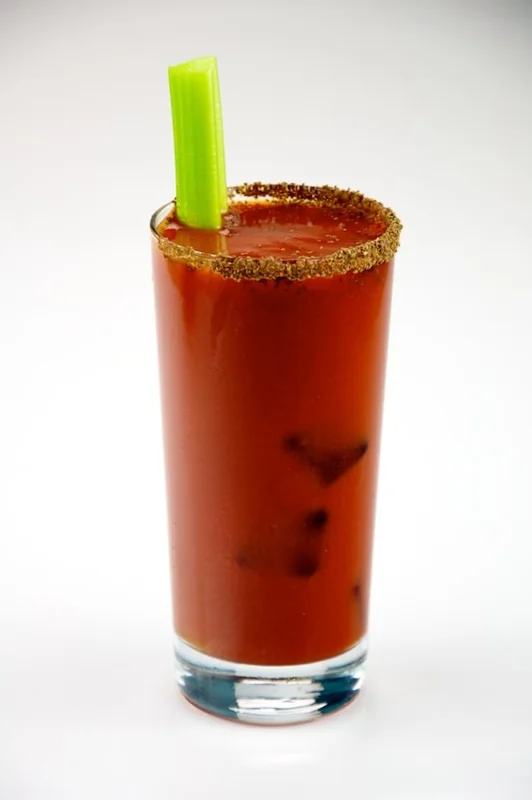
The Bloody Mary is a savoury cocktail combining vodka, tomato juice, lemon juice, Worcestershire sauce, Tabasco sauce, horseradish, celery salt, and black pepper. Origin accounts include Fernand 'Pete' Petiot at Harry's New York Bar in Paris in the 1920s, who may have created an early version, and Harry Craddock at the St. Regis Hotel in New York in 1934, who popularised it under the name 'Red Snapper.' The drink is distinctive for its savoury, umami-forward character derived from tomato juice and Worcestershire sauce. It is commonly associated with brunch service and is among the most customised cocktails — garnish complexity ranges from a celery stalk to elaborate constructions.
Quick facts
- Type
- Classic Recipe
- Base spirits
- vodka
- Era
- 1920s–present
- Origin
- Paris, France / New York, United States
- Glass
- highball
- IBA listed
- Yes — Official IBA cocktail
Petiot, Craddock, and Origin Documentation
The most frequently cited origin is Fernand 'Pete' Petiot, a bartender at Harry's New York Bar in Paris (opened 1911), who claimed to have invented the drink around 1921 by combining equal parts vodka and tomato juice. Petiot moved to the King Cole Bar at the St. Regis Hotel in New York in 1934, where he added spices (Worcestershire, hot sauce, horseradish) to the recipe. A 1964 New Yorker profile quoted Petiot describing this development. Harry Craddock's connection is through the King Cole Bar's 'Red Snapper' name — Petiot was reportedly asked to rename the 'Bloody Mary' for polite hotel company. The name 'Bloody Mary' may reference Queen Mary I of England or the American folk legend of the same name — the etymology is not definitively established.
Worcestershire Sauce and Umami Structure
The Bloody Mary's distinctive savoury depth comes from the interaction of several umami-rich ingredients. Worcestershire sauce (produced by Lea & Perrins since 1838) contains fermented anchovies, tamarind, molasses, malt vinegar, and spices, contributing glutamate-rich umami. Tomato juice is naturally high in free glutamates. Horseradish (freshly grated or prepared) adds isothiocyanate compounds that produce sharp sinus-clearing pungency. Tabasco or other hot sauces add capsaicin heat. The combination of sweet (tomato), sour (lemon), salty (celery salt), umami (Worcestershire, tomato), and hot (Tabasco, horseradish) makes the Bloody Mary one of the most structurally complex cocktails in the classic canon, engaging all five basic tastes.
Sources & further reading (1)
- encyclopedia — accessed 2026-05-08
Frequently asked questions
What is a Virgin Mary?
A Virgin Mary (also 'Bloody Shame') is a Bloody Mary made without vodka — all other ingredients (tomato juice, lemon juice, Worcestershire, hot sauce, horseradish, spices) are used identically. It is a documented non-alcoholic cocktail option and is the most complex of non-alcoholic mocktail equivalents due to the savoury-spice profile not requiring spirit for flavour balance.
Why is celery a conventional Bloody Mary garnish?
The celery stalk garnish is associated with Chicago's Pump Room in the 1960s, where a guest reportedly used a celery stick from a relish tray as a stirrer. The convention spread. Celery's mild, fresh, slightly bitter flavour complements the tomato-spice base without overwhelming it. The garnish also provides a natural stirring tool to mix the denser tomato juice before drinking. Elaborate garnishes (olives, pickles, shrimp, bacon) developed in the 2000s–2010s as a restaurant presentation trend.