Felis catus
Vietnamese Bobtail
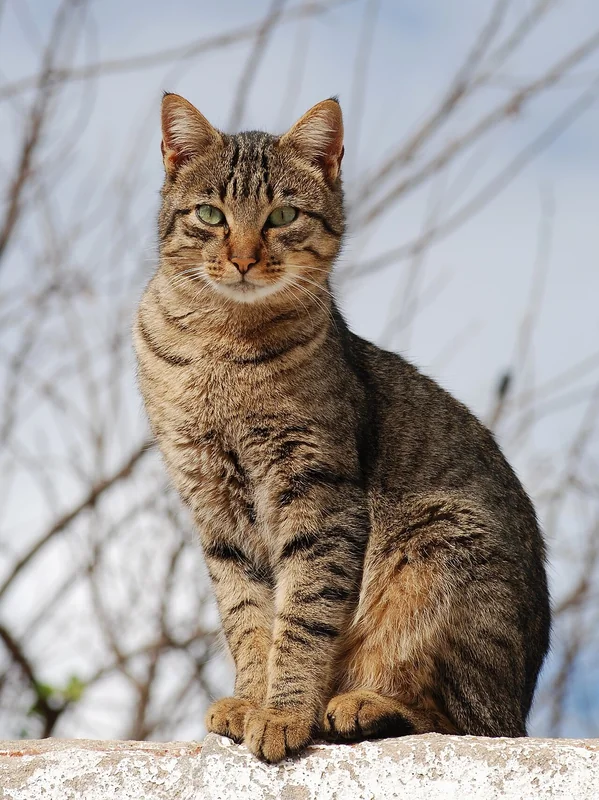 Featured photovietnamese-bobtail.jpg
The Vietnamese Bobtail is a naturally occurring short-tailed domestic cat native to Vietnam, part of the broad Southeast Asian bobtail cat family. Short-tailed cats are common throughout Vietnam and neighboring Southeast Asian countries; the Vietnamese variety has been present for centuries and is referenced in local folklore and cultural traditions. Vietnamese cat preservation efforts and international breed documentation have begun recognizing the Vietnamese Bobtail as a distinct regional type.
Quick facts
- Origin country
- Vietnam
- Origin period
- Ancient native breed; modern documentation ongoing
- Coat type
- Short
- Coat colors
- All colors and patterns, Tabby predominant in natural populations, Solid, Bicolor
- Size category
- Small
- Average lifespan
- 12-17 years
- Recognition
- —
Origin
Short-tailed cats are a natural feature of domestic cat populations throughout Vietnam and much of Southeast Asia. The bobtail mutation in the Southeast Asian cat population appears to be widespread and of great antiquity, possibly predating the introduction of cats from China or India. In Vietnam, cats with short or kinked tails are described in traditional folklore and are considered ordinary household companions. The Vietnamese Bobtail has not been subject to formal breed development programs; its characteristics reflect natural selection in the Vietnamese domestic cat population rather than controlled breeding for specific traits.
Regional Context
The Vietnamese Bobtail is part of a broader family of Southeast Asian bobtail cats that includes the Malaysian Kuchinta, the Thai bobtail, the Mekong Bobtail (a formally recognized breed from the same region), and others. The region has a higher natural prevalence of the bobtail mutation than most other parts of the world, and multiple independent mutations may be responsible for the various short-tail forms. The Mekong Bobtail, which is derived from similar Vietnamese and regional stock and was formally developed and registered with WCF, represents the nearest formally recognized breed relative of the Vietnamese Bobtail.
Appearance
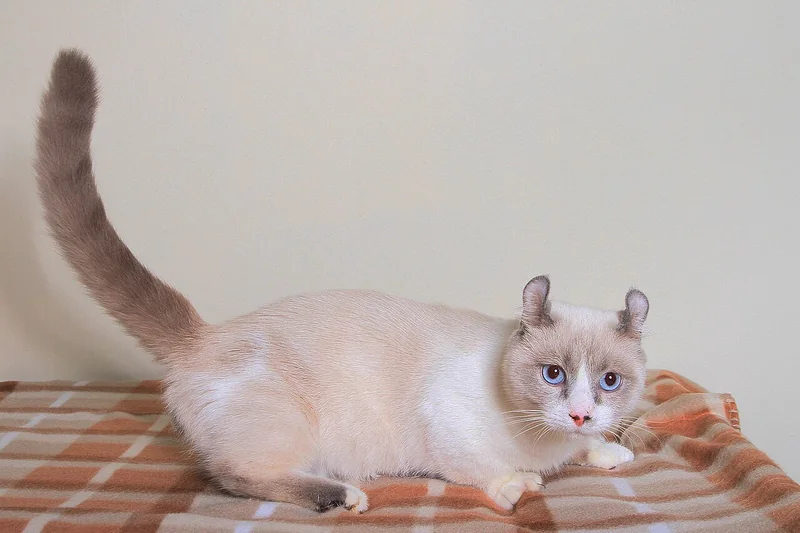
The Vietnamese Bobtail is a small to medium-sized, lean cat of Southeast Asian domestic type: a moderately triangular head, medium ears, almond-shaped eyes, and a slender, athletic body. The defining trait is the short or kinked tail, which may be as short as a stump or a few centimeters in length, often with one or more kinks. The coat is short, smooth, and lies flat. The natural population shows all colors and patterns; tabby is especially common. The breed is adapted to the warm, humid Vietnamese climate, with a minimal coat that provides little insulation.
Sources & further reading (2)
- encyclopedia — accessed 2026-05-07
- encyclopedia — accessed 2026-05-07
Frequently asked questions
Is the Vietnamese Bobtail the same as the Mekong Bobtail?
The Mekong Bobtail is a formally recognized breed developed from the short-tailed cats of the Mekong River region, including Vietnam, Laos, Cambodia, and Thailand. It was registered with WCF and developed as a show breed. The Vietnamese Bobtail is the broader category of naturally occurring short-tailed cats native to Vietnam, which provided some of the founding stock for the Mekong Bobtail but have not themselves been subject to a formal breeding program.
Is the Vietnamese Bobtail recognized by any major registry?
As of 2026, major international cat registries (CFA, TICA, GCCF, FIFe) do not maintain Vietnamese Bobtail registrations. The naturally occurring population is documented by Vietnamese cat enthusiasts and Southeast Asian breed researchers, but has not advanced to formal registry recognition.
How common are short-tailed cats in Vietnam?
Short-tailed cats are relatively common in Vietnam compared to most other parts of the world. Estimates suggest that the bobtail mutation is more prevalent in Southeast Asian domestic cat populations than in European or North American cats. This higher frequency reflects either a founder effect from ancient cat populations that carried the gene, regional gene flow, or independent multiple mutation events across the region.