Felis catus
Ussuri
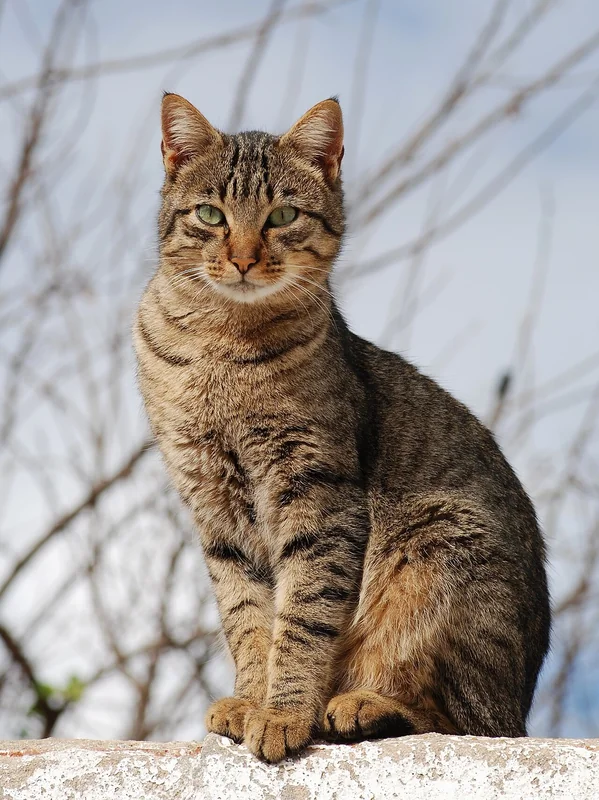 Featured photoussuri.jpg
The Ussuri is a Russian experimental cat breed developed in the Primorsky Krai region of Russia and registered with the WCF. Named after the Ussuri River in the Russian Far East, the breed is believed to be descended from crosses between domestic cats and the Amur Forest Cat (Prionailurus bengalensis euptilurus), a subspecies of the Asian Leopard Cat native to the region. The Ussuri has a wild-type tabby pattern, a broad head, and a robust build.
Quick facts
- Origin country
- Russia
- Origin period
- Developed Primorsky Krai, Russia; WCF experimental registration early 2000s
- Coat type
- Medium
- Coat colors
- Ticked tabby (banded hairs), Spotted tabby, Classic tabby, Brown, silver, or golden base with dark markings
- Size category
- Medium
- Average lifespan
- 10-15 years
- Recognition
- —
Origin
The Ussuri was developed in Primorsky Krai (Primorye), a region of Russia bordering the Ussuri River, the Amur River basin, and Manchuria. The Amur Forest Cat (Prionailurus bengalensis euptilurus) is a subspecies of the Asian Leopard Cat native to this region. Local breeders claimed to observe naturally occurring hybrids between domestic cats and the forest cat, with physical characteristics including robust build, wild-type patterning, and large size. A breeding and registration program was begun, and WCF accepted the Ussuri as an experimental breed. Genetic verification of the wild hybrid ancestry had not been published as of 2026.
Wild Hybrid Claims
The Ussuri's claimed wild hybrid ancestry parallels that of other hybrid-derived breeds such as the Bengal (Asian Leopard Cat crosses) and Savannah (Serval crosses). Unlike the Bengal and Savannah, whose wild-hybrid ancestry is documented in founding registration records and verified by genetic testing, the Ussuri's status as a confirmed Prionailurus bengalensis hybrid has not been independently verified. WCF accepted the breed's registration as experimental based on breeder documentation. The wild tabby pattern and robust conformation of some specimens are consistent with hybrid ancestry but are also achievable through selective breeding of purely domestic cats.
Appearance
The Ussuri is a medium to large, robustly built cat with a broad, slightly rounded head, high cheekbones, and large ears. The body is muscular and substantial with medium-length legs and a medium-length tail. The coat is medium-length, dense, and weather-resistant, suited to the cold Primorsky climate. The defining characteristic is the bold tabby pattern: spotted, ticked, or classic tabby in warm brown, silver, or golden tones with well-defined dark markings. The overall impression is of a wild-looking, athletic cat with a semi-domestic appearance.
Sources & further reading (2)
- encyclopedia — accessed 2026-05-07
- registry-breed-profile — accessed 2026-05-07
Frequently asked questions
Is the Ussuri a hybrid of a wild cat?
The Ussuri's breeders claim descent from crosses between domestic cats and the Amur Forest Cat (an Asian Leopard Cat subspecies) in the Russian Far East. This claim has not been verified by published genetic studies as of 2026. WCF registered the breed as experimental based on breeder documentation. The claimed wild ancestry parallels that of the Bengal cat, whose Asian Leopard Cat hybrid origin is fully documented; the Ussuri's status remains unverified.
How is the Ussuri different from the Bengal?
Both the Ussuri and Bengal are believed to involve Prionailurus bengalensis (Asian Leopard Cat) ancestry, but the Bengal has fully documented wild hybrid origins through Jean Mill's recorded breeding program from the 1970s. The Ussuri's wild hybrid claim is based on naturally occurring hybrids observed in Primorsky Krai rather than a controlled breeding program. The Bengal is fully recognized by TICA, CFA, and other major registries; the Ussuri has only experimental WCF status.
Where is the Ussuri breed found today?
The Ussuri remains a rare breed primarily found in Russia, especially in the Primorsky Krai region. WCF registration provides some structure for breeders in WCF-affiliated countries. The breed does not have recognition from CFA, TICA, GCCF, or FIFe and has not been significantly developed outside its region of origin as of 2026.