Felis catus
Turkish Vankedisi
 Featured phototurkish-vankedisi.jpg
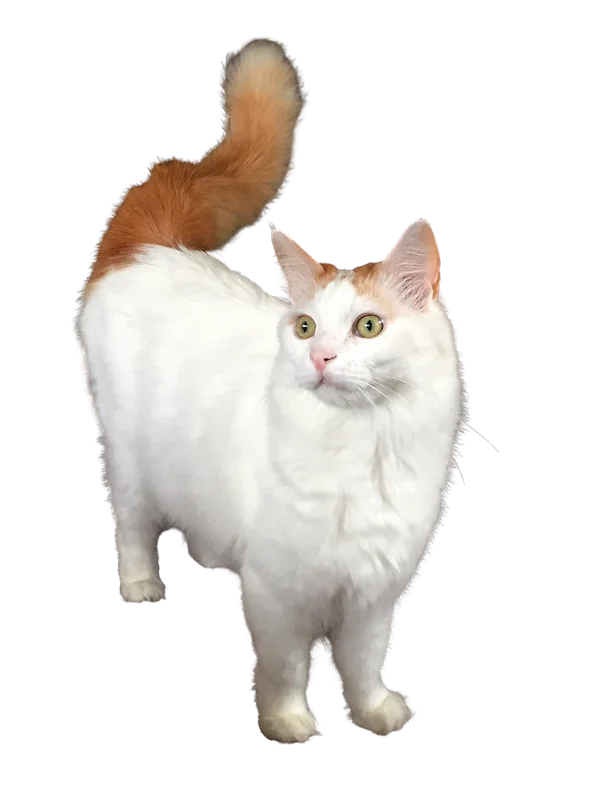
The Turkish Vankedisi is a pure-white domestic cat native to the Lake Van region of eastern Turkey, recognized by Turkish cat authorities as a distinct breed from the Turkish Van. While the Turkish Van has a colored head and tail with a white body, the Vankedisi is entirely white with odd eyes (one amber, one blue) or blue or amber eyes. The breed is maintained by Turkish universities and conservation programs as a national natural heritage cat.
Quick facts
- Origin country
- Turkey
- Origin period
- Ancient breed native to Lake Van region; formal documentation 20th century
- Coat type
- Medium
- Coat colors
- Pure white (only accepted color), May have amber, blue, or odd (amber + blue) eyes
- Size category
- Large
- Average lifespan
- 13-17 years
- Recognition
- —
Origin
The Turkish Vankedisi is a naturally occurring all-white cat from the Lake Van region of eastern Anatolia. Genetic studies conducted by Van Yuzuncu Yil University in the 1990s identified the Vankedisi as a genetically distinct population from other Turkish domestic cats and from the Turkish Van, which displays the piebald-spotted Van pattern. The university established a protected breeding colony in 1992 to conserve the Vankedisi and has maintained purebred records since then. The Turkish government has designated the Vankedisi as a cultural and natural heritage breed of Turkey.
Relationship to Turkish Van
The Turkish Vankedisi and Turkish Van are both native to the Lake Van region and share the same general conformation: large, semi-longhaired, white cat with a cashmere-like coat and water-resistant properties. The Van pattern (chalk-white body with auburn or cream head and tail markings) is caused by the piebald spotting gene. The Vankedisi is entirely white, which may result from a different genetic pathway (the dominant white W gene) or from piebald homozygosity. Turkish authorities classify the two as distinct breeds; Western registries typically classify all Lake Van cats under the Turkish Van name.
Appearance
The Turkish Vankedisi is a large, muscular, semi-longhaired cat with a chalk-white, cashmere-textured coat that is water-resistant. The head is moderately wedge-shaped with high cheekbones; ears are medium-sized with tufts. The tail is a full brush, often called 'fox tail.' Eyes are large and slightly oval. The Vankedisi is most recognized for its odd-eyed individuals: one amber and one blue eye, which is considered the ideal and most prized variant in Turkey. Blue-eyed and amber-eyed all-white cats are also found but odd-eyed is most sought after. The coat has no undercoat in summer and a thick double coat in winter.
Sources & further reading (2)
- encyclopedia — accessed 2026-05-07
- encyclopedia — accessed 2026-05-07
Frequently asked questions
What makes the Turkish Vankedisi different from the Turkish Van?
The Turkish Van displays the Van pattern: a chalk-white body with colored (usually auburn) markings restricted to the head and tail. The Turkish Vankedisi is entirely white with no colored markings. Both breeds are native to the Lake Van region of Turkey and share similar large, semi-longhaired conformation. Turkish authorities classify them separately; international registries typically list all Lake Van cats under the Turkish Van breed.
Why do many Turkish Vankedisi cats have odd eyes?
Odd eyes (one amber, one blue) in white cats are caused by differential expression of melanocytes in the developing iris. Cats carrying the dominant white (W) gene frequently have reduced melanin in one or both eyes, producing blue or odd eyes. In the Vankedisi population, odd-eyed individuals are especially prized and are the hallmark of the breed in Turkish culture, representing the colors of the sun and moon in some interpretations.
Where is the Turkish Vankedisi conservation program based?
The primary conservation program for the Turkish Vankedisi is operated by Van Yuzuncu Yil University (now Van YYU) in Van, eastern Turkey. The university established its protected breeding colony in 1992 and has maintained records to document the breed's genetics and population. The Turkish Ministry of Culture has also recognized the Vankedisi as a national heritage breed.