Felis catus
Persian Traditional
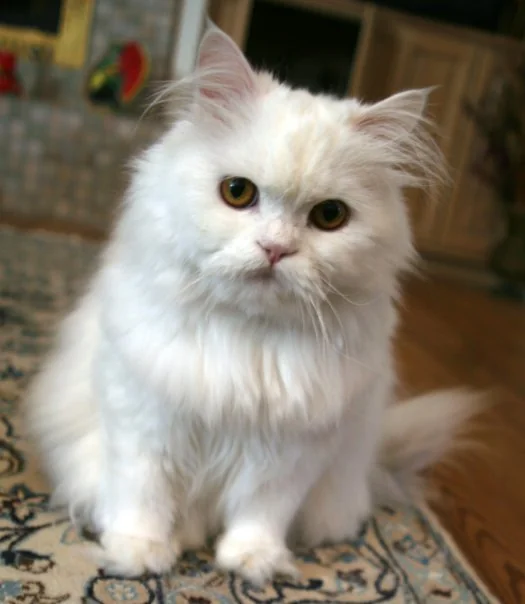 Featured photopersian-traditional.jpg
The Persian Traditional (also called Doll-Face Persian or Classic Persian) is the moderate-profile form of the Persian breed, representing the type that existed before the progressive selective breeding for increasingly flat faces in the 20th century. Traditional Persians have a longer muzzle, a visible nose profile, and no structural brachycephaly. TICA and some national registries recognize the Traditional Persian as a distinct variety or alternative standard, and dedicated breeder groups maintain the type.
Quick facts
- Origin country
- Persia (Iran) / United Kingdom
- Origin period
- Original Persian type imported 1620s-1880s; traditional type maintained by breeders against modern extreme standard
- Coat type
- Long
- Coat colors
- All recognized Persian colors, Solid, Tabby, Bicolor, Smoke, Shaded, Colorpoint (Himalayan pattern)
- Size category
- Large
- Average lifespan
- 12-17 years
- Recognition
- TICA 2009
Historical Type
The original Persian cats imported to Europe from the 17th century onward had moderate facial profiles: a rounded head, prominent cheekbones, and a nose that protruded slightly below the forehead. The 19th-century Crystal Palace cat show Persians still showed visible noses and longer muzzles than the modern show Persian. Show preferences began to favor flatter faces from the 1930s onward, accelerating through the mid-20th century. CFA's written standard evolved to accommodate the flatter type. Breeders who considered the flat-face aesthetically objectionable and who had welfare concerns about the associated brachycephalic health effects began preserving the older type under names such as Traditional, Classic, and Doll-Face.
Recognition
TICA accepted the Traditional Persian as a distinct type in 2009, allowing registration of moderate-profile Persians with fuller muzzles. Some other registries also accept traditional-type registrations under various names. CFA maintains a single Persian standard that, while not excluding moderate types explicitly, has historically been interpreted in show competition to favor flatter faces. Dedicated organizations such as the Traditional and Classic Cat International maintain standards and registries for traditional-type Persians separately from mainstream show registries.
Appearance
The Traditional Persian standard describes a large, cobby, heavily boned cat with a round head and a visible nose profile. The forehead is rounded and slightly domed; the nose has a moderate stop but the nose leather is clearly visible from the side without requiring a worm's-eye view. The muzzle is broad and full but not tucked in. Eyes are large, round, and vivid in color. The coat is long, thick, full, and flowing with a heavy ruff; it requires regular grooming. The overall impression is of a round, luxuriant cat with a distinct but moderate profile rather than a face-flattened silhouette.
Sources & further reading (2)
- encyclopedia — accessed 2026-05-07
- encyclopedia — accessed 2026-05-07
Frequently asked questions
What is the difference between a Traditional Persian and a modern show Persian?
The Traditional Persian has a moderate facial profile with a visible nose that extends below the forehead, a longer muzzle, and a rounded but not flattened head. The modern show Persian (especially the extreme or peke-face type favored at CFA shows) has a very flat face where the nose is at or above the level of the eyes when viewed from the side. The Traditional type represents the pre-1960s Persian conformation; the extreme type was progressively selected by show breeders during the latter half of the 20th century.
Why do some breeders prefer the Traditional Persian?
Some breeders and owners prefer the Traditional Persian for aesthetic reasons and because the moderate facial profile is not associated with the brachycephalic obstructive airway syndrome (BOAS) that affects some extreme flat-faced Persians. Brachycephalic cats may have difficulty breathing, experience eye discharge, and have other structural health consequences related to the extreme conformation. The Traditional Persian's longer muzzle avoids the most severe of these concerns.
Is the Traditional Persian recognized by CFA?
CFA does not maintain a separate Traditional Persian registration. All Persians compete under a single CFA standard. TICA accepted Traditional Persian registrations from 2009. Some dedicated organizations such as Traditional and Classic Cat International maintain separate studbooks and show schedules for traditional-type Persians.