Felis catus
Kurilian Bobtail Longhair
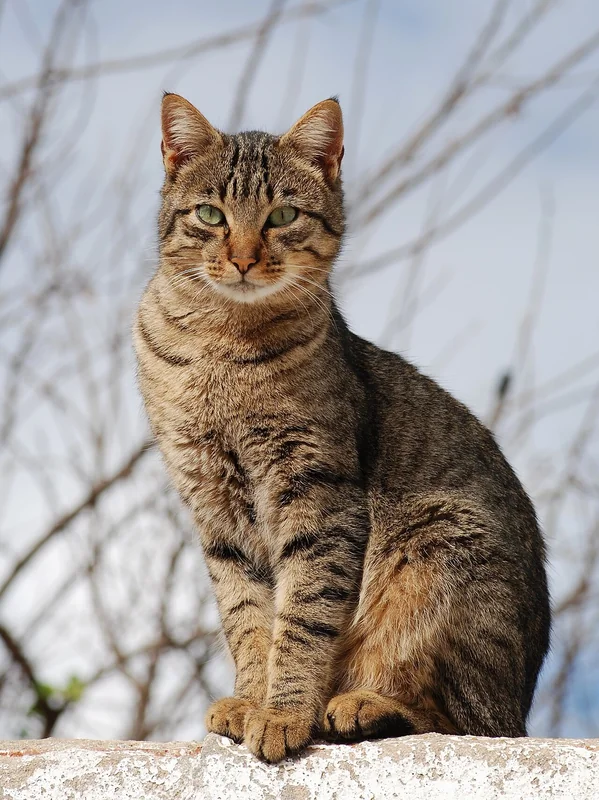 Featured photokurilian-bobtail-longhair.jpg
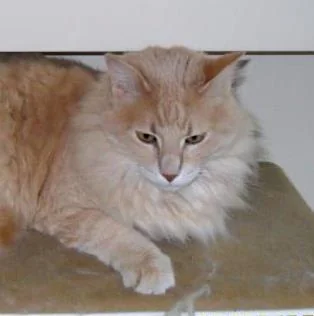
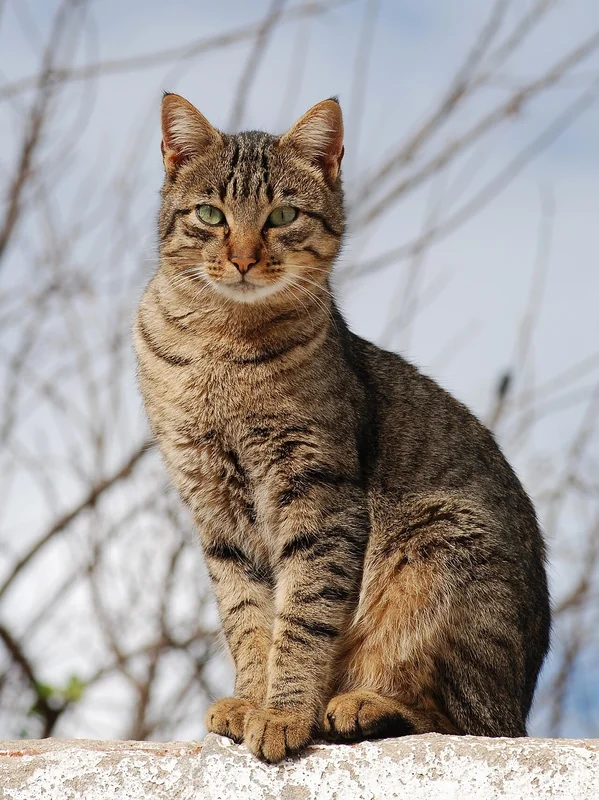
The Kurilian Bobtail Longhair is the semi-long-coated form of the Kurilian Bobtail, a cat native to the Kuril Islands archipelago between Japan and Russia. Like the shorthaired form, it has a unique kinked or knotted tail that forms a fluffy pom-pom. WCF and TICA recognize both short and long-coated Kurilian Bobtails, with the longhaired form being common in the wild population of the islands. The longhaired form has a dense, semi-long coat adapted to the cold, damp island climate.
Quick facts
- Origin country
- Russia / Japan (Kuril Islands)
- Origin period
- Ancient island population; WCF recognition; TICA recognition 2012
- Coat type
- Long
- Coat colors
- All colors and patterns except chocolate, lilac, and colorpoint
- Size category
- Large
- Average lifespan
- 15-20 years
- Recognition
- TICA 2012 · FIFe 2003
Origin
The Kurilian Bobtail is native to the Kuril Islands, a chain of volcanic islands stretching from Hokkaido, Japan to Kamchatka, Russia. The cats were brought to the islands by settlers and traders over several centuries and developed the bobtail mutation independently from the Japanese Bobtail. The long-coated form adapted to the cool, moist island climate; both coat lengths exist in the natural island population. Russian breeders in the 1980s began systematic development and registration. FIFe recognized the breed in 2003; TICA followed in 2012 with both short and long-coated forms.
The Kurilian Tail
The Kurilian Bobtail tail is genetically distinct from both the Japanese Bobtail and Manx tail mutations. The tail is composed of two to ten vertebrae that may be kinked, bent, or spiral-shaped, creating a unique pom-pom or shaggy brush effect. No two Kurilian Bobtail tails are exactly alike; each cat has an individually shaped tail. In the longhaired form, the tail hair is longer and fuller, creating a more pronounced fluffy pom-pom. The tail mutation has not been associated with the spinal problems seen in the Manx.
Appearance
The Kurilian Bobtail Longhair is a large, substantial, semi-cobby cat with a broad, moderately wedge-shaped head; high cheekbones; large, wide-set ears; and a compact, muscular body. The hind legs are notably higher than the front legs, giving the cat a characteristic hind-end elevation. The semi-long coat is dense and weather-resistant with a well-developed undercoat, suited to the cold island climate. The coat is slightly coarser than the more silky longhaired Oriental breeds. All colors and patterns are accepted except chocolate, lilac, and colorpoint varieties.
Sources & further reading (2)
- registry-breed-profile — accessed 2026-05-07
- encyclopedia — accessed 2026-05-07
Frequently asked questions
How is the Kurilian Bobtail tail different from the Japanese Bobtail tail?
The Kurilian and Japanese Bobtail tails are caused by different mutations. The Kurilian tail has more vertebrae (typically 2-10) arranged in complex kinks, bends, or spirals, creating a uniquely shaped pom-pom. The Japanese Bobtail tail is shorter (typically fewer vertebrae) with a simpler kink producing a tight pom-pom. Each Kurilian Bobtail has an individually shaped tail; no two are exactly alike.
When did TICA recognize the Kurilian Bobtail?
TICA accepted the Kurilian Bobtail (both short and long coated forms) in 2012. FIFe had recognized the breed in 2003, and WCF registered it earlier. CFA does not maintain a Kurilian Bobtail registration as of 2026.
What colors are NOT accepted in the Kurilian Bobtail?
Both the shorthaired and longhaired Kurilian Bobtail standards exclude chocolate, lilac, and colorpoint (pointed) varieties. All other colors and patterns are accepted. This exclusion reflects the breed's natural island population, which does not carry the chocolate (b) or colorpoint (cs) genes in significant frequency.