Yixing Teapot
Unglazed zisha clay teapots from Yixing, Jiangsu — revered gongfu cha vessels that absorb tea over decades.
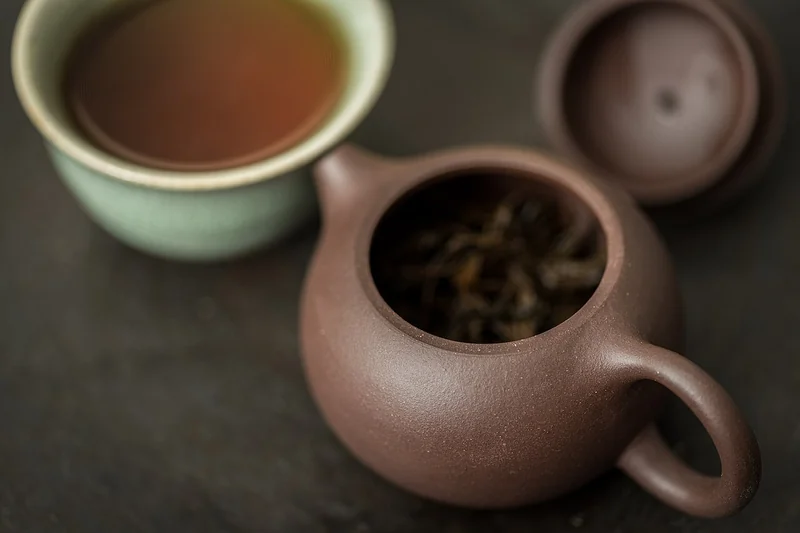
Yixing teapots (宜興茶壺) are handcrafted unglazed ceramic vessels made from zisha (紫砂, 'purple sand') clay from the region around Yixing city in Jiangsu Province, China. The three main zisha clay types — zini (purple clay), zhuni (red clay), and lüni (green clay) — differ in mineral composition, firing temperature, and resulting colour and porosity. Yixing teapots have been the preferred vessel for brewing premium Chinese oolongs and pu-erh since the Song dynasty, with widespread documentation from the Ming dynasty onwards. Their porous, unglazed clay gradually absorbs tea oils during use, developing a sheen (baojiang) and theoretically contributing to flavour over decades. Master Yixing teapots by documented artisans represent a significant collecting category.
Quick facts
- Type
- Tea Ware
Zisha Clay Types
Three principal zisha clay types are used for Yixing teapots. Zini (purple clay) is the most common, fired at 1100–1200°C to produce a brownish-purple to dark brown colour; its moderate porosity makes it suitable for a wide range of teas. Zhuni (red clay) fires at higher temperatures (1150–1280°C) to a brick-red colour; it is denser, less porous, and considered best for greener, lighter oolongs. Lüni (green/grey clay) fires to a greenish-grey colour and is less common. Clay quality, mineral composition, and mining location vary significantly and have a direct effect on the teapot's properties and price. The best deposits from Huanglong Mountain are now largely exhausted, making authentic material increasingly scarce and expensive.
Handcrafting Techniques
Authentic high-quality Yixing teapots are handcrafted using two main methods: wheel-throwing (used for round shapes) and clay-slab construction (used for angular and complex shapes). Master craftspeople form the body from a slab, attach the spout and handle, and close the lid opening with precise fittings. The lid should fit perfectly — neither rattling nor jamming — and the spout should pour cleanly without dripping. Knocking a well-made Yixing teapot produces a clear, slightly metallic ring; poor clay produces a dull thud. Factory-produced Yixing teapots (produced by molding, not handcrafting) are significantly less expensive but do not carry the collector value of handcrafted pieces.
Collecting and Authentication
The Yixing teapot collecting market extends from modestly priced factory pieces to extremely valuable works by recognised masters. The title of 'Master Artist' (工艺美术大师) awarded by the Chinese government identifies elite craftspeople whose signed work commands significant premiums. Historical Yixing teapots by famous Ming and Qing dynasty masters (Shi Dabin, Hui Mengchen, Chen Mingyuan) are museum pieces. Forgeries and misattribution are significant market concerns — many teapots carry fake artist seals. Buyers of premium Yixing teapots are advised to purchase from reputable dealers with provenance documentation and to develop specific knowledge of particular artists' styles.
Sources & further reading (2)
- encyclopedia — accessed 2026-05-07
- specialty-reference — accessed 2026-05-07
Frequently asked questions
Why are Yixing teapots left unglazed?
Zisha clay's unglazed surface is intentional — the microporosity allows trace quantities of tea oils and aromatic compounds to gradually be absorbed into the clay during repeated use. Over months and years, this accumulation theoretically contributes a subtle flavour enhancement and the visible baojiang (patina sheen). Glazing would seal the pores and eliminate this property, reducing the teapot to a standard ceramic vessel.
How do I choose a Yixing teapot for a specific tea?
Zini (purple clay, moderate porosity) is versatile and suits most oolongs and pu-erh. Zhuni (red clay, denser) is traditionally paired with lighter, more floral oolongs (green-style Tieguanyin, Wuyi teas). Lüni (green clay) is rare and suits lighter teas. Volume matters: very small pots (50–80 ml) are used for single-person gongfu cha; medium pots (100–150 ml) for two to three people. The spout's pouring angle and lid fit are practical considerations; the clay type and artist are aesthetic and philosophical ones.
What is 'baojiang' and how does it develop?
Baojiang (包浆, 'wrapped patina') is the visible sheen that develops on a well-used Yixing teapot from the accumulation of tea oils and regular maintenance. It appears as a subtle, unified lustre across the exterior surface — distinct from the raw texture of a new, unused teapot. Baojiang develops through consistent use (the same tea type), regular exterior wiping with a damp tea cloth, and the absence of detergent or harsh cleaning. A full, evenly developed baojiang on an antique teapot is considered evidence of long-term careful use.