Tieguanyin
The most famous Fujian oolong, named for the Iron Goddess of Mercy — extraordinary orchid-floral complexity.
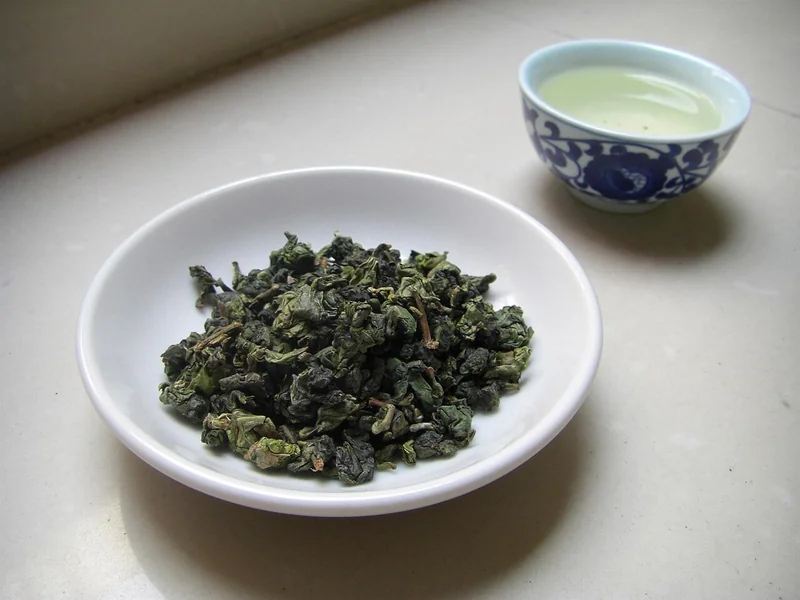
Tieguanyin (鐵觀音, 'Iron Goddess of Mercy') is a variety of oolong tea originating from Anxi County in Fujian Province, China. Named after the Buddhist deity Guanyin, it is one of China's most celebrated teas. Tieguanyin exists in a spectrum from lightly oxidised (20–30 percent, modern 'green' style) to more heavily oxidised (60–70 percent, traditional roasted style), each producing distinctly different flavour profiles. The lightly oxidised style produces floral, orchid-like aromas with high fragrance; the roasted style delivers deeper, roasted honey and caramel character. The cultivar itself is called Tieguanyin and was first cultivated in Anxi. The tea is closely associated with gongfu cha brewing.
Quick facts
- Type
- Tea
- Origin
- China (Anxi County, Fujian Province)
- Cultivar
- Tieguanyin (named cultivar)
- Oxidation
- Oolong (partial)
- Caffeine
- Medium
- Umami
- Subtle in lightly oxidised; more present in roasted
- Astringency
- Low to moderate, depends on oxidation level
- Sweetness
- Orchid sweetness (green style); roasted honey (baked style)
- Body
- Medium
- Tasting notes
- orchid, gardenia, honey, roasted caramel, rock sugar
Origin Legends and Cultivar
Two competing origin stories surround Tieguanyin. In the 'Wei' story, a Qing dynasty tea farmer named Wei Yin discovered a wild tea plant near a rundown Guanyin shrine, cultivated it, and named it after the deity. In the 'Wang' story, a scholar named Wang Shirang presented the tea to Emperor Qianlong, who named it. Neither account is fully verifiable. What is documented is that the Tieguanyin cultivar — a specific clone of Camellia sinensis — was established in Anxi County, Fujian, and has been cultivated there since at least the 19th century. The cultivar is distinctive for its large, robust leaves with a purple-green tint and thick, waxy surface.
Two Styles: Green and Traditional Roasted
Modern Tieguanyin production bifurcated in the 1990s into two distinct styles. The 'green' or lightly oxidised style (qingxiang, 'light fragrance') uses minimal oxidation (20–30 percent) and no roasting, producing vivid green rolled balls, a bright yellow-green infusion, and intense orchid and gardenia floral aromas. This style dominates the market today. The 'traditional roasted' style (nongxiang, 'rich fragrance') involves higher oxidation (40–70 percent) and multiple rounds of charcoal or electric roasting, darkening the leaves and producing caramel, honey, and roasted notes similar to Wuyi rock oolongs. The roasted style was the historical norm before the qingxiang revolution of the 1990s.
Gongfu Cha and Multiple Infusions
Tieguanyin is one of the teas most closely associated with gongfu cha (工夫茶) brewing — the Chinese art of careful, attentive tea preparation using small vessels and short steeping times. In traditional gongfu cha, a gaiwan or small Yixing teapot is filled to 30–50 percent capacity with tightly rolled Tieguanyin balls, then steeped in 90–95°C water for 15–30 seconds per infusion. The rolled balls slowly unfurl over multiple infusions (typically 5–7), with each infusion revealing a different aspect of the tea's flavour. The first infusion is used to rinse the leaves and warm the vessel rather than to drink.
Sources & further reading (2)
- encyclopedia — accessed 2026-05-07
- specialty-reference — accessed 2026-05-07
Frequently asked questions
Why is Tieguanyin called 'Iron Goddess of Mercy'?
Tieguanyin translates directly as Iron (Tie) Goddess of Mercy (Guanyin). The 'iron' in the name refers to the cultivar's characteristic dark, heavy rolled balls — the finished tea is denser and heavier than most oolongs. Guanyin is the Buddhist bodhisattva of compassion, a popular deity in Chinese folk religion. The name reflects both the tea's appearance and its origin legends connecting it to a Guanyin shrine.
What is the difference between green and roasted Tieguanyin?
Green (qingxiang) Tieguanyin is lightly oxidised (20–30 percent) and not roasted, producing a bright, orchid-floral character with high fragrance and a green-yellow infusion. Traditional roasted (nongxiang) Tieguanyin is more heavily oxidised and charcoal or electrically roasted, producing a darker leaf, amber infusion, and flavours of caramel, honey, and roasted grain. The two styles are dramatically different in character despite coming from the same cultivar.
How many infusions can Tieguanyin produce?
High-quality Tieguanyin produces 5–7 or more infusions using gongfu cha brewing. The tightly rolled balls require 2–3 infusions to fully open, so the character evolves significantly across the session. Later infusions from fully opened leaves tend to develop deeper, more mineral notes. Lighter qingxiang styles may exhaust earlier than roasted styles.