Tetsubin Brewing
The Japanese cast-iron kettle method — tetsubin water takes on trace iron ions said to improve brewed tea.
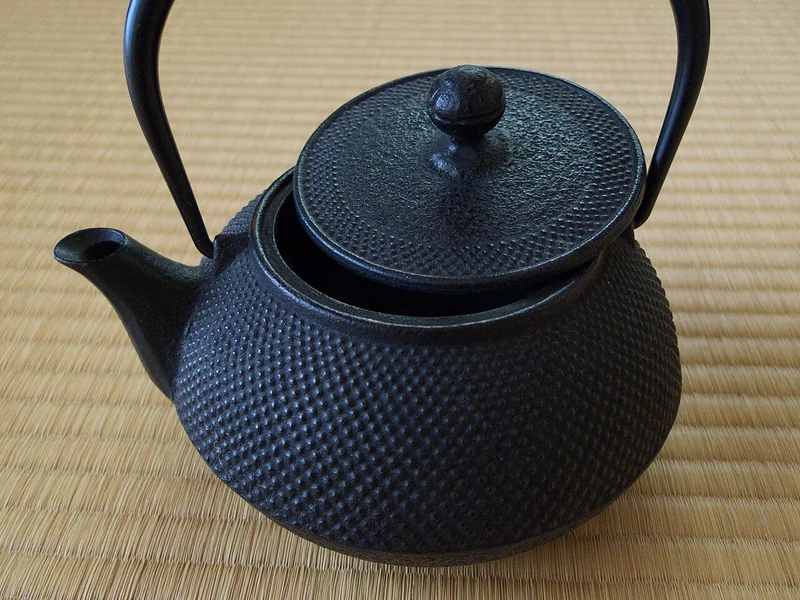
Tetsubin brewing refers to the use of a Japanese cast-iron kettle (tetsubin, 鉄瓶) to heat water for tea preparation. The tetsubin, traditionally made in Nambu ironware (Nambu tekki) from Iwate Prefecture, is heated directly over a charcoal fire or electric heat source. As water heats in the cast-iron vessel, trace iron ions are released into the water — a small and measurable increase in mineral content. Traditional Japanese tea practitioners claim this mineral modification makes water 'softer' in taste and improves the extraction of all teas brewed from it. Modern tetsubin are typically enamelled on the inside, which prevents rusting but also prevents iron release, making them decorative heating vessels rather than true mineral-modifying kettles.
Quick facts
- Type
- Brewing Method
Traditional Nambu Tetsubin
The most celebrated tetsubin are produced by artisans in Iwate Prefecture's Nambu region (now Morioka and Oshu cities), using sand-casting techniques documented from the 17th century. Nambu tekki (南部鉄器) iron goods, including tetsubin, were recognised as Traditional Crafts products by Japan's Ministry of Economy, Trade, and Industry. The casting process produces a textured exterior — often with a distinctive nodule or crosshatch pattern — and an un-enamelled interior that allows direct water-iron contact. Traditional tetsubin require careful seasoning before first use and regular drying after each use to prevent rust. The inside develops a natural mineral coating (sabi-dome) over time that helps stabilise and protect the iron surface.
Iron Release and Water Chemistry
When water is heated in an un-enamelled cast-iron tetsubin, ferrous ions (Fe²⁺) dissolve slowly into the water in trace quantities. The amount is small — typically in the low milligrams per litre range — and varies with water hardness, temperature, and the tetsubin's seasoning state. These iron ions may slightly affect the perception of the water's mineral character. Some tea practitioners describe water from a well-seasoned tetsubin as having a rounder, smoother quality compared to the same water heated in stainless steel or glass. Scientific measurement of flavour differences attributable solely to tetsubin iron release is limited; the practice is primarily documented in traditional Japanese tea culture rather than controlled experimental settings.
Modern Tetsubin and Enamelled Versions
Much of the tetsubin sold internationally today is enamelled on the interior, making it a decorative teapot (used for steeping and serving, not just heating water) rather than a traditional iron-releasing kettle. Enamelled tetsubin do not release iron into water and are effectively standard teapots in cast-iron form. They are easier to maintain — no seasoning required, rust-resistant — but do not provide the mineral modification associated with traditional tetsubin. True un-enamelled tetsubin (intended for use on a heat source) require careful maintenance: always dried immediately after use, never left with water sitting inside, and stored with a piece of charcoal inside to absorb moisture if not in regular use.
Sources & further reading (2)
- encyclopedia — accessed 2026-05-07
- industry-association — accessed 2026-05-07
Frequently asked questions
Does water from a tetsubin really taste different?
Traditional Japanese tea practitioners widely report that water heated in an un-enamelled tetsubin has a noticeably rounder, softer character. The trace iron ions released during heating increase the mineral content of the water slightly, which can affect how tea extracts — particularly the perception of sweetness and body. The differences are subtle and may not be universally perceptible, but the practice has a documented multi-century history in Japanese tea culture.
What is the difference between a tetsubin and an enamelled cast-iron teapot?
A traditional tetsubin is an un-enamelled cast-iron kettle used to heat water over a flame or electric coil — it is not a teapot. An enamelled cast-iron teapot (often sold internationally as a 'tetsubin' but technically a different object) is coated inside with enamel, preventing iron release, and is used for steeping and serving tea rather than heating water. The traditional tetsubin releases trace iron ions; the enamelled version does not.
How should a traditional tetsubin be maintained?
After each use, pour out all remaining water immediately. Heat the tetsubin briefly over low heat to dry any remaining moisture inside — leaving water sitting inside accelerates rusting. Store with the lid open to allow airflow. If storing long-term, place a piece of wood charcoal inside to absorb moisture. Never use detergent inside a traditional tetsubin. A small amount of rust inside an active tetsubin is not considered harmful — the rust forms a patina that stabilises over time.