Tetsubin
The Japanese cast-iron kettle — handcrafted in the Nambu ironware tradition — a craft art since the Edo period.
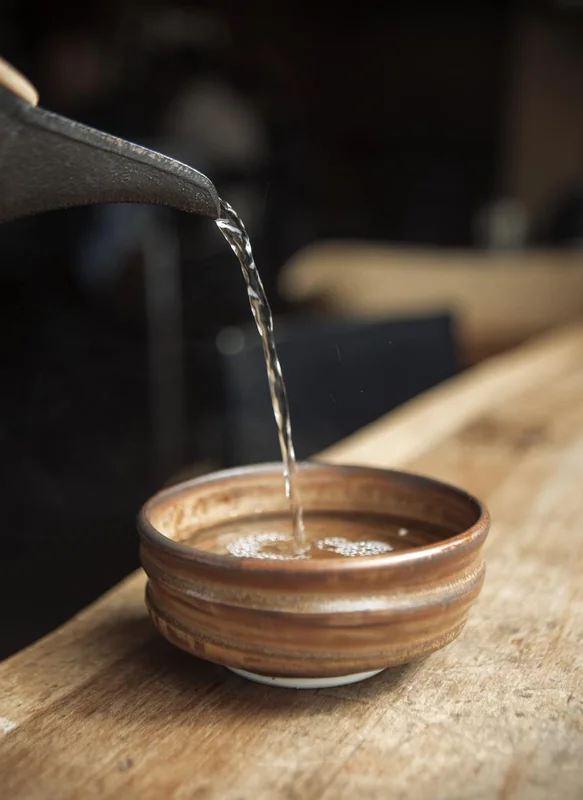
Tetsubin (鉄瓶, 'iron bottle') are Japanese cast-iron kettles used to heat water for tea preparation. The most celebrated tradition is Nambu tekki (南部鉄器), produced by artisans in Morioka and Oshu in Iwate Prefecture, recognised by Japan's Agency for Cultural Affairs as a traditional craft. Traditional tetsubin are sand-cast in two halves, with an un-enamelled interior and a textured exterior surface in patterns such as arare (hailstone nodules), bishamon, or arabesque. Water heated in an un-enamelled tetsubin absorbs trace iron ions from the cast-iron surface. Modern reproductions sold internationally are often enamelled on the interior and function as teapots rather than true water-heating kettles.
Quick facts
- Type
- Tea Ware
Nambu Ironware Tradition
Nambu tekki ironwork originated in the Nambu domain (present-day Iwate and Aomori Prefectures) in the 17th century, when feudal lords invited craftsmen from Kyoto to establish iron goods production. The tradition flourished under patronage in the Edo period, producing both utilitarian goods and highly refined art objects. Tetsubin production in Nambu became particularly refined from the 18th century. The sand-casting technique used by Nambu artisans creates a two-piece mold from compacted sand, into which molten iron is poured. After cooling, the mold is broken, and the rough casting is filed, polished, and treated with lacquer or ru (plum seed) juice to produce the characteristic matte-black exterior. The textured surface patterns — arare, bishamon, wisteria, pine needle — are formed in the mold.
Un-enamelled vs. Enamelled Interiors
Traditional tetsubin have un-enamelled interiors, allowing the cast-iron surface to be in direct contact with heated water. Over time, a layer of natural minerals precipitates inside — called sabi-dome (rust prevention layer) — which stabilises the iron surface and slightly mineralises the water. Enamelled tetsubin (common in the international market) have a glass-like vitreous enamel coating inside, preventing rust and iron contact with water, but they function essentially as standard teapots. They cannot be used on direct heat sources without risk of enamel cracking and are used only for steeping and serving. Buyers should note this distinction: a true un-enamelled tetsubin is a water-heating kettle; an enamelled one is a decorative teapot.
Care and Maintenance
An un-enamelled tetsubin requires specific maintenance. After each use, all remaining water must be poured out. The kettle should then be heated over low heat until completely dry inside — residual moisture causes rust. Store with the lid off to allow airflow. A small piece of charcoal placed inside during long-term storage absorbs moisture. The interior will develop a patina over time — some orange spots are normal and do not indicate failure. Never use soap inside. If significant rust develops, specialist advice is recommended before continuing use. Enamelled tetsubin require only rinsing with water and air drying, similar to any ceramic vessel.
Sources & further reading (2)
- encyclopedia — accessed 2026-05-07
- government-data — accessed 2026-05-07
Frequently asked questions
What is Nambu tekki and why is it famous?
Nambu tekki (南部鉄器) is a traditional iron craft from Iwate Prefecture in Japan, designated as a Traditional Craft by Japan's Agency for Cultural Affairs. The tradition, centred in Morioka and Oshu cities, has produced both tetsubin (kettles) and other iron goods since the 17th century. Nambu tetsubin are known for their distinctive textured surface patterns, refined proportions, and the depth of the ironwork tradition behind them. The craft is maintained by a small number of registered artisans.
Can a tetsubin be used on induction cooktops?
Traditional cast-iron un-enamelled tetsubin can be used on induction cooktops because cast iron is magnetic. However, the transition from cool to hot should be gradual to avoid thermal shock. Enamelled decorative tetsubin marketed as teapots should not be used on any direct heat source — they are designed only for pouring from pre-heated water. Check the manufacturer's specifications before using any tetsubin on induction or gas.
How is a tetsubin different from a tetsukyusu?
A tetsubin is a kettle for heating water — typically without a strainer inside, designed to be placed on a heat source. A tetsukyusu (鉄急須, 'iron teapot') is a smaller iron vessel designed for brewing and serving tea, always with an interior strainer. Tetsukyusu are never placed directly on heat. Both are made from cast iron, but their functions differ. Many commercially sold 'tetsubin' in international markets are actually tetsukyusu.