Shou Pu-erh (Ripe)
Yunnan's artificially fermented pu-erh — invented in 1973 to produce aged pu-erh in weeks — dark and earthy.
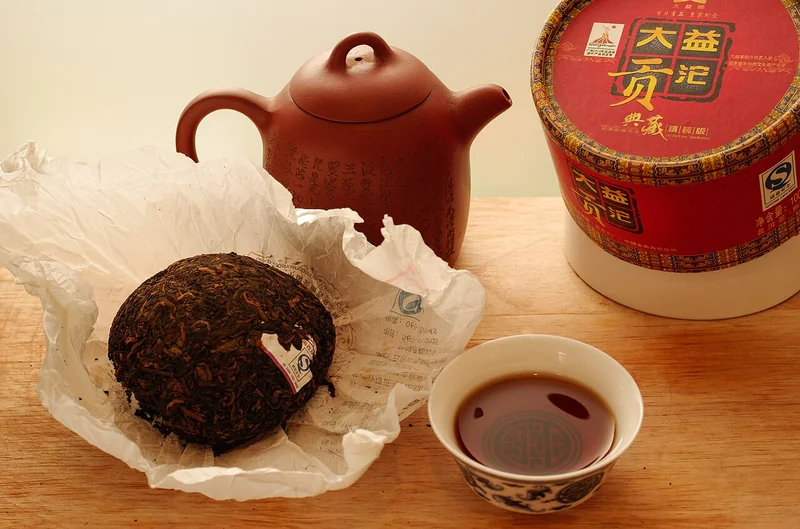
Shou pu-erh (熟普洱, 'ripe pu-erh') is a Yunnan post-fermented tea produced using the wo dui (wet-piling) process developed by the Kunming Tea Factory in 1973. In wo dui fermentation, maocha (sun-dried Yunnan green tea leaf) is piled to a depth of 50–100 cm, moistened to 30–35 percent humidity, and left to undergo accelerated microbial fermentation for 40–60 days. Temperatures inside the pile can reach 60–70°C. The resulting tea has a dark-brown to black appearance, a dark reddish-brown infusion, and a smooth, earthy, woody flavour profile with minimal bitterness — resembling 30 or more years of aged sheng pu-erh in basic character, though distinct in detail.
Quick facts
- Type
- Tea
- Origin
- China (Yunnan Province, Menghai, Kunming)
- Oxidation
- Post-fermented
- Caffeine
- Low
- Umami
- Deep, mushroom-like umami
- Astringency
- Very low
- Sweetness
- Dried fruit, molasses sweetness
- Body
- Full, smooth
- Tasting notes
- earth, dried mushroom, wood, dark molasses, leather
Wo Dui: The 1973 Invention
By the early 1970s, demand for aged sheng pu-erh — which required 20–30 years of storage — exceeded supply. Tea technicians at the Kunming Tea Factory, led by Wu Qiyuan and others, developed the wo dui (渥堆, 'wet piling') process in 1973 as a shortcut to producing tea with similar earthy character to aged sheng. Maocha is spread in a 50–100 cm layer, moistened with water to approximately 30–35 percent humidity, then covered with cloth. Natural microorganisms — predominantly Aspergillus niger but also bacteria and other fungi — colonise the pile, generating heat (60–70°C inside the pile) and enzymatically degrading the polyphenols and other compounds. The pile is turned periodically to ensure even fermentation. After 40–60 days, the fermented maocha is dried and pressed or sold loose.
Menghai Factory and Modern Shou Production
The Menghai Tea Factory (7572 and other factory codes) in Xishuangbanna became the dominant commercial producer of shou pu-erh after the wo dui process was shared across Yunnan's state tea factories. Menghai's specific microbial culture — developed over decades in its factory environment — is considered proprietary, and the factory maintains that its wo dui fermentation produces a distinctive profile compared to other producers. Several iconic shou pu-erh references come from Menghai: the 7572 recipe (using a specific leaf grade combination) has been produced since the 1970s and is a benchmark for shou quality assessment. Private estate shou production expanded from the 1990s as private tea companies entered the market.
Aging and Storage of Shou
Unlike sheng pu-erh, which requires decades of aging to develop, shou pu-erh is drinkable immediately after production. However, freshly produced shou often has a 'pile smell' (dui wei) — a sometimes off-putting musty or fishy note that results from the wo dui process. This dissipates with 6–12 months of dry, airy storage. Properly stored shou pu-erh continues to improve over 5–10 years as remaining fermentation activity stabilises, the pile smell fully dissipates, and the earthy character deepens. Some collectors compare well-aged shou (10–20 years) to moderately aged sheng in complexity, though the profiles remain fundamentally distinct.
Sources & further reading (2)
- encyclopedia — accessed 2026-05-07
- specialty-reference — accessed 2026-05-07
Frequently asked questions
Why was shou pu-erh invented?
Aged sheng pu-erh — requiring 20–30+ years of storage — was in high demand in Hong Kong and overseas Chinese communities in the early 1970s, but supply was limited by the time required for natural aging. Technicians at Kunming Tea Factory developed the wo dui (wet-piling) process in 1973 to produce tea with a similar earthy, aged character in 40–60 days rather than decades. Shou pu-erh filled the market demand for aged-style tea at lower prices.
What is 'pile smell' and does it go away?
Pile smell (dui wei) is a musty, sometimes fishy or barnyard-like odour in freshly produced shou pu-erh that results from the microbial activity of wo dui fermentation. It is not a defect per se but a characteristic of fresh production. With 6–12 months of dry, well-ventilated storage, pile smell dissipates significantly in most teas, though the pace varies by storage conditions and tea grade. Consumers who find fresh shou off-putting often find it much more pleasant after this initial airing period.
How is shou pu-erh different from other dark teas?
Shou pu-erh is a subset of Chinese dark tea (hei cha), which includes other post-fermented styles such as Liu Bao (Guangxi), Fu Brick, and Hunan dark tea. What distinguishes shou pu-erh from these is the specific wo dui process developed for Yunnan large-leaf assamica maocha, the Geographical Indication designation for pu-erh (restricted to defined Yunnan areas), and its specific microbial and flavour profile. Liu Bao and Fu Brick have different regional origins, different processing parameters, and distinct flavours.