Sencha
Japan's most widely consumed green tea, steamed after harvest to preserve vivid green colour and vegetal sweetness.
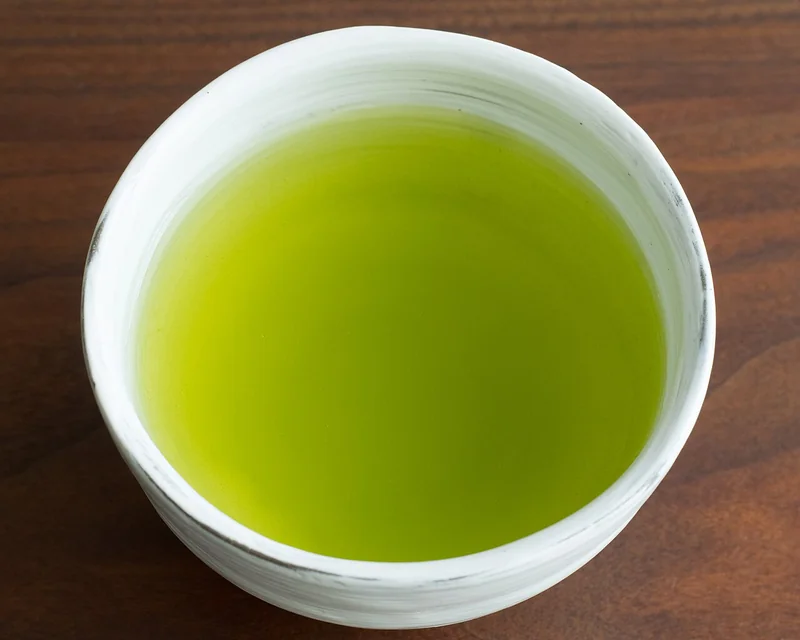
Sencha is the dominant green tea of Japan, accounting for roughly 80 percent of domestic tea production. Leaves of Camellia sinensis are steamed within hours of harvest — typically for 20–40 seconds in standard sencha or 60–120 seconds in fukamushi (deep-steamed) variants — which deactivates the polyphenol oxidase enzyme and locks in a green colour and grassy flavour. The leaves are then rolled, dried, and sorted by grade. Growing regions include Shizuoka Prefecture, Kagoshima, and Kyoto's Uji area, with altitude, soil type, and shading duration influencing flavour. Sencha is brewed at 70–80°C to minimise bitterness.
Quick facts
- Type
- Tea
- Origin
- Japan (Shizuoka, Kagoshima, Uji)
- Oxidation
- Green (unoxidised)
- Caffeine
- Medium
- Umami
- Moderate umami, more pronounced in higher grades
- Astringency
- Light to moderate, increases with higher temperature
- Sweetness
- Gentle sweetness, more evident in lower-temperature brews
- Body
- Light to medium
- Tasting notes
- fresh grass, seaweed, steamed vegetables, pine
Processing and Steaming
Immediately after harvest, sencha leaves are conveyed to a steamer where hot steam at 95–100°C is applied for 20–40 seconds (standard sencha) or 60–120 seconds (fukamushi). Steaming deactivates polyphenol oxidase, the enzyme responsible for oxidation and browning. Fukamushi sencha has a deeper green colour, a finer, more broken leaf, and a thicker, cloudier infusion compared to standard sencha. After steaming, the leaves are cooled, rolled longitudinally into thin needle shapes, and dried in several stages to reduce moisture content below 5 percent.
Growing Regions
Shizuoka Prefecture, located on the Pacific coast southwest of Tokyo, produces approximately 40 percent of Japan's green tea by volume. Kagoshima in southern Kyushu produces younger, lighter-flavoured teas under warmer conditions. Uji, south of Kyoto, is renowned as the home of premium sencha and the predecessor to modern tea cultivation in Japan. Within each region, microclimate factors — proximity to rivers, altitude, morning fog, and soil mineral content — create significant variation in flavour profiles. Yabukita is the dominant cultivar, accounting for over 70 percent of Japanese tea cultivation.
Grades and Market
Sencha is graded by the quality of the first, second, and third flushes. Shincha (the first-flush harvest, typically late April to early May) commands premium prices and is valued for its fresh, sweet character. Subsequent flushes produce more bitter, astringent teas typically blended for mass-market products. Gyokuro and kabusecha (partially shaded teas) are distinct from sencha in production but share the same base leaf. Japan exports relatively little sencha compared to domestic consumption, with exports primarily to the United States and select European markets.
Sources & further reading (2)
- encyclopedia — accessed 2026-05-07
- government-data — accessed 2026-05-07
Frequently asked questions
What is the correct water temperature for brewing sencha?
Standard sencha is brewed at 70–80°C. Lower temperatures (70–75°C) produce sweeter, more umami-forward brews with less bitterness, while temperatures above 80°C extract more tannins and create greater astringency. Fukamushi sencha can be brewed slightly cooler, around 65–75°C, to highlight its thicker flavour without excess bitterness.
What is the difference between sencha and gyokuro?
The primary difference is shading. Gyokuro plants are shaded for 20 or more days before harvest, which reduces photosynthesis and increases the concentration of L-theanine (an amino acid responsible for umami) relative to catechins (astringent compounds). Sencha is grown in direct sunlight. The result is that gyokuro has a more pronounced umami character, a sweeter taste, and less bitterness than sencha.
What is fukamushi sencha?
Fukamushi (deep-steamed) sencha uses a longer steam time of 60–120 seconds versus the 20–40 seconds used for standard sencha. The extended steaming breaks down leaf cells more thoroughly, producing smaller, powdery particles and a thicker, less transparent infusion. Fukamushi teas have a stronger flavour, more body, and appear cloudier in the cup. They are popular in Shizuoka and have grown in market share since the 1980s.