Samovar
The Russian and Central Asian urn for boiling water and maintaining tea concentrate — symbol of Russian tea culture.
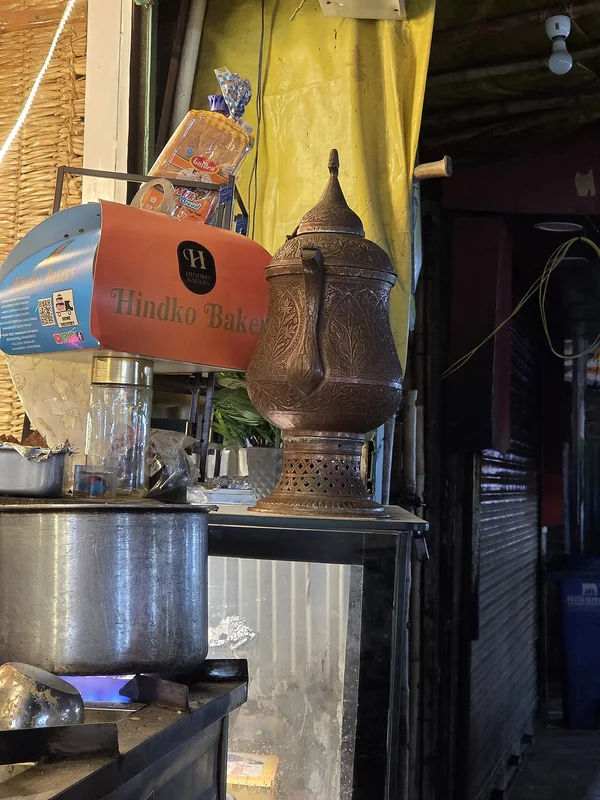
The samovar (самовар, Russian: 'self-boiler') is a heated metallic container traditionally used in Russia and across the former Soviet Union, Iran, Turkey, Central Asia, and parts of South Asia to heat and maintain hot water for tea. The traditional design consists of a water-filled urn heated by a central chimney filled with burning wood, coal, or charcoal; modern versions use electric heating elements. A small teapot (zavarnik) containing concentrated tea (zavarka) sits on top of the samovar's crown. Tea is served by diluting a portion of the strong concentrate from the zavarnik with boiling water from the samovar's spigot, allowing each person to choose their preferred tea strength.
Quick facts
- Type
- Brewing Method
Design and Operation
The traditional samovar consists of a cylindrical body holding 3–12 litres of water, a central chimney tube through which burning fuel (wood, charcoal, or pine cones) heats the surrounding water, a spigot near the base for dispensing hot water, and a crown on top that holds the small teapot (zavarnik) containing the tea concentrate. The chimney draws air upward, creating a draught that keeps the fuel burning. The body maintains water at near-boiling for extended periods. Traditional samovars are made from copper or brass; high-quality versions from silver or gilded copper. The fuel-fired samovar was gradually replaced by electric samovar designs in Soviet-era Russia, and electric samovars remain common in Russian and Central Asian households today.
Tea Service Tradition
Russian tea service using a samovar involves the concentrate-and-dilution method: strong black tea (traditionally Keemun or mixed Chinese-Indian blends in historical contexts, now typically Indian CTC black teas) is brewed in the small zavarnik teapot placed on the crown of the samovar. The heat of the samovar keeps the concentrate warm. When serving, 20–40 ml of concentrate is poured into a glass or cup, then hot water from the samovar spigot is added to achieve the desired strength. This allows customisation — some drink very strong, dark tea; others prefer a lighter infusion. Traditional Russian tea service uses glass holders (podstakannik, a decorative metal holder for a glass) rather than cups.
History and Spread
The samovar's precise origin is disputed. Tula, a city south of Moscow, claims to be the manufacturing centre of the Russian samovar tradition, with some historians tracing the design to the 17th century or earlier. Mass production in Tula began in the 18th century, and the city still produces samovars today. The Russian samovar spread throughout the Russian Empire and into Central Asia with Russian expansion, and local versions developed in Iran (where the samovar became central to tea culture, introduced in the 19th century), Turkey, and Afghanistan. The samovar also appeared in East European Jewish culture (known in Yiddish as a 'samovar') and in parts of the Caucasus. Internationally, the samovar has become a cultural symbol of Russian hospitality.
Sources & further reading (2)
- encyclopedia — accessed 2026-05-07
- museum-reference — accessed 2026-05-07
Frequently asked questions
What does 'samovar' mean?
Samovar derives from the Russian 'sam' (self) + 'varit' (to boil) — literally 'self-boiler.' The name reflects the device's ability to maintain hot water independently once lit, without requiring a separate heat source outside the container. The central chimney with burning fuel heats the surrounding water from within the vessel itself.
How is tea served from a samovar?
A small teapot (zavarnik) sits on the samovar's crown, keeping a strong tea concentrate warm. To serve, a portion of concentrate (20–40 ml) is poured into a glass or cup, then diluted to taste with boiling water from the samovar's spigot. This allows each person to control the strength of their tea. Traditionally, Russian tea is served in glasses held in metal podstakannik (glass holders), typically with sugar cubes, lemon slices, or jam.
Is the samovar still used today?
Yes. Electric samovars remain common in Russian, Ukrainian, Central Asian, and Iranian households. The traditional fuel-fired (wood or charcoal) samovar is now used primarily for outdoor occasions, dacha (country house) tea, and ceremonial purposes. Tula continues to manufacture both traditional and electric samovars, and antique samovars are collected internationally. In Iran, Pakistan, and parts of Central Asia, the samovar remains a standard household and hospitality item.