Oriental Beauty
Taiwan's heavily oxidised, leafhopper-bitten oolong — renowned for a natural honey-muscat sweetness from insect stress.
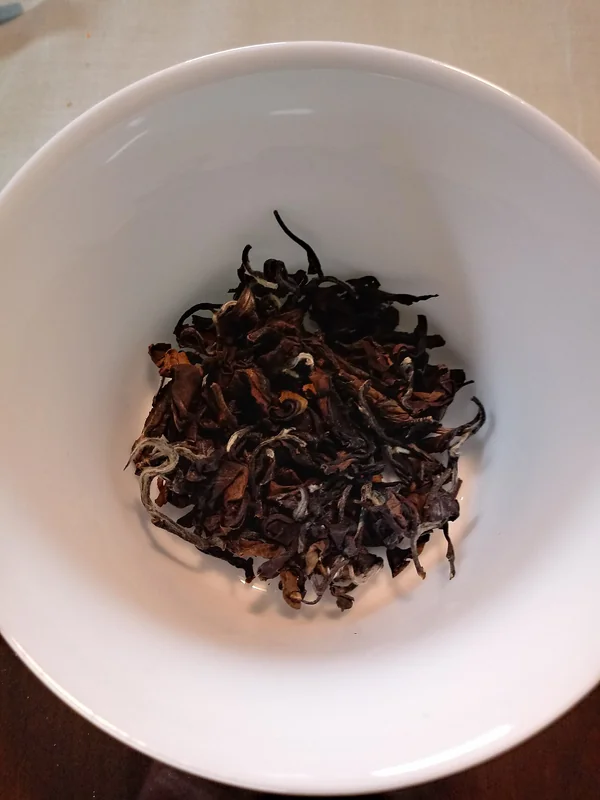
Oriental Beauty (東方美人茶, Dongfang Meiren, also called Bai Hao oolong or Champagne oolong) is a unique heavily oxidised Taiwanese oolong produced primarily in Hsinchu and Miaoli counties at lower elevations (200–600 metres). The defining production requirement is intentional leafhopper (Empoasca onukii) infestation: insects bite the young tea shoots, triggering the plant's defensive biochemistry and releasing aromatic compounds (geraniol, linalool, hotrienol) responsible for Oriental Beauty's characteristic honey-Muscat aroma. Heavily oxidised (60–80 percent), lightly roasted, it produces a large-leaf, multicolored appearance (white, green, yellow, brown, red) and a luminous amber infusion.
Quick facts
- Type
- Tea
- Origin
- Taiwan (Hsinchu, Miaoli Counties)
- Cultivar
- Qingxin Dapan, Bai Hao cultivar
- Oxidation
- Oolong (partial)
- Caffeine
- Medium
- Astringency
- Low
- Sweetness
- Pronounced honey, Muscat grape sweetness
- Body
- Medium, silky
- Tasting notes
- honey, Muscat grape, peach, rose, cinnamon
Leafhopper Infestation as Production Requirement
Oriental Beauty production depends on the green leafhopper (Empoasca onukii, also called the tea green leafhopper) biting the young tea shoots before harvest. This feeding stress triggers the tea plant's defence response, releasing volatile terpenoids including geraniol, linalool, and hotrienol — compounds responsible for the characteristic honey-muscat fragrance. The process is similar to the floral stress response observed in Darjeeling second-flush muscatel and Japanese melon honeydew notes in some high-end sencha. Crucially, insecticide use is incompatible with Oriental Beauty production — the leafhopper damage must be allowed to occur. This is the primary reason certified organic farming has become standard for Oriental Beauty producers.
Heavy Oxidation and Appearance
Oriental Beauty is oxidised to 60–80 percent — far higher than most oolongs (20–50 percent), approaching the oxidation level of black teas. This heavy oxidation is applied to the leafhopper-stressed leaves, which are more fragile than normal leaves and require careful processing. After oxidation, light roasting stabilises the tea. The finished dry leaf shows five colours: white (bud tips), green (young leaves), yellow (mid-growth leaves), red-brown (older leaves), and brown-black (most oxidised material). This multicolored appearance is called 'five-colour' and is considered a quality indicator — the variety of colours indicates that multiple leaf ages and maturity levels are present, each contributing different compounds to the infusion.
British Connection and the Name
According to popular tradition, a Taiwanese tea merchant presented a bag of this tea to Queen Elizabeth II in the mid-20th century. The queen, reportedly delighted by its character, called it 'Oriental Beauty' — and the name stuck for the English market. Whether this story is precisely accurate is uncertain, but the English name has become the most widely used internationally. The tea has also been called 'Champagne oolong' in some Western markets, a reference to its amber colour and perceived luxury. In Chinese, it is Dongfang Meiren (Eastern Beauty) or Bai Hao (White Down) oolong — the latter name referring to the white-tipped buds.
Sources & further reading (2)
- encyclopedia — accessed 2026-05-07
- specialty-reference — accessed 2026-05-07
Frequently asked questions
Why must Oriental Beauty be bitten by leafhoppers?
Leafhopper feeding triggers the tea plant's biochemical defence response, producing volatile terpenoids including geraniol, linalool, and hotrienol — the specific aromatic compounds responsible for Oriental Beauty's honey-Muscat character. Without leafhopper stress, the same cultivar and processing produce a generic heavily oxidised oolong without the characteristic aroma. This is why insecticide use is incompatible with production: the insects must be allowed to feed.
What are the 'five colours' of Oriental Beauty?
High-quality Oriental Beauty shows five distinct colours in the dry leaf: white (bud tips covered in hair), green (young leaves), yellow (mid-growth stage), red-brown (older leaves), and dark brown-black (most heavily oxidised material). This multicolored mix indicates that multiple flush stages and leaf maturities were harvested together — each contributing different aromatic compounds. Teas with all five colours prominently visible are considered premium.
How does Oriental Beauty relate to Darjeeling muscatel?
Both teas develop their characteristic floral-honey notes through the same mechanism: leafhopper (green leafhopper) feeding stress that triggers volatile terpenoid release in the tea plant. In Darjeeling, the insect is Empoasca flavescens; in Taiwan, it is Empoasca onukii. The resulting aromatic compounds (geraniol, linalool) are similar. Oriental Beauty is far more heavily oxidised than Darjeeling second flush, producing a more amber, honey-dominant cup versus Darjeeling's Muscat-floral character.