Matcha
Finely stone-ground shaded Japanese green tea consumed as a suspended powder, the medium of the formal chanoyu ceremony.
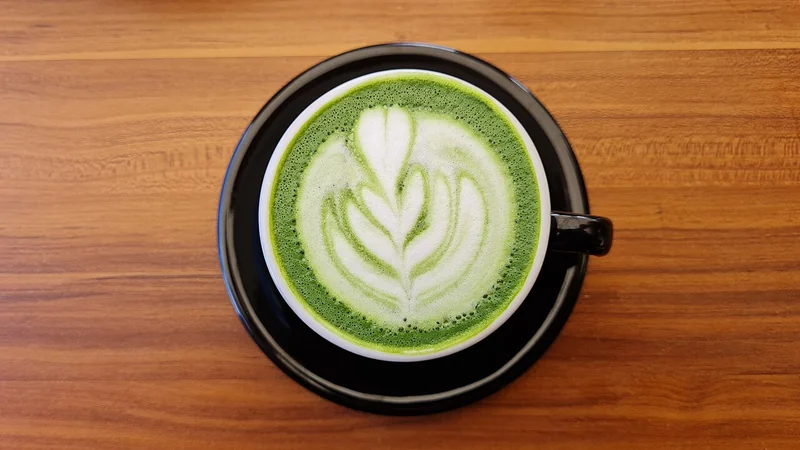
Matcha is a powdered green tea produced exclusively in Japan from shade-grown Camellia sinensis leaves. Plants destined for matcha are covered for 20–30 days before harvest, reducing sunlight and increasing chlorophyll and L-theanine concentrations. Harvested leaves (tencha) are steamed, dried, de-stemmed, and de-veined before stone-grinding into a fine powder of 5–10 microns. Unlike steeped teas, matcha is fully suspended in water using a chasen (bamboo whisk); the entire leaf is consumed. Matcha is produced primarily in Uji (Kyoto), Nishio (Aichi), and Yame (Fukuoka).
Quick facts
- Type
- Tea
- Origin
- Japan (Uji, Nishio, Yame)
- Cultivar
- Yabukita, Okumidori, Samidori
- Oxidation
- Green (unoxidised)
- Caffeine
- High
- Umami
- Strong umami, characteristic of high-grade matcha
- Astringency
- Low in ceremonial grade, higher in culinary grade
- Sweetness
- Persistent sweetness in ceremonial grades
- Body
- Full-bodied, thick suspension
- Tasting notes
- steamed spinach, seaweed, cream, grass
Production: From Shade to Stone Mill
Matcha production begins with shading the tea plants 20–30 days before the May first flush. Covering materials historically were reed screens (sudare) and now include synthetic black netting. Reduced sunlight slows photosynthesis, causing plants to produce more chlorophyll (maintaining vivid green colour) and L-theanine (an amino acid contributing to umami and a mellow character). After harvest, leaves are quickly steamed to stop oxidation, then dried in flat sheets (tencha). De-stemming and de-veining remove coarser plant material. The resulting tencha is then stone-ground in slowly rotating granite mills at a rate of 30–40 grams per hour — a deliberately slow process that prevents heat buildup that would alter flavour.
Grades and Uses
Ceremonial-grade matcha (usucha, thin tea) is produced from the youngest first-flush tencha of premium cultivars. It is intended for traditional preparation: 1–2 grams of matcha whisked in 70–80 ml of 75–80°C water to produce a frothy, vivid green cup. Koicha (thick tea) uses 3–4 grams in 50 ml, reserved for formal tea ceremony. Culinary-grade matcha is produced from later flushes, older leaves, and lower-quality cultivars — its stronger, more bitter character suits baking, ice cream, and beverages where it is combined with dairy or sweeteners. Culinary grade is typically yellower-green in colour than ceremonial grade.
Matcha in the Chanoyu Ceremony
Matcha is inseparable from the Japanese tea ceremony (chanoyu or chado). Sen no Rikyu (1522–1591), the tea master who codified the wabi-cha style of tea ceremony, enshrined matcha preparation as a complete aesthetic and social practice. The objects used — chawan (ceramic bowl), chasen (bamboo whisk), chashaku (bamboo scoop), and chakin (linen cloth) — are selected and handled according to specific protocols. The ceremony emphasises the host's attention to the guest and the transience of the encounter, expressed through the phrase ichi-go ichi-e (one time, one meeting).
Sources & further reading (2)
- encyclopedia — accessed 2026-05-07
- industry-association — accessed 2026-05-07
Frequently asked questions
How is matcha different from other green teas?
Unlike sencha or gyokuro, which are steeped and the leaves discarded, matcha leaves are ground into a fine powder and the entire leaf is consumed suspended in water. Shading before harvest increases L-theanine and chlorophyll, giving matcha its characteristic deep green colour and pronounced umami. The stone-grinding process creates a particle size of 5–10 microns, fine enough to remain suspended when whisked.
What water temperature should be used for matcha?
75–80°C is standard for ceremonial-grade usucha. Water that is too hot (above 85°C) can cause bitterness and destroy some of the more delicate aromatic compounds. After boiling water, allowing it to cool for several minutes in the kettle or pouring it through a cooling bowl (yuzamashi) achieves the correct temperature. A thermometer is the most reliable method.
What is the difference between ceremonial and culinary-grade matcha?
Ceremonial-grade matcha is made from first-flush tencha of premium cultivars, ground slowly in granite mills. It has vivid green colour, pronounced umami, gentle sweetness, and low astringency — intended to be drunk plain without sweeteners. Culinary-grade matcha uses later flushes and older leaves; it is more bitter and yellower-green, designed for cooking and beverages where the stronger character holds up against milk, sugar, and other flavours.