Keemun
China's most celebrated black tea from Qimen County, Anhui — famous for its wine-like orchid aroma and smooth character.
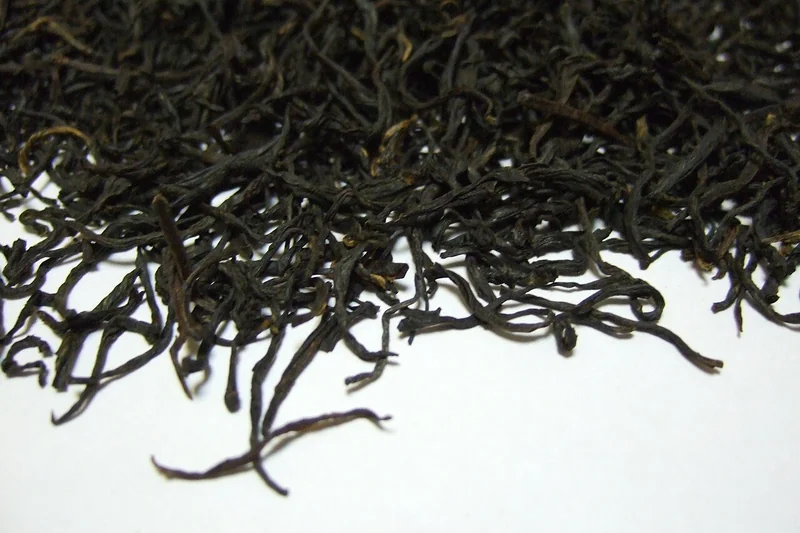
Keemun (Qimen Hong Cha, 祁門紅茶) is a black tea produced in Qimen County and surrounding areas of Anhui Province, China. Introduced commercially in 1875 by Yu Ganchen, a former government official who learned tea processing in Fujian Province, Keemun became one of the most sought-after black teas in the British market by the late 19th century. It is characterised by a distinctive fragrance described as orchid, wine, and fruit — sometimes called the 'Keemun aroma' or 'Qihong fragrance.' Keemun is less astringent than Indian black teas, lower in body, and more complex in aroma. It is the basis of some English breakfast blends and is associated with the formal Chinese tradition of gift-giving at the state level.
Quick facts
- Type
- Tea
- Origin
- China (Qimen County, Anhui Province)
- Cultivar
- Zhuye (local Qimen cultivar)
- Oxidation
- Black (full)
- Caffeine
- Medium
- Astringency
- Low to moderate, smoother than Indian black teas
- Sweetness
- Wine-like, dried fruit sweetness
- Body
- Medium
- Tasting notes
- orchid, dried fruit, cocoa, subtle smokiness, rose
History and Introduction
Before 1875, Qimen County produced primarily green tea. Yu Ganchen, a former official who had observed black tea processing in Fujian Province's Ningde region, returned to Qimen and began producing black tea using the fully oxidised method in 1875. Within two decades, Keemun black tea had become a major export commodity, reaching London markets in the 1880s. British tea companies recognised its distinctive aroma and incorporated it into premium blends. The tea became a component of the Russian royal family's preferred blends and was served at the British royal court. Keemun received a Geographical Indication designation in China in 2005.
The Keemun Aroma
Keemun's characteristic fragrance — variously described as orchid, rose, wine, and dried fruit — is attributed to a specific aromatic compound profile. Key contributors include geraniol, nerol, phenyl ethanol, and various terpene aldehydes that develop during the oxidation and drying process. The Qimen cultivar (Zhuye), the local mineral-rich red soil (red-yellow podzol), and the humid climate of the Anhui mountain valleys are all considered contributing factors. The fragrance is most pronounced in freshly brewed tea and dissipates with storage; premium Keemun is valued fresh rather than aged.
Grades and Production
Keemun is graded from the finest Haoya (down-tip) grade — fine, wiry leaves from bud-heavy picks — through Congou (Gongfu, carefully rolled full-leaf orthodox), to Fannings and Dust grades used in tea bags. Premium Keemun Haoya commands some of the highest prices among Chinese black teas. Production follows orthodox rolling: withered leaves are rolled to break down cell structure, then fully oxidised (fermented) for 3–5 hours in a cool, humid room, then dried. The entire process takes 18–24 hours. Annual production is approximately 6,000 tonnes from the defined Geographical Indication zone, considerably less than many other premium Chinese teas.
Sources & further reading (2)
- encyclopedia — accessed 2026-05-07
- specialty-reference — accessed 2026-05-07
Frequently asked questions
What is the 'Keemun aroma' and where does it come from?
The Keemun aroma — orchid, wine, dried fruit, and rose notes — results from a distinctive set of aromatic compounds (geraniol, nerol, and terpene aldehydes) that develop during full oxidation. The local Zhuye cultivar, Qimen's specific soil composition (red-yellow podzol rich in certain minerals), and the mountain valley microclimate all contribute. The aroma is most intense in fresh, high-grade Keemun and diminishes with storage.
Why is Keemun considered a classic English breakfast tea ingredient?
Keemun's moderate body, low astringency, and complex orchid-wine aroma complement the stronger, more malty Assam and bright Ceylon teas often used in English breakfast blends. It contributes aromatic complexity without dominating. Some historical English breakfast blends were Keemun-heavy, particularly those imported before Indian tea dominance in the late 19th century.
How is Keemun different from other Chinese black teas?
Keemun is distinguished from Yunnan Dianhong (which has a stronger, more robust malt and cocoa character with prominent golden tips) by its more delicate, wine-like orchid aroma and lighter body. Lapsang Souchong (Fujian) is smoked, a characteristic entirely absent from Keemun. Keemun is also less astringent than most Indian black teas and brews a lighter reddish-amber cup.