Junshan Yinzhen
China's rarest yellow tea — silver-needle buds from Dongting Lake, Hunan, with a mellow sweetness from slow smothering.
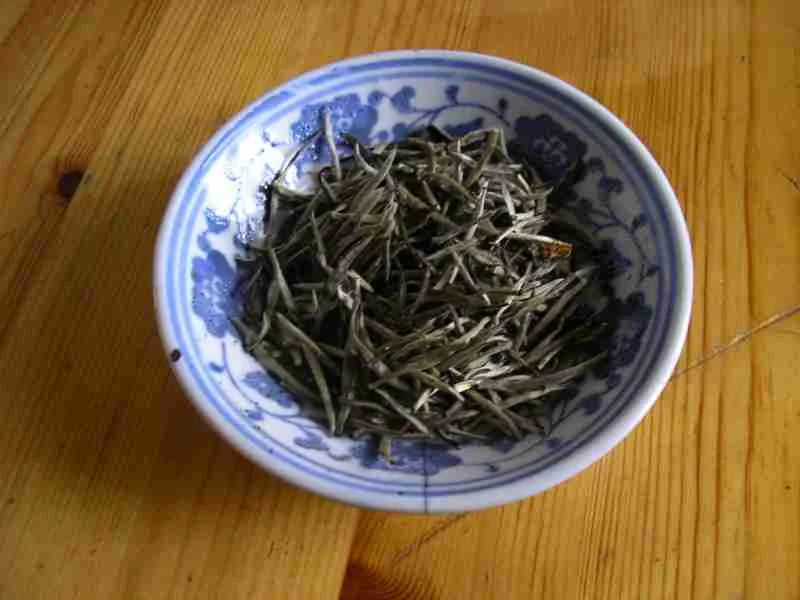
Junshan Yinzhen (君山銀針, 'Silver Needle of Junshan') is produced on Junshan Island, a small landmass in Dongting Lake, Hunan Province — one of China's most geographically constrained tea origins. Yellow tea is produced from the same cultivar as green tea but undergoes an additional step called men huan (smothering or sealing): after initial pan-firing (sha qing), the leaves are lightly covered and allowed to rest in their own heat and moisture for several hours. This slow, mild yellowing process reduces the sharp grassiness of green tea, develops a mellow sweetness, and produces the characteristic yellow leaf colour and clear, yellow infusion. Junshan Yinzhen is one of the most historically significant and rarest Chinese teas, historically classified among the Ten Famous Teas of China.
Quick facts
- Type
- Tea
- Origin
- China (Junshan Island, Dongting Lake, Hunan Province)
- Oxidation
- Yellow (slight)
- Caffeine
- Medium
- Umami
- Mild, delicate umami
- Astringency
- Very low
- Sweetness
- Mellow, apricot-like sweetness
- Body
- Light to medium
- Tasting notes
- apricot, fresh grain, light floral, mellow sweetness
Men Huan: The Yellow Tea Process
Yellow tea production follows the same initial steps as green tea — withering, sha qing (kill-green pan-firing), and initial rolling — but adds the unique men huan (悶黃, 'smothering') step. After sha qing and initial drying, the warm, slightly moist leaves are wrapped in thick yellow paper or cloth and left in a warm, sealed environment for several hours to several days, depending on the specific style. During men huan, residual heat and moisture from the leaves trigger slow non-enzymatic browning reactions (Maillard and Strecker degradation) and limited enzymatic activity. This transforms the vivid green colour to yellow-green, reduces the grassy volatiles characteristic of green tea, and develops a mellower, less sharp flavour. The process must be carefully timed — too little men huan leaves the tea too similar to green; too much produces excessive yellowing and stale flavour.
Junshan Island and Production Scale
Junshan Island is approximately 0.96 square kilometres in area, situated in Dongting Lake in northeastern Hunan Province. The island's combination of misty lake-influence climate, fertile soil, and long production history creates the specific terroir associated with Junshan Yinzhen. Production is extremely limited — annual output is estimated at a few hundred kilograms — making authentic Junshan Yinzhen one of China's scarcest teas. The island was reportedly the source of tea gifts to Mao Zedong, and during the Cultural Revolution era, production was centralised under state management. Only whole, fresh spring buds of a specific minimum length are used.
Yellow Tea in the Ten Famous Teas
Junshan Yinzhen is listed among the traditional 'Ten Famous Teas of China' — a historical classification system without a single authoritative source (different dynasties and regions produced different lists). The consistency of Junshan Yinzhen's inclusion reflects its historical reputation at the imperial level. Yellow tea as a category is far rarer than green, black, or oolong — few producers continue the traditional men huan method, as it requires additional processing time and skill. Most of China's yellow tea production comes from three areas: Hunan (Junshan Yinzhen, Mengding Huangya), Anhui (Huoshan Huangya), and Zhejiang (Pingyang Huangtang).
Sources & further reading (2)
- encyclopedia — accessed 2026-05-07
- specialty-reference — accessed 2026-05-07
Frequently asked questions
What makes yellow tea different from green tea?
Yellow tea begins with the same production steps as green tea but adds the men huan (smothering) step, in which warm, partly dried leaves are sealed and allowed to rest in their own heat and moisture. This reduces the sharp grassiness of green tea, develops a mellower, less vegetal character, and produces the characteristic yellow-green leaf colour and golden-yellow infusion. The flavour sits between green and lightly oxidised white tea in delicacy.
How rare is Junshan Yinzhen?
Junshan Yinzhen is produced on a small island of less than 1 square kilometre in Dongting Lake. Annual production is estimated at a few hundred kilograms — making it among the smallest production volumes of any premium Chinese tea. Authentic Junshan Yinzhen is correspondingly expensive and rarely seen outside specialist Chinese tea shops. Much tea sold under the name may be produced on the lake shore or in Hunan generally, not on Junshan Island itself.
Why are there so few yellow tea producers?
The men huan (smothering) step requires additional time, skill, and careful environmental control — a more complex process than standard green tea production with no proportional price premium compared to the additional effort at most commercial scale. As market demand shifted toward green tea in the late 20th century, many yellow tea producers simplified to green tea processing. Only a handful of traditional producers in Hunan, Anhui, and Zhejiang maintain the authentic men huan technique.