Hojicha
A uniquely roasted Japanese green tea — browned over high heat — with toasty, caramel character and low caffeine.
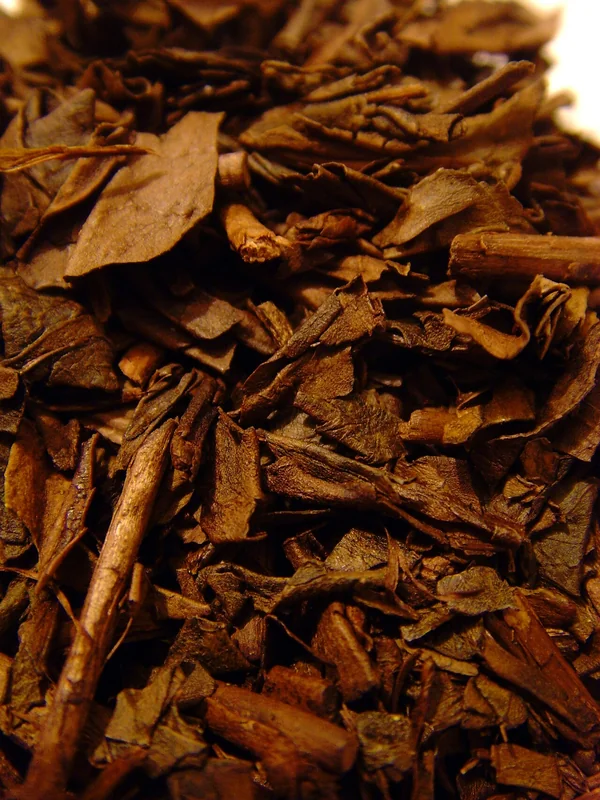
Hojicha (焙じ茶) is a Japanese green tea that has been roasted after initial processing, transforming it into a distinctively different beverage from other green teas. While standard green teas are steamed and dried to preserve freshness and green colour, hojicha undergoes a secondary roasting step — traditionally in a clay pot over charcoal, now typically in a drum roaster — at temperatures around 200°C. This roasting caramelises the sugars in the leaf, produces Maillard reaction compounds, drives off volatile grassy compounds, reduces astringency, and dramatically lowers caffeine content. The result is a tea with a reddish-brown colour, a toasty, caramel-sweet flavour, and significantly less caffeine than unroasted green teas.
Quick facts
- Type
- Tea
- Origin
- Japan (Kyoto, Shizuoka, nationwide)
- Oxidation
- Green (unoxidised)
- Caffeine
- Low
- Umami
- Very low
- Astringency
- Very low
- Sweetness
- Caramel, roasted grain sweetness
- Body
- Light to medium
- Tasting notes
- roasted grain, caramel, brown butter, light smoke, toasted nuts
Roasting Process and Maillard Reaction
Hojicha production begins with standard-grade Japanese green tea leaves — typically bancha (summer-autumn large leaves) or kukicha (stems and leaf stalks) — which are placed in a porcelain pot and roasted at 150–200°C for 30–60 minutes, stirring continuously. The heat triggers two key chemical processes: the Maillard reaction (between amino acids and reducing sugars) and pyrolysis of chlorophyll and polyphenols. These processes produce hundreds of new aromatic compounds, including pyrazines, aldehydes, and furans, which create the characteristic roasted, nutty, and caramel notes. The green colour of the leaf turns to reddish-brown through chlorophyll degradation. Tannins and catechins are also significantly reduced, dropping astringency. Caffeine, being a volatile compound at high temperatures, partially sublimes during roasting, reducing caffeine content.
Bancha and Kukicha as Raw Materials
Most commercial hojicha is produced from bancha (番茶) — the summer and autumn harvest of mature Camellia sinensis leaves, lower in price and larger in leaf size than first-flush teas — or kukicha (茎茶), which consists primarily of stems and twigs discarded during other tea production. These starting materials have lower amino acid and catechin content compared to young spring leaves, but this is partly compensated by roasting. Stem hojicha (houjicha from kukicha) tends to have a lighter, cleaner roasted character; leaf hojicha from bancha is sometimes more complex. Premium hojicha producers use sencha or gyokuro as a base, producing a higher-quality starting material before roasting.
Cultural Position in Japan
Hojicha has a different cultural position than premium Japanese teas. Rather than being served in formal or high-prestige contexts, it is the everyday, accessible tea of Japanese households — often served after meals, to children and elderly people (due to its low caffeine), or as a warming winter drink. It is widely available in convenience stores across Japan, both as loose-leaf and as bottled tea. In restaurant contexts, hojicha is often served as the free tea (oshibori) that accompanies a meal. In recent years, hojicha has gained global recognition as a culinary ingredient — used in ice cream, baked goods, and lattes, particularly following the international spread of Japanese confectionery culture.
Sources & further reading (2)
- encyclopedia — accessed 2026-05-07
- industry-association — accessed 2026-05-07
Frequently asked questions
Why does hojicha have less caffeine than other green teas?
Caffeine sublimes at approximately 178°C. The high-temperature roasting of hojicha (150–200°C) causes a portion of the caffeine to evaporate from the leaf. The extent of reduction depends on roasting time and temperature; typically, hojicha contains approximately 30–50 percent less caffeine than unroasted bancha and significantly less than sencha or gyokuro. This makes hojicha suitable for contexts where caffeine intake is being limited, such as evening consumption or drinking by children.
What is the difference between hojicha and bancha?
Bancha is the raw material from which most hojicha is made — a standard-grade Japanese green tea from summer or autumn harvests. Bancha is a regular steamed green tea with grassy, slightly astringent character. Hojicha is bancha (or kukicha) that has been additionally roasted at high temperature, transforming its colour, flavour, and caffeine content entirely. All hojicha is derived from bancha or similar base leaves, but not all bancha becomes hojicha.
What water temperature works best for hojicha?
Hojicha is one of the few Japanese green teas that brews well at higher temperatures — 85–95°C. Because roasting has already significantly reduced catechins and tannins, high temperatures do not extract excessive bitterness as they would with sencha or gyokuro. Hojicha brewed at full boiling temperature produces a bolder, slightly smokier cup; slightly lower temperatures (85–90°C) preserve more of the caramel sweetness.