Hibiscus
A vivid crimson tisane from dried Hibiscus sabdariffa calyces — tart, cranberry-like, caffeine-free.
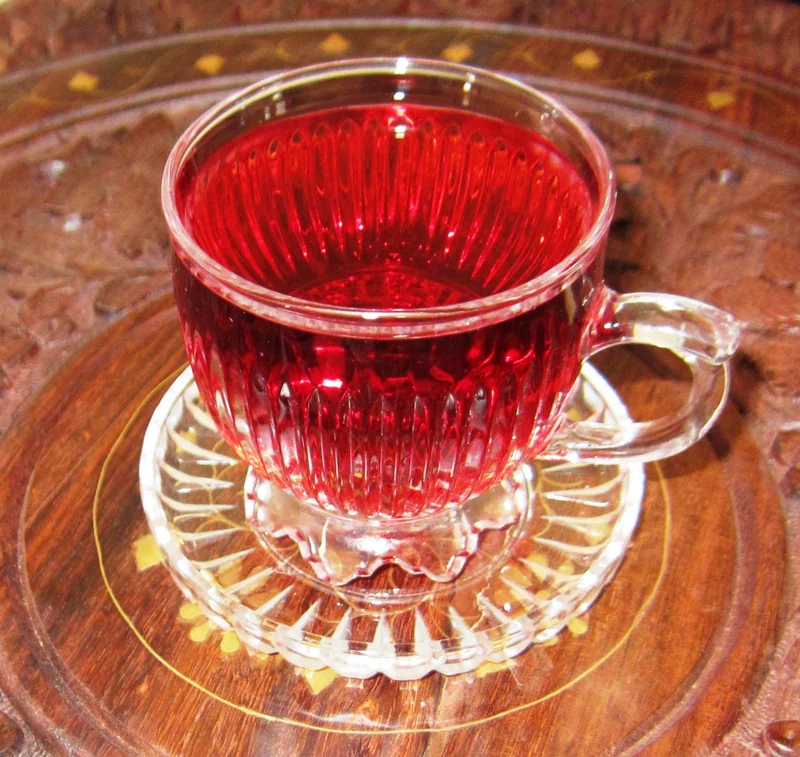
Hibiscus tisane (also called karkade, agua de Jamaica, bissap, or sobolo) is produced from the dried calyces of Hibiscus sabdariffa (Roselle), a species in the Malvaceae family native to West Africa or possibly South and Southeast Asia, now cultivated throughout tropical regions globally. The large red calyces that surround the seed pod after flowering are harvested, dried, and steeped in hot or cold water. The resulting infusion is characteristically crimson, intensely tart (from hibiscus acid and citric acid), and slightly fruity — comparable to a concentrated cranberry or pomegranate juice in flavour profile. It is consumed both hot and cold across many cultures.
Quick facts
- Type
- Herbal Infusion
- Origin
- Tropical Africa and South/Southeast Asia (cultivated worldwide)
- Caffeine
- Caffeine-free
- Astringency
- Moderate to high, pleasantly tart
- Sweetness
- Tart, balanced sweetness when sweetened
- Body
- Medium
- Tasting notes
- cranberry, pomegranate, raspberry, light floral, citrus tartness
Hibiscus sabdariffa: The Roselle Plant
Hibiscus sabdariffa (Roselle) is an annual or perennial shrub reaching 1–2 metres. The botanical part used for tisane is the fleshy calyx — the leaf-like sepals surrounding the seed pod that enlarge and turn bright red after the flower drops. The calyces are harvested manually when fully developed and red, then sun-dried or mechanically dried at low temperature. Sudan and Egypt are major producers for the international market, as are Senegal, Nigeria, Burkina Faso, and Thailand. The dried calyces contain hibiscus acid (dihydroxymaleic acid), citric acid, tartaric acid, and various anthocyanins (pigments from the cyanidin family) responsible for the intense red colour of the infusion.
Global Presence and Names
Hibiscus tisane is consumed under many names in different cultures, reflecting its wide geographic distribution. In Egypt and much of the Arab world, it is karkade (كركديه) — served both hot and cold. In Sudan and West Africa, it is bissap (Senegal), zobo (Nigeria), or sobolo (Ghana). In Mexico, Central America, and the Caribbean, it is agua de Jamaica — a cold drink sweetened with sugar, often sold by street vendors. In Thailand, it is Nam Krajiab. In the Caribbean, sorrel (a regional name for the plant) infusion is a traditional Christmas drink. This geographic spread reflects the plant's historical trade routes across Africa, the Middle East, and eventually the Americas following the Columbian Exchange.
Preparation Styles and Culinary Uses
Hibiscus tisane is consumed both hot (typically 3–5 grams per 250 ml, steeped for 5–10 minutes) and cold (as an iced or cold-brewed concentrate). Hot hibiscus develops more astringency and a fuller tartness; cold preparations are lighter and more refreshing. The tisane is frequently sweetened with sugar or honey to balance the tartness. The deep red colour makes hibiscus popular as a natural food colouring and as a visual element in layered beverages. In culinary applications, hibiscus is used in sauces, jams, syrups, and ciders. Dried hibiscus calyces can also be eaten directly as a tart, chewy dried fruit or used in salads.
Sources & further reading (2)
- encyclopedia — accessed 2026-05-07
- encyclopedia — accessed 2026-05-07
Frequently asked questions
What makes hibiscus tisane bright red?
The vivid crimson colour comes from anthocyanins — specifically cyanidin-based pigments — concentrated in the dried calyces of Hibiscus sabdariffa. The same class of pigments gives colour to red cabbage, blueberries, and black elderberries. The colour intensifies as the tisane steeps and depends on the pH (more acidic conditions produce brighter red; adding baking soda shifts the colour toward purple).
Why is hibiscus tisane tart?
Hibiscus calyces contain significant concentrations of organic acids — primarily hibiscus acid (dihydroxymaleic acid), citric acid, and tartaric acid. These acids give the infusion its characteristic tartness, similar in intensity to cranberry or pomegranate juice. The tartness can be moderated with sugar, honey, or other sweeteners. Hibiscus is one of the more acidic common herbal infusions.
Is agua de Jamaica the same as hibiscus tea?
Yes. Agua de Jamaica is the Mexican and Central American name for a cold hibiscus infusion — concentrated Hibiscus sabdariffa calyx extract sweetened with sugar and served cold. It is the same plant as karkade (Middle East), bissap (West Africa), and sorrel (Caribbean). The preparation method varies (hot vs. cold, level of sweetness, dilution), but the base botanical material is the same dried Roselle calyx.