Genmaicha
Japanese green tea blended with popped and roasted brown rice — grassy sencha balanced by toasted grain warmth.
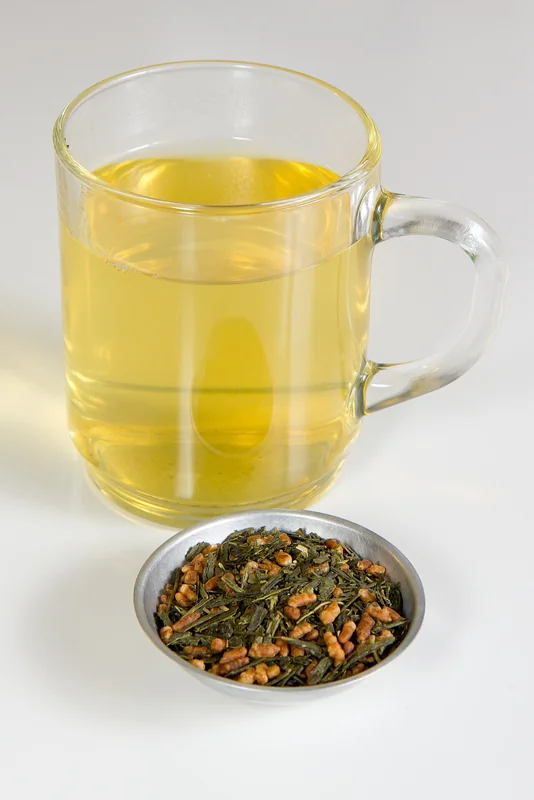
Genmaicha (玄米茶, 'brown rice tea') is a blend of Japanese green tea — typically bancha or sencha — with roasted and puffed brown rice. The rice component adds a toasty, nutty, grain-like aroma to the lighter, vegetal green tea, creating a flavour combination described as comforting and earthy. The blend originated in Kyoto, where brown rice was added to tea as a food-extending measure — making expensive tea go further by volume. Individual grains of the rice are both toasted and some are popped (similar to popcorn), giving genmaicha its Japanese nickname 'popcorn tea.' Some commercial versions include a small addition of matcha powder, called matcha-iri genmaicha, which deepens the green colour and adds umami.
Quick facts
- Type
- Tea
- Origin
- Japan (Kyoto, nationwide)
- Oxidation
- Green (unoxidised)
- Caffeine
- Low
- Umami
- Mild, from the tea base
- Astringency
- Low
- Sweetness
- Toasted grain sweetness
- Body
- Light
- Tasting notes
- popped rice, toasted grain, fresh grass, light seaweed
Origins and the Rice Component
The historical origin of genmaicha is linked to a practical economic rationale: brown rice, being cheaper and more abundant than tea leaves, was added to extend the volume of expensive tea for households with limited means. The addition was reportedly common in Kyoto by at least the 19th century. The brown rice used is genmai (玄米, unpolished brown rice), which is first washed, steamed, dried, and then roasted in a pan or drum until some grains pop (similar to popcorn). The popped grains — called hana (花, 'flower') — are mixed with the roasted unpopped grains in a roughly 1:1 ratio. The combined rice mixture is then blended with green tea leaves, typically at a 50:50 ratio by weight.
Matcha-Iri Genmaicha
A popular modern variant, matcha-iri genmaicha (抹茶入り玄米茶), adds a small quantity of matcha powder to the standard blend. This produces a greener-coloured infusion with a more pronounced umami character and a slight creaminess. The matcha coating can be applied to the rice or the tea leaves, and the quantity varies by producer. Matcha-iri genmaicha is widely sold in Japanese supermarkets and convenience stores as a daily drinking tea. The addition of matcha increases the caffeine content slightly compared to plain genmaicha.
Market Position and Global Spread
Genmaicha is widely consumed in Japan as an everyday tea — not a premium or ceremonial product, but a reliable, comforting daily beverage. It is among the most recognised Japanese teas internationally after sencha and matcha, partly because its toasty-grain character is accessible to consumers unfamiliar with the more vegetal sencha profile. Bottled genmaicha is sold in Japanese convenience stores. Internationally, genmaicha has found a following in specialty tea markets and among consumers seeking a lower-caffeine option. The blend can also be cold-brewed, producing a very clean, slightly grain-sweet result.
Sources & further reading (2)
- encyclopedia — accessed 2026-05-07
- industry-association — accessed 2026-05-07
Frequently asked questions
Why does genmaicha have lower caffeine than other green teas?
Genmaicha is typically a 50:50 blend of green tea leaves and roasted rice by weight. Since rice contains no caffeine, the effective caffeine per gram of genmaicha is approximately half that of the base green tea alone. Additionally, bancha (often used as the base) contains less caffeine than sencha or gyokuro because it uses larger, more mature leaves from later harvests. The combined effect makes genmaicha among the lower-caffeine green teas.
What is the difference between genmaicha and hojicha?
Both are commonly served as everyday Japanese teas with lower astringency than premium green teas. Hojicha is a roasted green tea — the tea leaf itself is browned by roasting — producing a caramel-dominant character with almost no vegetal note. Genmaicha is an unroasted green tea blended with roasted rice — the tea retains its green character while the rice adds a toasted-grain overlay. Hojicha is darker in colour and more uniformly roasted; genmaicha is lighter and more complex.
Can genmaicha be brewed cold?
Yes. Cold-brewing genmaicha in cold water for 6–8 hours (in the refrigerator) produces a clean, slightly sweet, grain-aromatic drink with low bitterness. The rice component contributes a rounded sweetness that complements cold-brew's natural reduction of bitterness. Hot brewing at 75–80°C for 30–60 seconds produces a more aromatic, toastier cup. Genmaicha is also used as a cooking ingredient in Japanese cuisine.