Darjeeling
India's most famous tea district — high-altitude Himalayan teas with a characteristic muscatel character.
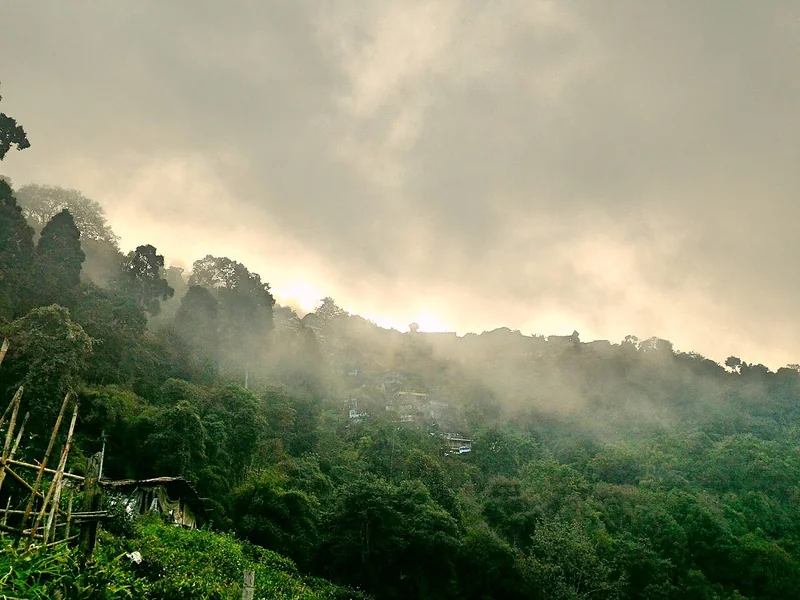
Darjeeling is a hill district in West Bengal, India, located in the foothills of the Himalayas at altitudes of 600–2,000 metres. The 87 registered tea estates of the Darjeeling district produce teas highly regarded for their floral and muscatel (Muscat grape-like) character, particularly in the second flush. Darjeeling teas are produced from Camellia sinensis var. sinensis (the Chinese small-leaf variety) introduced by British colonial planters, rather than the native assamica variety. The Darjeeling Geographical Indication (GI) was registered in 2004 as the first GI product in India, requiring teas to originate from the 87 registered gardens. Annual production is approximately 8 million kg — a small fraction of India's total tea output.
Quick facts
- Type
- Tea
- Origin
- India (Darjeeling District, West Bengal)
- Cultivar
- AV2, Clonal varieties, Chinese sinensis varieties
- Oxidation
- Black (full)
- Caffeine
- Medium
- Astringency
- Light to moderate, lower than Assam
- Sweetness
- Distinctive Muscatel grape sweetness (second flush)
- Body
- Light to medium
- Tasting notes
- Muscat grape, peach, floral, light malt, apricot
The Three Flushes
Darjeeling produces three main harvests. The first flush (March–April) yields light, delicate teas with a fresh, floral, sometimes astringent character; the young leaves are lightly oxidised, producing a greenish-golden infusion and flavours closer to oolong than typical black tea. The second flush (May–June) is considered the peak of Darjeeling production, yielding the muscatel teas that define the district's international reputation. Second-flush muscatel character is attributed partly to the feeding activity of the green leafhopper (Empoasca flavescens), which stresses the leaf in a manner similar to oriental beauty oolong in Taiwan. The autumnal flush (October–November) produces darker, more robust teas that lack the floral finesse of first and second flush.
Muscatel Character and Leafhopper Theory
The muscatel character of second-flush Darjeeling — described as resembling Muscat grapes or stone fruit — has been studied by tea researchers. One documented contributing factor is the feeding activity of the tea green leafhopper (Empoasca flavescens). When these insects bite the tea leaf, the plant releases defensive chemical compounds including terpenes and other volatiles. These compounds, including geraniol and linalool, are associated with the floral and fruity notes perceived as muscatel. This same phenomenon explains the characteristic floral flavour of oriental beauty oolong in Taiwan, where leafhopper damage is deliberately encouraged. Second-flush leaves with significant leafhopper damage are sometimes called 'tippy' for their high proportion of golden tips.
Geographical Indication and Authentication
Darjeeling received India's first Geographical Indication certification in 2004, protecting the name for teas produced in the 87 registered gardens of Darjeeling district. Authentication uses a certification mark — the Darjeeling logo featuring a tea plucker — which registered gardens can use on genuine product. Despite this protection, the Tea Board of India estimated that global sales of tea labelled 'Darjeeling' have historically exceeded the district's total production by a factor of four or more, indicating widespread misuse of the name. Consumers seeking genuine Darjeeling should look for the registered certification mark and purchase from reputable specialty tea retailers.
Sources & further reading (2)
- encyclopedia — accessed 2026-05-07
- government-data — accessed 2026-05-07
Frequently asked questions
What is the muscatel character of Darjeeling?
Muscatel is the defining flavour note of second-flush Darjeeling — a combination of Muscat grape, stone fruit (peach, apricot), and floral aromas. It results partly from volatile compounds (terpenes including geraniol and linalool) released by the tea plant in response to leafhopper feeding. These same compounds are found in Muscat grapes, creating the sensory similarity. First-flush Darjeeling lacks this character, being lighter and more floral.
Why is Darjeeling sometimes described as oolong-like?
First-flush Darjeeling is lightly oxidised (30–60 percent oxidation) compared to standard black teas (90+ percent). This produces a lighter, more floral cup with a greenish colour and a character closer to oolong than to full-oxidised black teas like Assam or Ceylon. Some estates market first-flush Darjeeling as a green or 'white' tea for this reason. Second flush is more fully oxidised and closer to traditional black tea.
How much Darjeeling is actually from Darjeeling?
Annual production from the 87 registered Darjeeling gardens is approximately 8–10 million kg. However, historical estimates from the Tea Board of India suggest that the global market sells 40,000+ tonnes per year under the Darjeeling name — four times or more the actual output. Much tea labelled as Darjeeling is blended with teas from Nepal, Assam, or other regions. Genuine Darjeeling carries the registered certification mark.