Cold Brew Tea
Steeping tea in cold water for 6–12 hours — smoother, sweeter, and less astringent than hot brewing.
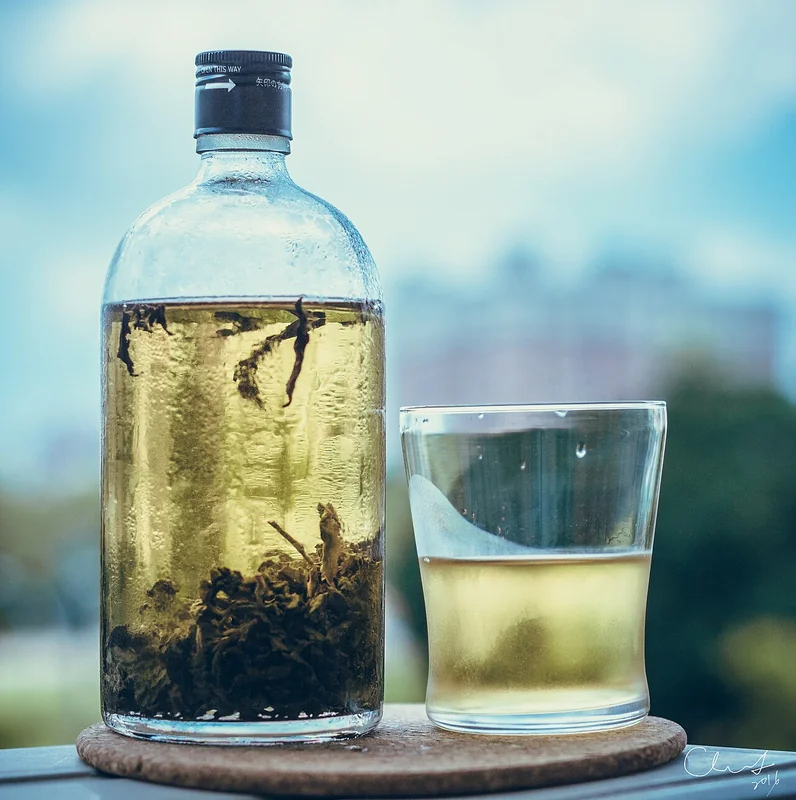
Cold brew tea is produced by steeping tea leaves or herbal material in cold or room-temperature water (4–20°C) for 6–12 hours, typically in a refrigerator. Unlike hot brewing, which rapidly extracts both desirable flavour compounds and bitter tannins at high temperature, cold water extracts compounds more selectively over time. The result is a tea with lower bitterness, reduced astringency, greater sweetness perception, and a distinct aromatic profile compared to the same tea brewed hot. Cold brewing has a history in Japanese mizudashi (水出し, 'water-drawn') green tea and has expanded globally as a preparation method across all tea types including green, oolong, black, white, and herbals.
Quick facts
- Type
- Brewing Method
Extraction Chemistry at Cold Temperature
The primary difference between cold-brew and hot-brew extraction is temperature-dependent solubility. Catechins (the bitter tannins responsible for astringency) have lower solubility in cold water — they extract slowly and in lower concentrations than in hot water. Caffeine also extracts at a lower rate in cold water. By contrast, certain aromatic compounds and amino acids (including L-theanine) are relatively more extractable in cold water, producing a proportionally sweeter, more amino-acid-forward infusion. The ratio of these compounds shifts toward a smoother, less bitter cup. The extended contact time (6–12 hours vs. 2–5 minutes for hot brewing) compensates for the reduced extraction rate per unit time.
Japanese Mizudashi Tradition
Cold-brewed green tea (mizudashi, 水出し) has a documented history in Japan, where it is used particularly with gyokuro and sencha. Japanese cold brewing typically uses a jug or pitcher with a mesh strainer, with leaves left in the refrigerator for 6–8 hours. Gyokuro is especially suited to cold brewing because its high L-theanine content (the amino acid responsible for umami) extracts proportionally better in cold water, while the catechins (astringency) extract less — amplifying the tea's natural sweetness and umami relative to bitterness. This produces a result that is more one-dimensionally sweet and umami-focused than hot-brewed gyokuro.
Application to Different Tea Types
Cold brewing works across all tea types but produces notably different results depending on the starting material. Green teas (sencha, gyokuro) produce a very clean, sweet, pale result. Oolongs produce a floral, nuanced infusion. White teas produce an extremely delicate, honey-sweet result often praised for its lightness. Black teas cold-brew to a smoother, less tannic result — effective for sun tea (room-temperature steeping in sunlight) and refrigerator cold brew. Pu-erh cold brews to a surprisingly clean, light result. Herbal tisanes including hibiscus, chamomile, and peppermint cold-brew effectively, with hibiscus producing a particularly clear, tart result.
Sources & further reading (2)
- encyclopedia — accessed 2026-05-07
- industry-association — accessed 2026-05-07
Frequently asked questions
Why is cold-brewed tea less bitter than hot-brewed tea?
Bitterness in tea comes primarily from catechins (polyphenolic tannins) that extract much more readily in hot water than cold. At cold temperatures (4–20°C), catechin extraction is slower and lower in total concentration, even with extended steeping time. The result is that cold-brew extracts more of the sweeter amino acids and aromatic compounds relative to bitter tannins, producing a proportionally less bitter, more rounded cup.
How long should tea be cold-brewed?
6–12 hours in the refrigerator (4–8°C) is the standard range. Green teas: 6–8 hours. White teas and delicate oolongs: 8–12 hours. Black teas: 6–10 hours. Herbal tisanes: 8–12 hours. Room-temperature cold brew (15–20°C) extracts faster — 3–5 hours — but carries a higher risk of bacterial growth if left too long. Refrigerator brewing is safer for longer steeping times. Over-steeping beyond 12 hours can extract some bitterness even at cold temperatures.
Is cold brew tea the same as iced tea?
No. Iced tea is typically brewed hot and then cooled or poured over ice — it is hot-extracted tea that has been chilled. Cold brew tea is steeped in cold water from the start, using a fundamentally different extraction process that produces less bitter, more delicate results. Iced tea retains the bitterness and astringency of hot extraction (though diluted somewhat by ice); cold brew does not.