Chasen
The bamboo whisk carved from a single bamboo piece — whisks matcha into frothy usucha or smooth koicha in chanoyu.
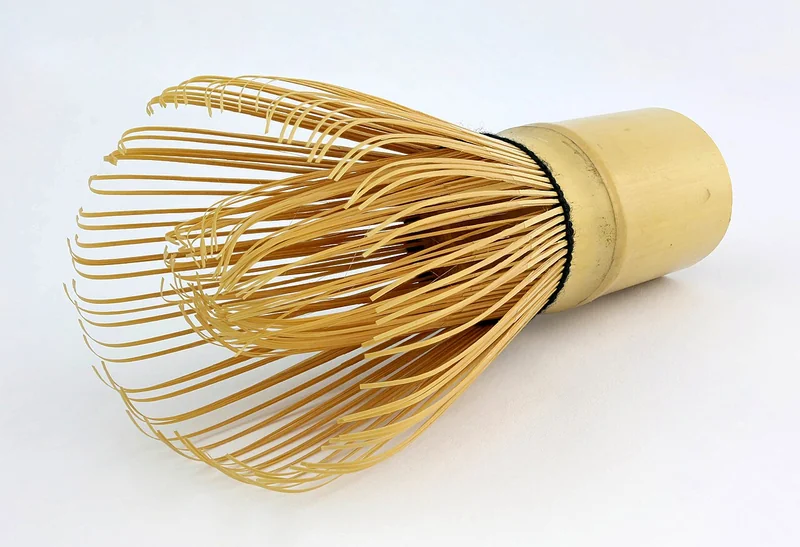
Chasen (茶筅) are Japanese bamboo whisks used to whisk matcha powder into suspension in hot water. A chasen is made from a single piece of bamboo (typically Madake bamboo, Phyllostachys bambusoides, or susudake smoked bamboo) that is split into 60–120 tines using fine knives, then curved outward with heat and moisture. The number and fineness of tines varies by style and intended use: thin 100–120 tine versions (e.g., Kazuho) are used for usucha (thin tea) to produce fine, stable froth; fewer, thicker tines (60–80) are used for koicha (thick tea). Chasen are produced primarily in Takayama, Nara Prefecture, with artisan families maintaining a tradition documented from the Muromachi period (15th century).
Quick facts
- Type
- Tea Ware
Carving from a Single Bamboo Piece
The chasen's manufacture begins with a section of thick-walled bamboo approximately 8–10 cm in length. The outer skin of the bamboo is left intact at the base (the handle) while the upper portion is scored with a thin knife along the bamboo grain into a specific number of slivers. These slivers become the tines of the whisk. An inner ring and outer ring of tines are carved separately: the outer ring forms the main whisking tines; the inner ring forms stabilising tines that maintain the whisk's shape. Each tine is then individually curved using a combination of heated water and body heat from the artisan's hands, giving the whisk its characteristic outward-curving form. The process is entirely manual for artisan pieces and takes roughly 2 hours per chasen for a skilled maker.
Tine Count and Style Names
Standard chasen styles are defined by their tine count. The Kazuho style (数穂, 'numerous spikes') has 100–120 very fine tines, producing the finest foam — used for premium usucha. The Araho style (荒穂, 'rough spikes') has 50–60 coarser tines suited to koicha's folding motion. The Zuiho style has 80 tines — a middle-ground choice. Chasen are also differentiated by bamboo colour: white (shirake) bamboo produces a lighter-coloured whisk; smoked (susudake) bamboo produces a darker, grey-brown whisk. Susudake chasen are more expensive and are associated with formal tea ceremony contexts.
Takayama and the Chasen Tradition
The community of Takayama in Nara Prefecture is the historical centre of Japanese chasen production, with the tradition documented from the 15th century. The craft is said to have been founded by Tesshu Sotan, who received instructions from the shogun Ashikaga Yoshimasa and developed the production method. Today, Takayama artisan families (organised into several distinct lineages) produce hand-carved chasen sold across Japan and internationally. A small number of artisan families maintain the traditional manual production, while machine-assisted production exists for lower-price segments. Takayama chasen received a Geographical Indication designation from Japan.
Sources & further reading (2)
- encyclopedia — accessed 2026-05-07
- industry-association — accessed 2026-05-07
Frequently asked questions
How long does a chasen last?
A chasen used for daily usucha preparation typically lasts 2–3 months with proper care. Signs of wear include tines breaking, the whisk losing its shape, or the tines beginning to separate at the base. A broken tine in brewed matcha is a sign the chasen needs replacement. Proper care (soaking before use, rinsing and air-drying on a kusenaoshi stand after use) extends lifespan. Chasen used for special occasions and stored properly can last much longer.
What is a kusenaoshi and why is it used?
A kusenaoshi (クセ直し, 'shape corrector') is a small mushroom-shaped stand on which a chasen is placed to dry after use, keeping the tines in their correct outward-curved shape rather than drying bent inward or flattened. Without a kusenaoshi, a wet chasen can dry with deformed tines that produce less effective whisking. The stand is an inexpensive accessory widely available alongside chasen.
How do I prepare a new chasen before first use?
Soak a new chasen in warm water for 3–5 minutes before first use. This softens the bamboo tines and makes them more flexible, reducing the risk of breakage during the first whisking session. Before each subsequent use, a brief 30-second soak in warm water is sufficient. After use, rinse the tines under warm water, gently shake dry, and place on a kusenaoshi to dry in the correct shape.