Chamomile
Dried flower-heads of Matricaria chamomilla — one of the world's most consumed herbal infusions, apple-honey fragrant.
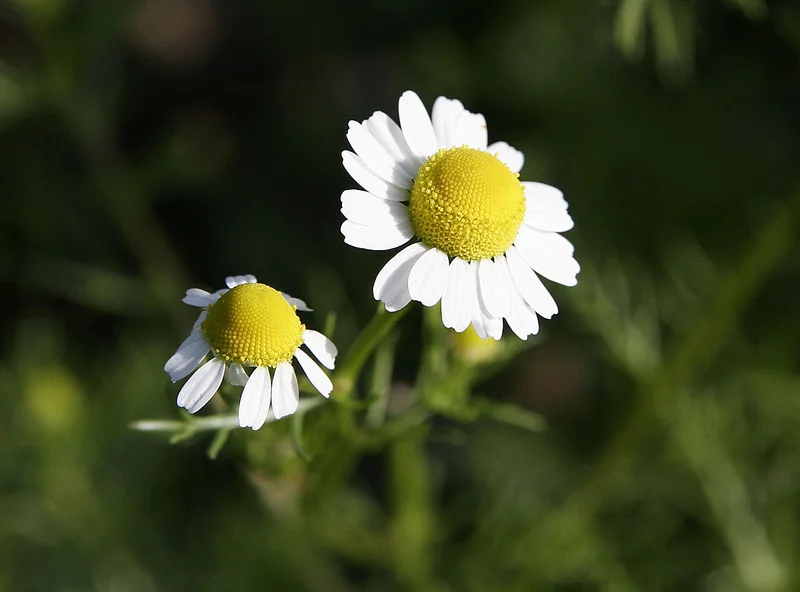
Chamomile tisane is prepared from the dried flower-heads of two main species: German chamomile (Matricaria chamomilla or M. recutita) and Roman chamomile (Chamaemelum nobile, also called Anthemis nobilis). German chamomile, an annual herb native to central Europe and western Asia, is the dominant commercial source, grown particularly in Germany, Hungary, Egypt, Argentina, and the Czech Republic. The flower-heads are harvested at full bloom and dried at 35–40°C. The infusion has a characteristic apple-honey fragrance from the volatile compounds alpha-bisabolol, chamazulene, and various terpenoids. Chamomile is among the most widely consumed herbal infusions globally.
Quick facts
- Type
- Herbal Infusion
- Origin
- Central Europe and western Asia (primarily Germany, Hungary, Egypt)
- Caffeine
- Caffeine-free
- Astringency
- Very low
- Sweetness
- Mild honey-apple sweetness
- Body
- Very light
- Tasting notes
- apple, honey, light floral, fresh hay
German and Roman Chamomile: Two Species
Commercial chamomile products are derived from two related but botanically distinct species. German chamomile (Matricaria chamomilla, sometimes called M. recutita) is an annual reaching 20–60 cm, native to central Europe and western Asia. It is the dominant commercial source and produces the characteristic apple-sweet aroma primarily from alpha-bisabolol and its oxides, along with chamazulene (from the blue essential oil). Roman chamomile (Chamaemelum nobile, syn. Anthemis nobilis) is a perennial, lower-growing plant with a slightly more bitter, herbaceous character. It is used regionally in France, the UK, and Belgium. Most commercially available chamomile tea — particularly in bags — uses German chamomile. High-quality chamomile is sold as whole flower-heads rather than fragmented material.
Cultivation and Processing
Major German chamomile production regions include Hungary (the world's largest producer), Germany, Egypt, Argentina, and the Czech Republic. The plant grows in well-drained, moderately fertile soil. Harvesting is typically mechanical in commercial operations, using specially designed harvesting machines that strip the flower-heads from the stem. Hand-harvesting is used for the highest quality products. After harvest, flower-heads are dried at low temperature (35–40°C) to preserve volatile aromatic compounds. Over-drying or high-temperature drying degrades aroma quality. Properly dried chamomile retains its white petals and yellow centre and can be stored for 12–18 months without significant quality loss.
Traditional Use and Trade History
Chamomile has been used as a medicinal and culinary plant for several thousand years. Ancient Egyptian records document it as an offering to the sun god Ra. Greek and Roman texts describe its use. It was one of the nine sacred herbs described in the Old English poem Lacnunga (c. 10th century). The plant featured prominently in European apothecary traditions through the medieval and early modern period. Germany's pharmacopoeias have included chamomile since the 16th century. Peter Rabbit's mother gives him chamomile tea after his frightening encounter with Mr. McGregor in Beatrix Potter's 1902 story — a cultural reference to chamomile's status as a traditional folk beverage.
Sources & further reading (2)
- encyclopedia — accessed 2026-05-07
- regulatory — accessed 2026-05-07
Frequently asked questions
What gives chamomile its apple scent?
Chamomile's characteristic apple-honey fragrance comes primarily from alpha-bisabolol and its oxides, along with chamazulene (the blue compound in chamomile essential oil), terpenoids, and various esters. Alpha-bisabolol has a sweetish, floral character with an apple-like note. Chamazulene, produced from matricine during the drying and extraction process, gives the essential oil a distinctive blue colour but contributes only marginally to the beverage's aroma. The specific ratio of compounds varies by species, cultivation location, and processing.
What is the difference between German and Roman chamomile?
German chamomile (Matricaria chamomilla) is the dominant commercial species — an annual with a characteristic apple-sweet aroma, cultivated widely in Hungary, Germany, Egypt, and Argentina. Roman chamomile (Chamaemelum nobile) is a perennial with a slightly more bitter, complex, and less sweet character. It is more commonly used in continental European traditional herbal practices. Most commercial chamomile tea bags contain German chamomile.
Is chamomile tisane related to tea (Camellia sinensis)?
No. Chamomile is botanically unrelated to Camellia sinensis. Chamomile flower-heads come from plants in the Asteraceae (daisy) family — Matricaria chamomilla or Chamaemelum nobile. 'Tea' in the strict sense refers only to Camellia sinensis infusions. Chamomile is correctly called a tisane or herbal infusion. It contains no caffeine.