Ceylon
Sri Lanka's national black tea, grown across multiple altitude zones each with a distinct flavour profile.
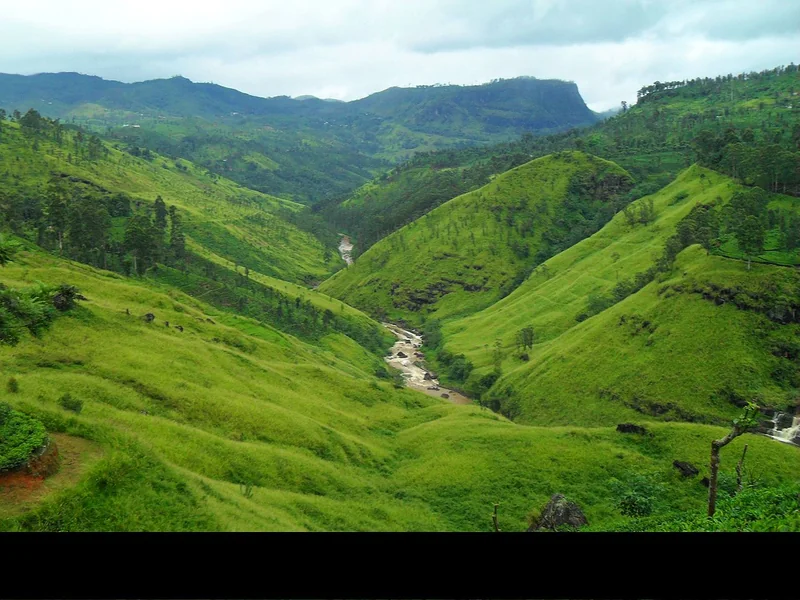
Ceylon is the trade name for teas produced in Sri Lanka — formerly called Ceylon under British colonial rule. Sri Lanka is one of the world's largest tea exporters, producing approximately 300 million kilograms annually from seven main growing districts: Nuwara Eliya, Dimbula, Uva, Kandy, Sabaragamuwa, Ruhuna, and Uda Pussellawa. The altitude of each district dramatically affects the tea's character: high-grown teas (above 1,200 metres) from Nuwara Eliya and Dimbula are light, delicate, and citrusy; mid-grown teas are medium-bodied; low-grown teas from Ruhuna are full, rich, and dark. Ceylon teas are a key component of international tea blends and are known for their brightness and clean flavour.
Quick facts
- Type
- Tea
- Origin
- Sri Lanka (Nuwara Eliya, Dimbula, Uva, Ruhuna)
- Oxidation
- Black (full)
- Caffeine
- Medium
- Astringency
- Brisk, clean astringency
- Sweetness
- Light, depending on altitude
- Body
- Light (high-grown) to full (low-grown)
- Tasting notes
- citrus, bright brisk character, light malt, eucalyptus (Uva)
From Coffee to Tea: Sri Lanka's Agricultural Transition
Sri Lanka's tea industry arose from the catastrophic destruction of its coffee plantations by coffee leaf rust (Hemileia vastatrix), which devastated the island's primary export crop in the 1870s. James Taylor, a Scottish planter, had begun experimental tea cultivation at Loolecondera estate in Kandy in 1867. Following the coffee rust disaster, planters rapidly converted to tea across the island's hill country. By the 1880s, Ceylon tea was reaching London markets. The Scottish planter Thomas Lipton purchased Ceylon estates in 1890 and built a direct farm-to-consumer supply chain that helped establish Ceylon tea's international reputation. Ceylon tea exports overtook China as Britain's primary tea source by the end of the 19th century.
Altitude Zones and Flavour
Ceylon teas are classified into high-grown (over 1,200 metres), mid-grown (600–1,200 metres), and low-grown (below 600 metres). High-grown districts — principally Nuwara Eliya (Sri Lanka's highest tea district at 1,800+ metres) and Dimbula — produce light, aromatic teas with bright acidity, characteristic citrus notes, and a delicate character suited to light-coloured infusions. Uva district, sheltered from monsoon winds by the central mountain range, produces distinctive teas during July–September when dry seasonal winds increase the intensity of certain aromatic compounds, yielding teas with a characteristic eucalyptus-like note. Low-grown teas from Ruhuna are full-bodied, dark, and well-suited to milk.
The Lion Logo and Geographical Indication
Authentic Sri Lankan tea is identified by the Sri Lanka Tea Board's Lion Logo — a stylised lion holding a sword, based on the national flag symbol. This certification mark, launched in 1974, indicates that the tea was grown, manufactured, and packaged in Sri Lanka. The certification requires adherence to quality standards enforced by the Tea Board. About 25–30 percent of Sri Lanka's tea exports are packaged within the country and can carry the Lion Logo; the remainder is exported as bulk tea. The Lion Logo is recognised internationally and is one of the most widely used geographical certification systems in the global tea industry.
Sources & further reading (2)
- encyclopedia — accessed 2026-05-07
- government-data — accessed 2026-05-07
Frequently asked questions
Why is Sri Lankan tea still called Ceylon?
Sri Lanka was known as Ceylon during British colonial rule (1815–1972). When the country became the Republic of Sri Lanka in 1972, the tea industry chose to retain the 'Ceylon' name for marketing continuity, as it was already established internationally as a quality designation. The Sri Lanka Tea Board continues to promote 'Ceylon Tea' as the official trade brand, distinguishing it from teas produced in India, China, or Kenya.
What is Uva tea, and what makes it distinctive?
Uva is a mid-to-high-grown district on the eastern slope of Sri Lanka's central mountain range. During July–September, dry northeastern winds (combined with the southwest monsoon's shelter effect) create distinctive conditions. Teas produced in this window have a characteristic flavour sometimes described as eucalyptus, minty, or camphor-like — technically attributed to the compound 5,6-epoxy-beta-ionone, which develops under the specific drying conditions. This seasonal Uva character is considered a regional speciality.
What is 'high-grown' Ceylon and why does altitude matter?
High-grown Ceylon (above 1,200 metres) benefits from cooler temperatures, more morning mist, and slower growth rates. Slower growth allows greater concentration of aromatic compounds in the leaf and produces a more delicate, nuanced flavour. High altitudes also experience greater temperature variation between day and night, which is associated with the development of complex aromatic profiles. Low-grown teas from below 600 metres grow faster in warmer, more humid conditions, producing fuller-bodied but less complex teas.