Bai Hao Yinzhen (Silver Needle)
China's most prized white tea — single-bud harvest from Fujian, silvery with fine hair and delicately sweet.
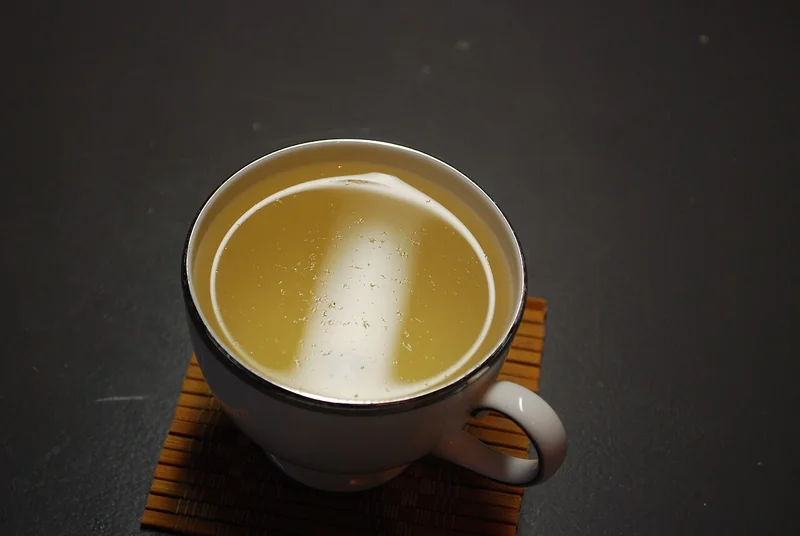
Bai Hao Yinzhen (白毫銀針, 'Silver Needle with White Down') is the highest grade of Chinese white tea, produced exclusively from the unopened buds of Camellia sinensis without any rolling or firing. The buds are harvested during a narrow window in March or April from Fuding and Zhenghe counties in Fujian Province. After harvest, the buds undergo minimal processing — simply withering outdoors in sunlight for 60–72 hours and then gentle drying — which allows a small degree of natural enzymatic activity without full oxidation. The result is a tea covered in fine silvery-white hair (bai hao), producing a pale golden infusion with a subtle sweetness and delicate floral aroma.
Quick facts
- Type
- Tea
- Origin
- China (Fuding and Zhenghe, Fujian Province)
- Cultivar
- Da Bai (Large White), Da Hao (Large Down)
- Oxidation
- White (minimal)
- Caffeine
- Low
- Umami
- Very subtle, barely perceptible
- Astringency
- Very low
- Sweetness
- Delicate, cucumber-melon sweetness
- Body
- Very light
- Tasting notes
- cucumber, honeydew melon, white peach, hay, subtle floral
Minimal Processing: The White Tea Method
White tea production involves the least processing of any tea category. Bai Hao Yinzhen uses only whole, unopened buds — no leaves. After harvest, buds are spread on bamboo racks or fabric and left to wither in natural sunlight and open air for 60–72 hours. The slow, natural wither allows a minimal degree of enzymatic activity (partial, unintentional oxidation) that contributes to a slight sweetness and the development of aromatic compounds. The buds are then dried at low heat (40–45°C) or in sunlight to stabilise the moisture content below 5 percent. No rolling, shaping, or sha qing (kill-green) is performed. This process retains the bud's natural covering of fine white hairs (bai hao), which give the tea its characteristic silvery appearance.
Harvest Window and Grade
Authentic Bai Hao Yinzhen is harvested within a very narrow window — typically from the day of the spring equinox through to Grain Rain (late March to mid-April). During this window, only whole, unopened buds are selected; any bud with an opened leaf tip or damaged surface is rejected. In Fuding, the Da Bai (Large White) and Da Hao (Large Down) cultivars are standard, known for their large, hair-covered buds. Zhenghe Yinzhen, from Zhenghe County, uses a slightly different local cultivar and is often described as slightly more robust and grassy than Fuding Yinzhen. Production quantity is limited by the narrow harvest window and bud-only selection, contributing to premium pricing.
Aged White Tea
White tea, particularly Silver Needle and White Peony, is sometimes aged deliberately in compressed or loose form. Unlike pu-erh, which undergoes microbial fermentation, aged white tea changes primarily through slow enzymatic reactions and oxidation in low-humidity storage. Over 3–15 years, aged white tea develops a deeper amber infusion, reduced bitterness, and a more complex character with notes of dried fruit and hay. The practice of intentionally aging white tea is historically documented in Fuding and has expanded commercially as aged pu-erh has shown that aged Chinese teas can command premium prices.
Sources & further reading (2)
- encyclopedia — accessed 2026-05-07
- specialty-reference — accessed 2026-05-07
Frequently asked questions
Why is white tea not rolled or fired like green tea?
White tea is defined by its minimal processing — only withering and gentle drying. No mechanical rolling or high-temperature sha qing (kill-green) is applied. This preserves the bud's natural form, including the fine white hairs, and produces a fundamentally different chemical profile from green or black teas. The lack of cell-rupturing rolling means fewer catechins are extracted during brewing, contributing to white tea's characteristically low astringency.
Is Silver Needle from Fuding the same as from Zhenghe?
Both are authentic Bai Hao Yinzhen from Fujian Province but differ in cultivar and character. Fuding Yinzhen (using Da Bai or Da Hao cultivars) is typically lighter, more delicate, and more floral. Zhenghe Yinzhen (using the Zhenghe Da Bai cultivar) tends to be slightly fuller, earthier, and more robust. Both are considered genuine Silver Needle; the differences reflect cultivar and terroir rather than quality.
How should Bai Hao Yinzhen be brewed?
Silver Needle is brewed at 80–85°C with a higher leaf-to-water ratio than other teas — approximately 5–7 grams per 150 ml. Steeping time is 3–5 minutes for a full infusion or shorter (1–2 minutes) for multiple infusions. Cooler water (75°C) produces a more delicate result; hotter water increases body but can extract slight bitterness. Multiple infusions (4–6) are possible; later infusions develop slightly more complex, hay-like notes.