Tradescantia zebrina
Tradescantia zebrina (Inch Plant) Care Guide
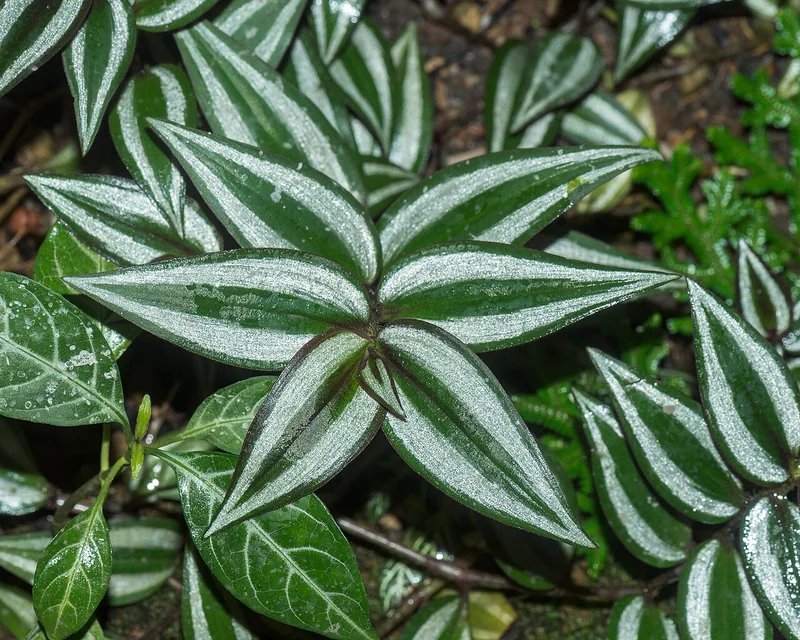 Featured phototradescantia-zebrina.jpg
Tradescantia zebrina is one of the most-grown trailing houseplants — fast, forgiving, and brightly coloured, with silver bands on dark green and rich purple undersides. It tolerates a wide range of indoor conditions and propagates from any stem fragment that touches moist soil. It is also sometimes invasive outdoors in warm climates and should not be released into wild ecosystems.
Care facts at a glance
- Light
- Bright indirect
- Water
- Water when the top 2 cm of mix has dried.
- Humidity
- 40–60 %
- Temperature
- 16–27 °C
- Soil
- Standard well-draining houseplant mix with perlite.
- Origin
- Mexico, Guatemala, and Central America.
- Mature size
- Trailing stems to 60 cm long.
Overview
Tradescantia zebrina was previously named Zebrina pendula and is widely grown as a houseplant worldwide. It has naturalised in many warm-climate regions and is regarded as a weed in some — keep clippings out of compost or wild areas.
Care Priorities
- Bright filtered light keeps the silver bands and purple underside vivid.
- Pinch back regularly — the species goes leggy quickly.
- Take cuttings every 6 to 12 months as insurance; old plants get woody and bare.
- Water on the dry side; soggy mix rots the brittle stems.
Common Problems
Long bare stems with leaves only at the tips means the plant wants more light or pinching. Yellow leaves are overwatering. Loss of silver and purple colour is too little light.
Sources & further reading (2)
- encyclopedia — accessed 2026-04-28
- botanical-garden — accessed 2026-04-28
Frequently asked questions
Why does my zebrina go leggy so fast?
Tradescantia naturally trails and stretches. Pinch back at least monthly to keep the plant dense, or just accept the trailing form and refresh from cuttings.
Is the sap really irritating?
For most people, no. Sensitive skin can develop a mild rash from prolonged contact. Wash hands after pruning.
Outdoor planting?
Avoid in warm climates — Tradescantia zebrina escapes cultivation easily and is regarded as invasive in many places. Keep cuttings out of green waste.