Hoya australis
Hoya australis (Common Waxflower) Care Guide
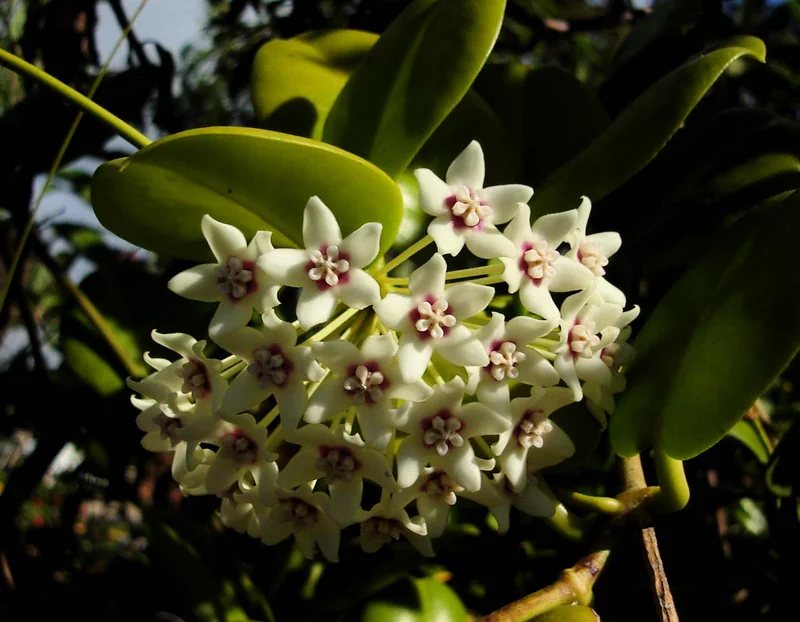 Featured photohoya-australis.jpg
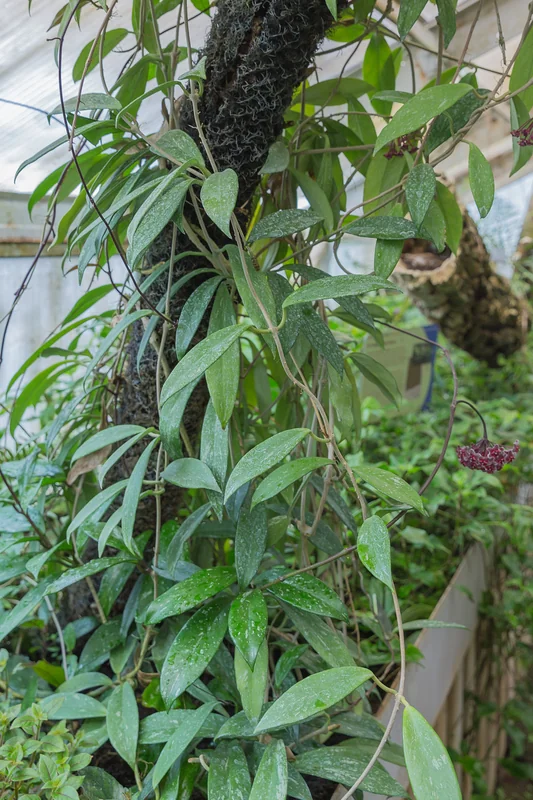
Hoya australis is one of the most widely distributed hoyas, native from Australia through the western Pacific. Its leaves are rounder and slightly thinner than H. carnosa, and its white star flowers are heavily fragrant in the evening. It is one of the fastest hoyas to flower and tolerates more light variability than most.
Care facts at a glance
- Light
- Bright indirect
- Water
- Water when the top 3 cm of mix has dried.
- Humidity
- 40–60 %
- Temperature
- 16–27 °C
- Soil
- Free-draining mix of orchid bark, perlite, and coir.
- Origin
- Tropical Australia and the western Pacific.
- Mature size
- Vines to 4 metres or more indoors with support.
Overview
Hoya australis was described in the 1830s and is the parent of many garden hybrids. Several subspecies exist; in cultivation the common form is subsp. australis with rounded glossy leaves.
Care Priorities
- Bright filtered light or several hours of direct sun.
- Allow the mix to dry between waterings.
- Provide a trellis for climbing growth — leaves enlarge significantly on a support.
- Leave peduncles intact for repeat flowering.
Common Problems
Yellow leaves are overwatering. No flowers usually means the plant is young or short of light. Sticky drops beneath flowers are nectar.
Sources & further reading (2)
- encyclopedia — accessed 2026-04-28
- botanical-garden — accessed 2026-04-28
Frequently asked questions
How fragrant are the flowers?
Strongly so, especially in the evening. Some growers find the scent overwhelming in small rooms.
Australis vs carnosa — care difference?
Almost none. Australis has rounder, slightly thinner leaves and is generally faster to flower.
Why are my flowers dropping before opening?
Bud blast is usually a watering swing — sudden dry-out or sudden flood while buds are forming. Keep watering steady once peduncles emerge.