Tradescantia virginiana
Tradescantia virginiana (Virginia Spiderwort) Care Guide
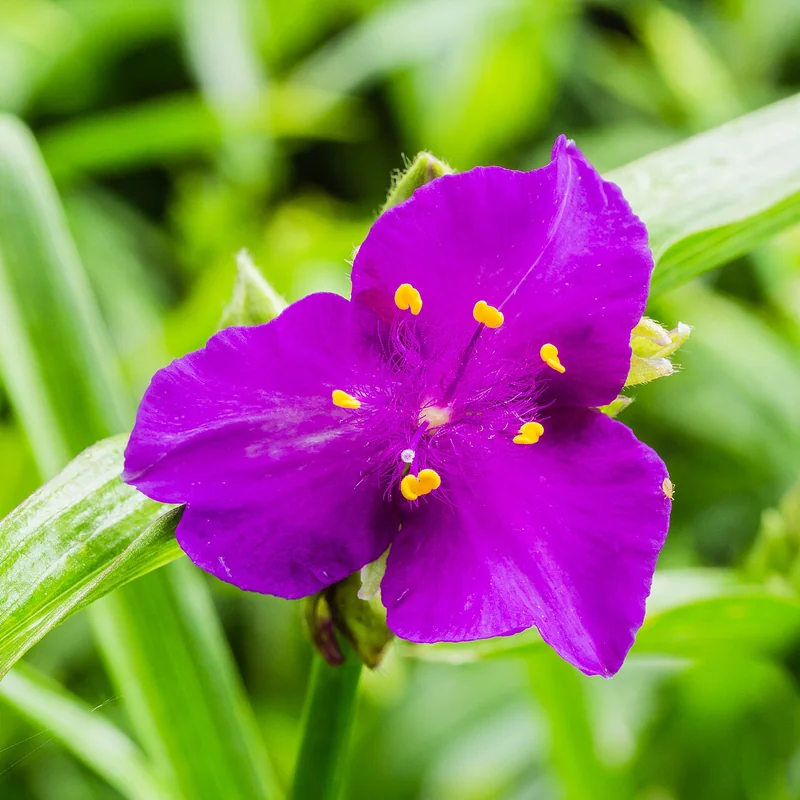 Featured phototradescantia-virginiana.jpg
Tradescantia virginiana, sold as Virginia Spiderwort, is a fast-growing Commelinaceae trailing herb popular for its colourful patterned leaves. Native to eastern North America, this hardy species is more often grown outdoors as a perennial but tolerates indoor culture in a cool bright spot, producing distinctive blue-purple three-petalled flowers. Tradescantia roots from stem cuttings within a week, making it one of the easiest houseplants to share or rejuvenate when growth becomes leggy.
Care facts at a glance
- Light
- Bright indirect
- Water
- Water when the top 2 cm of soil has dried.
- Humidity
- 40–60 %
- Temperature
- 13–24 °C
- Soil
- Standard houseplant mix with added perlite for drainage.
- Origin
- Tropical and subtropical regions of the Americas.
- Mature size
- Trails 30 to 90 cm; stem segments root readily.
Overview
Tradescantia virginiana is one of about 75 Tradescantia species, all native to the Americas. Native to eastern North America, this hardy species is more often grown outdoors as a perennial but tolerates indoor culture in a cool bright spot, producing distinctive blue-purple three-petalled flowers. The genus is named for the 17th-century English plant hunter John Tradescant the Younger.
Care Priorities
- Bright indirect light keeps the colour vivid and growth compact.
- Water when the top 2 cm of soil is dry; reduce in winter.
- Pinch growing tips to encourage branching.
- Refresh leggy plants by taking cuttings — old plants get bare-stemmed by year two.
- Average humidity is fine; high humidity invites botrytis.
Common Problems
Pale or all-green foliage signals too little light. Mushy stem bases mean overwatering or botrytis from too-humid air. Grey fuzzy mould on leaves is botrytis — improve air circulation and remove affected stems.
Sources & further reading (2)
- encyclopedia — accessed 2026-04-28
- botanical-garden — accessed 2026-04-28
Frequently asked questions
Can I grow Virginia Spiderwort indoors year-round?
It tolerates indoor culture but benefits from a cool winter rest below 10 °C, which most homes don't provide. Many growers move pots outdoors in summer and bring them back in for autumn flowering.
Why is my Tradescantia getting leggy?
Legginess is usually a light problem. Move to a brighter spot (no direct midday sun) and pinch back the leggy tips — those cuttings root in water within a week and can be replanted into the original pot.
Why is my Tradescantia losing its colour?
Tradescantia variegation fades in low light. Move the plant to bright filtered light or a few hours of direct morning sun and pinch the growing tips; new growth usually returns to full colour within a month.