Tradescantia fluminensis
Tradescantia fluminensis (Small-Leaf Spiderwort) Care Guide
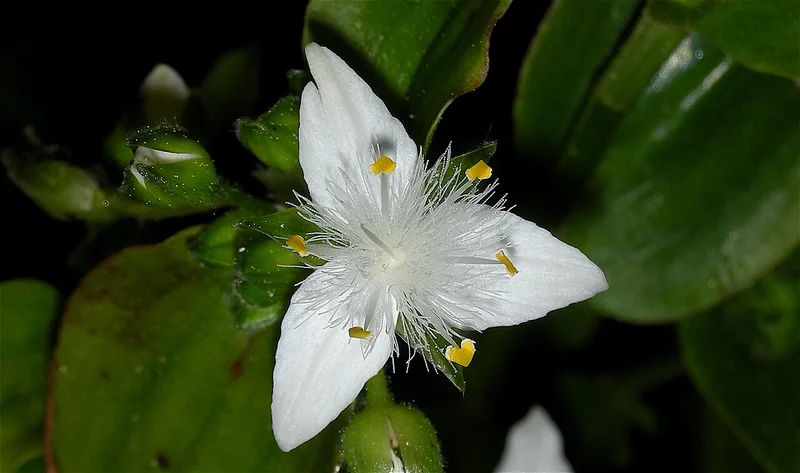 Featured phototradescantia-fluminensis.jpg
Tradescantia fluminensis is a Brazilian trailing tradescantia with smooth, plain green leaves and small white three-petaled flowers. The variegated and tricolour cultivars are the popular houseplants — Quicksilver, Tricolor, and Albovittata all have white-and-green or pink-and-cream striping. It is extremely fast and one of the easiest plants to root from a fragment.
Care facts at a glance
- Light
- Bright indirect
- Water
- Water when the top 2 cm of mix has dried.
- Humidity
- 40–60 %
- Temperature
- 16–27 °C
- Soil
- Standard well-draining houseplant mix with perlite.
- Origin
- Forests of southeastern Brazil and northern Argentina.
- Mature size
- Trailing stems to 60 cm long.
Overview
Tradescantia fluminensis is widely naturalised in subtropical regions and regarded as invasive in some — particularly New Zealand. Indoor varieties are typically variegated cultivars that grow more slowly and stay more manageable.
Care Priorities
- Bright filtered light keeps variegation vivid; deep shade reverts the plant to plain green.
- Pinch back regularly to keep the plant dense.
- Take cuttings as insurance every 6 to 12 months.
- Water on the dry side.
Common Problems
Reversion to plain green tissue on variegated cultivars is light deprivation; prune back to a variegated node. Long bare stems are leggy growth. Yellow leaves are overwatering.
Sources & further reading (2)
- encyclopedia — accessed 2026-04-28
- botanical-garden — accessed 2026-04-28
Frequently asked questions
Why is my Tricolor losing its pink?
Pink and white tissue lacks chlorophyll and burns or fades in low light. Move to brighter filtered light.
Best cultivar for beginners?
Quicksilver — the white-striped cultivar is fast, easy, and forgiving without much loss of variegation.
Outdoor planting?
Avoid in warm climates — fluminensis is regarded as invasive in subtropical regions. Treat as houseplant only.